





In this latest episode of Biographers in Conversation, Jacqueline Kent chats with Gabriella Kelly-Davies about her choices while crafting Inconvenient Women: Australian Radical Writers 1900-1970.
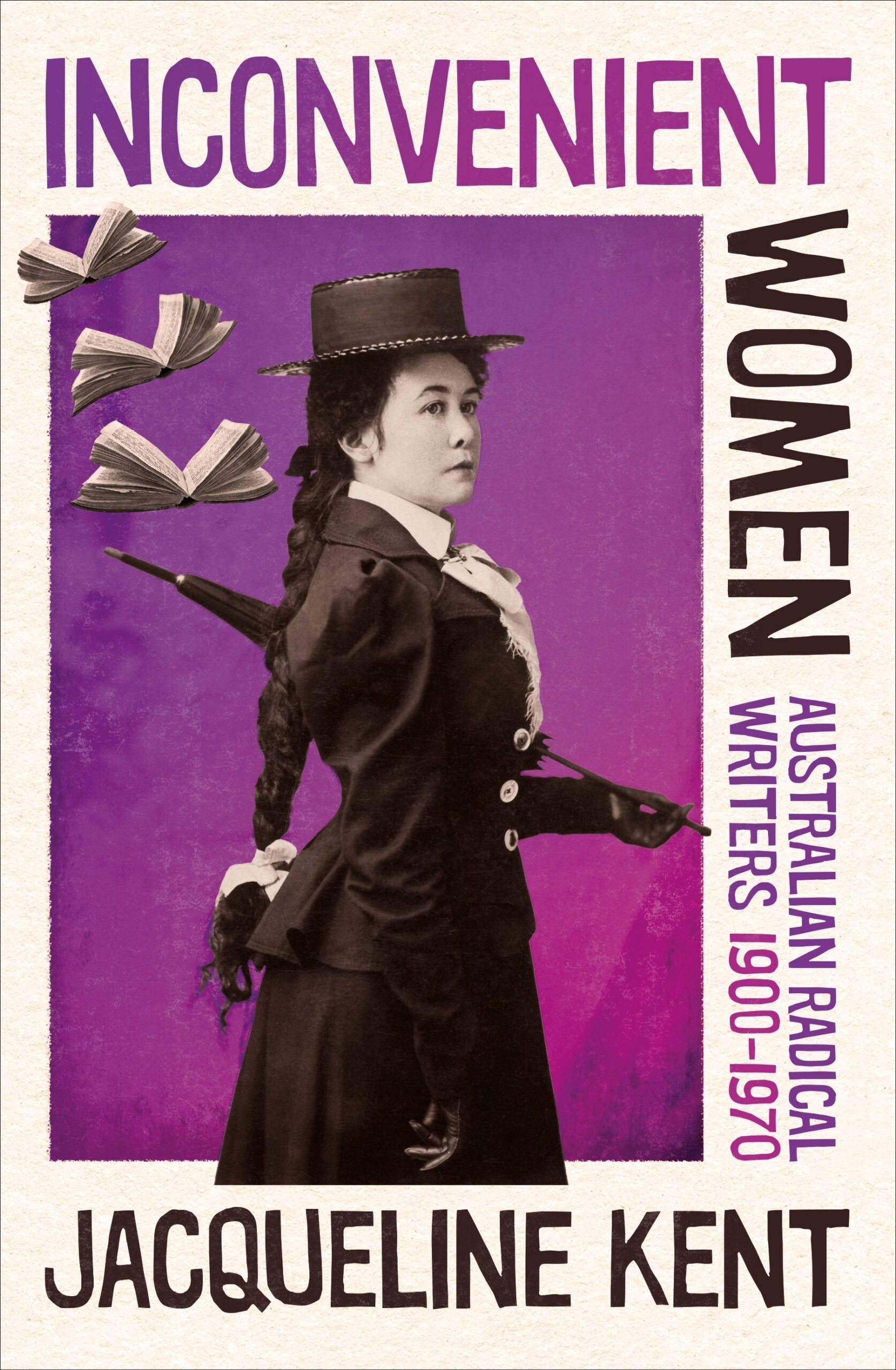
Inconvenient Women
Australia’s crusaders for women’s voting rights and the radical feminists of the 1970s changed lives across the country and around the globe. But what about the generation in between?
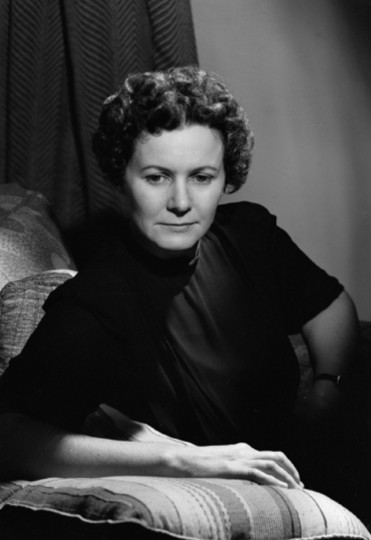
Eleanor Dark, 1945 (photograph by Max Dupain via Wikimedia Commons).
Throughout the twentieth century, a group of trailblazing women writers challenged the nation’s status quo. Miles Franklin’s forceful voice invigorated the emerging women’s movement; Mary Gilmore was a groundbreaking feminist journalist; and novelists Katharine Susannah Prichard and Eleanor Dark explored the colonial displacement of Australia’s Indigenous people. Kylie Tennant spoke up for battlers during the Great Depression and Dymphna Cusack, Katharine Susannah Prichard and Dorothy Hewett, all members of Australia’s Communist Party, advocated for social reform.
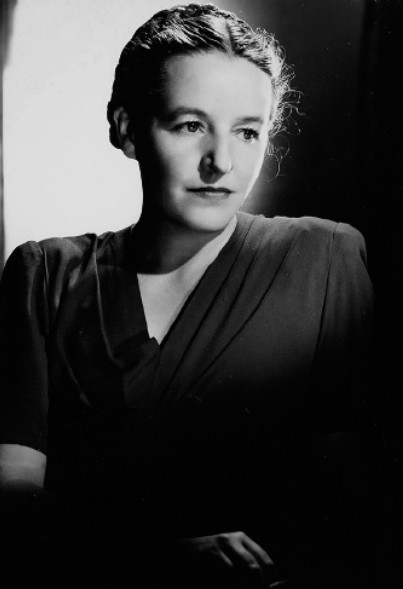
Dymphna Cusack, 1947
State Library of NSW.
Ruth Park’s The Harp in the South jolted the NSW government into developing slum clearance programs. And the work of First Nations poet and activist Kath Walker (later Oodgeroo Noonuccal) was crucial in achieving constitutional reform for Indigenous peoples.
Jacqueline Kent traces these women’s stories, shaped by the seismic social and political events of their time, illuminating their immense courage and principled determination to change the world. Inconvenient Women restores the voice and visibility of these extraordinary women, revealing the fierce intellects that shaped 20th-century Australian culture and politics.
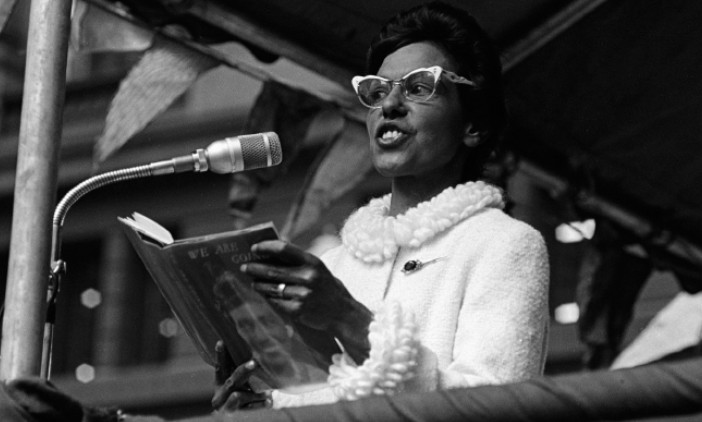
Kath Walker reading from We Are Going at the National Aborigines Day
demonstration in Martin Place, 1965.
Photograph by Ronald Stewart, Sydney Morning Herald.
What distinguishes Jacqueline’s approach is her deliberate choice to write these women’s stories against their social and political backgrounds rather than in isolation. Vitally, she contextualises their lives within the historical currents that shaped them: Federation, the two World Wars, economic depression, the rise and influence of the Communist Party, and the gradual recognition of Indigenous Australians as citizens, which was achieved in 1967.
This chronological, historically grounded structure reveals unexpected connections and shared struggles, demonstrating how these writers were deeply engaged with Australian politics and culture, not merely observers of it.
The title Inconvenient Women is deliberately provocative and capacious. It captures reactions ranging from nuisance to fury, encompassing both those who were politically radical and those who simply questioned social norms and literary conventions. Jean Devanny, for instance, became inconvenient by writing The Butcher Shop in 1926, which depicted a sexual relationship outside marriage between a European settler and a Māori woman. So transgressive, it was banned in both Australia and the United Kingdom. These women refused to be silent at a time when society expected them to be quietly decorative.
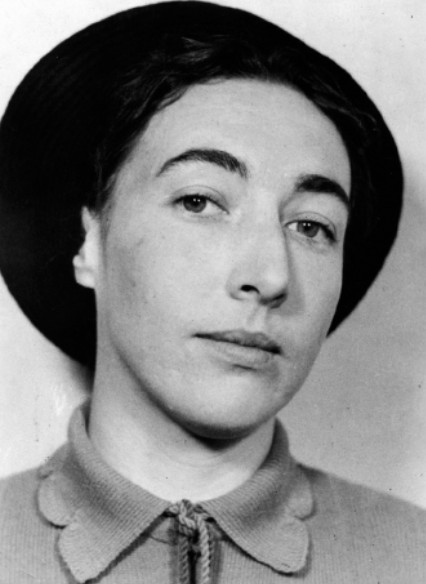
Kylie Tennant c.1945. Public domain, via Wikimedia Commons.
Crucially, Jacqueline emphasises the role of literary support networks such as the Fellowship of Australian Writers, the Society of Women Writers and the Commonwealth Literary Fund, which provided essential infrastructure for women writers isolated by domestic responsibilities. These organisations offered more than professional support. They offered community and validation to women whose creative work might otherwise have gone unwitnessed.
Highly informed, engaging, often wittily observed, this is also an impressively orchestrated study of groundbreaking writers and the tumultuous times they mirrored and interpreted.’
Sydney Morning Herald / The Age
Perhaps most striking is Jacqueline’s insight into the surprising cultural influence of the Communist Party, which never exceeded 20,000 members but profoundly shaped Australian intellectual life. During the Great Depression, when state support for the arts virtually disappeared, the Communist Party functioned as a combination of the Australia Council and the Workers’ Education Association, offering book groups, music groups and educational courses that gave ordinary people access to culture and learning. Understanding this context reframes these writers’ political engagement not as dogmatism but as pragmatic commitment to accessibility and social justice.
Contemporary readers will find Jacqueline’s exploration of these women’s legacies urgently relevant. While feminist progress has been undeniable, women remain vulnerable to discrimination and exclusion, from workplace harassment to ongoing inequities in pay and representation. Younger women, Jacqueline observes, are increasingly refusing to accept such injustices passively, channelling the spirit of their historical predecessors who insisted on being heard.
Praise for Inconvenient Women
‘Kent brings her cast of writers effortlessly to life.’
– Jason Steger
‘Each of these seven women writers set out, in her own way, to change the world, and this well-researched and engagingly written book makes clear their individual and collective bravery, curiosity and fearlessness.’
– Heidi Maier, InDaily
‘Inconvenient Women is a fluent stream of fascinating detail. It brings to the fore names half-remembered now, their collaborations with activist men such as Guido Baracchi and Egon Kisch as well as other women, and the political environment they all operated in. Once begun, it is difficult to put down: you’ll finish with dozens of notes to follow up.’
– Miriam Cosic, The Saturday Paper
Inconvenient Women Media and Podcast Interviews
Australia’s ‘inconvenient’ women writers blazed a trail through the 20th century, Anthea Taylor, The Conversation, 14 May 2025.
Remembering radical femmes who revealed inconvenient truths,
Heidi Maier, InReview, 14 May 2025.
Australian literary cage-rattlers and trailblazers,
Madeleine Swain, ArtsHub, 14 July 2025.
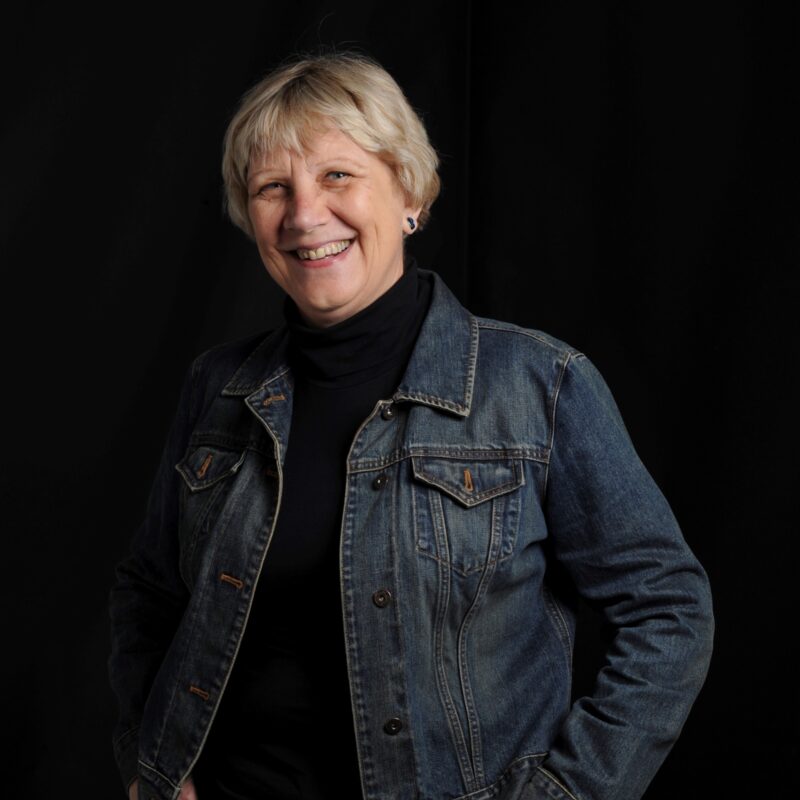
Jacqueline Kent is a Sydney-based writer of non-fiction and biography, as well as young adult fiction, general articles and literary journalism. Her working background includes radio interviewing, print journalism, radio and TV scriptwriting, editing books, ghost-writing, teaching editing and creative writing, and arts administration. She is the author of A Certain Style, the National Biography Award-winning biography of acclaimed book editor Beatrice Davis, as well as An Exacting Heart, the story of pianist and social activist Hephzibah Menuhin, and The Making of Julia Gillard, the only full biography of Australia’s first woman prime minister. Her most recent book is Bonjour, Mademoiselle! (with Tom Roberts), the biography of trans pioneer April Ashley. She holds a Doctorate of Creative Arts from UTS, Sydney.