





In this episode of Biographers in Conversation, Dava Sobel, a Pulitzer Prize finalist, chats with Dr Gabriella Kelly-Davies about her choices while crafting The Elements of Marie Curie: How the Glow of Radium Lit a Path for Women in Science.
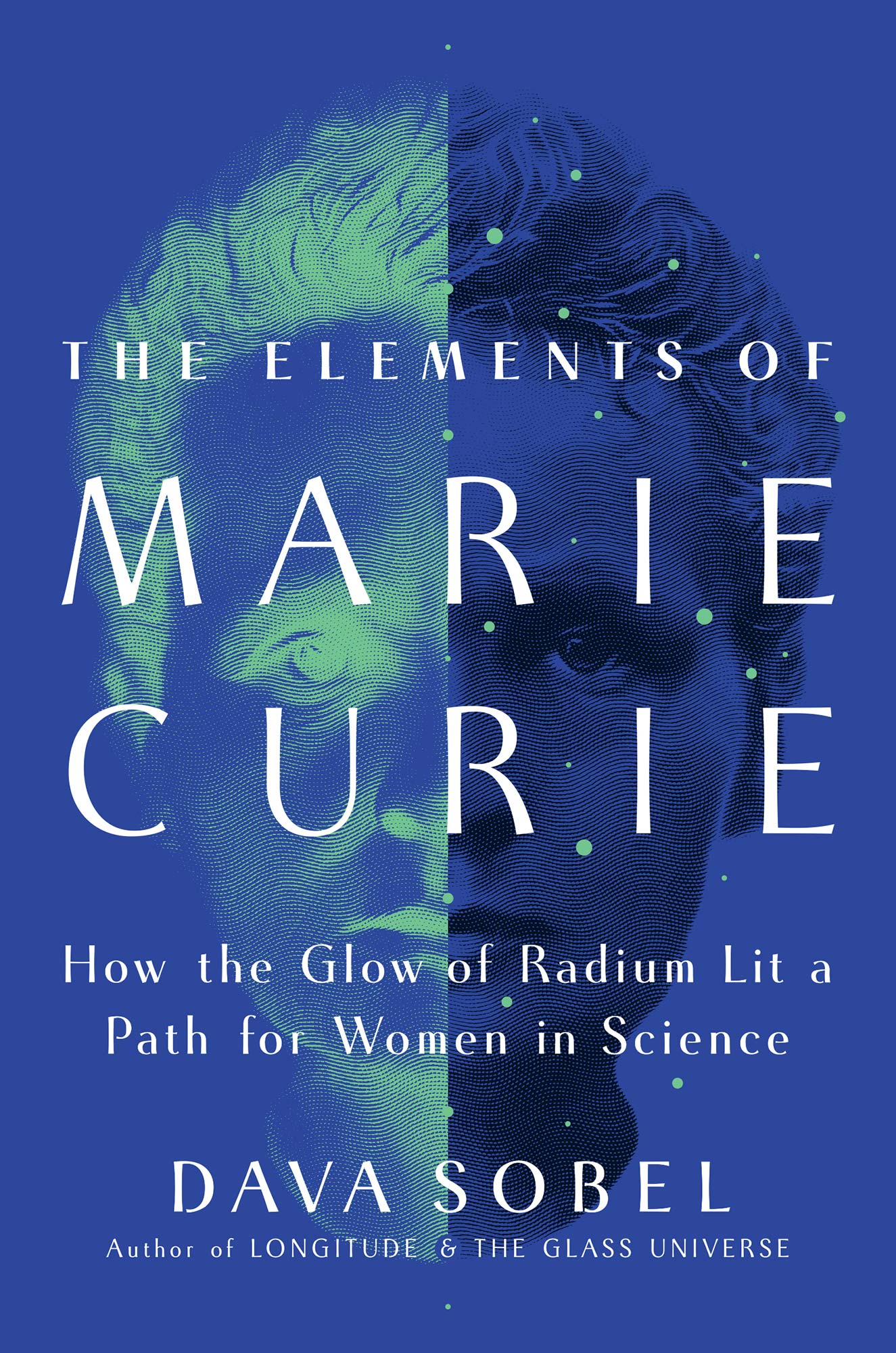
The Elements of Marie Curie
For decades, Marie Curie was the only woman in the room at international scientific gatherings, and despite constant illness, she travelled far and wide to share the secrets of radioactivity, a term she coined. She is still the only person to win a Nobel Prize in two scientific fields.
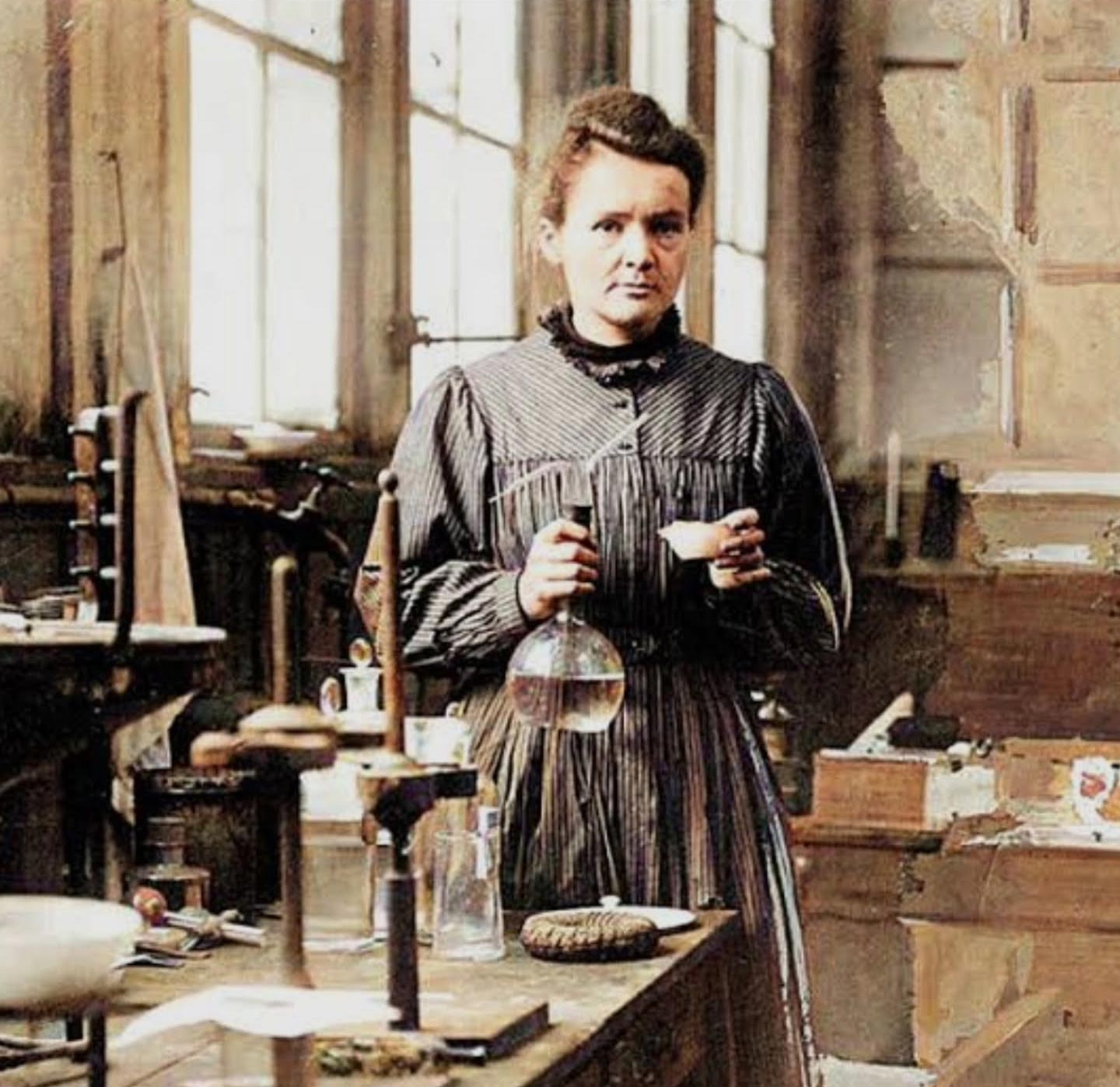
Marie Curie
Curie’s ingenuity extended far beyond the laboratory walls; grieving the death of her husband, Pierre, she took his place as professor of physics at the Sorbonne, devotedly raised two daughters, drove a van she outfitted with X-ray equipment to the front lines of World War I, befriended Albert Einstein and inspired generations of young women to pursue science as a way of life.
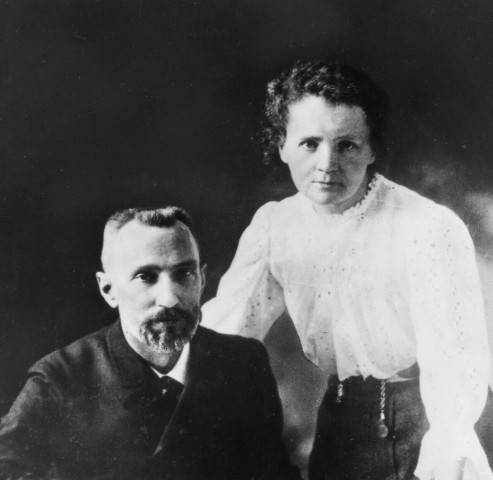
Pierre and Marie Curie
Approaching Marie Curie from a unique angle, Dava Sobel navigates her remarkable discoveries and fame alongside the women who became her legacy, from Norway’s Ellen Gleditsch and France’s Marguerite Perry, who discovered the element francium, to her own daughter, Irene, a Nobel Prize winner in her own right.
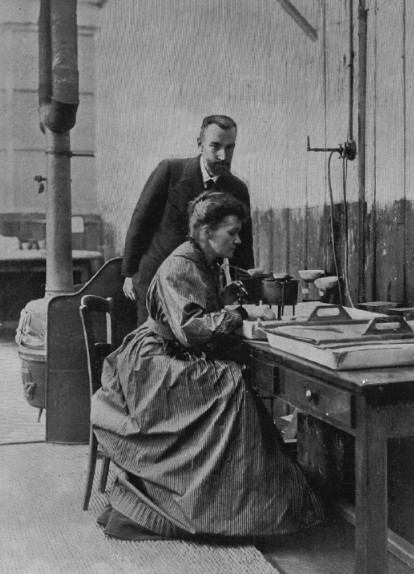
Marie and Pierre Curie in their Laboratory
When Dava Sobel’s publisher approached her about writing a biography of Marie Curie, her initial response was firm: ‘No, because she’s too famous. And I don’t have anything new to say about her.’ Then came the discovery that changed everything. While reviewing a collection of profiles titled Women In Their Element, Sobel encountered mention after mention of women chemists who had spent formative periods in Curie’s laboratory. She sat up straight in her chair, here was a story no previous biographer had told.
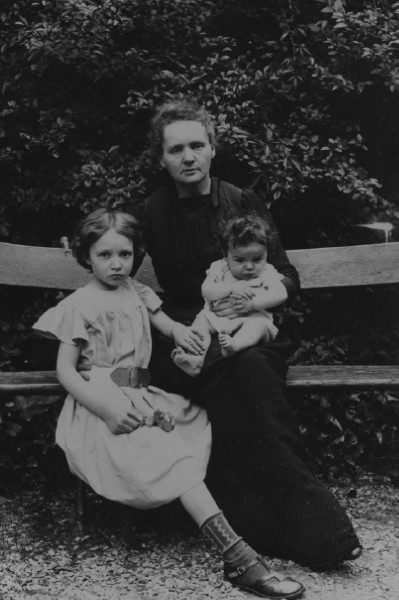
Marie with Irène and Eve, 1905
Contacting the Curie Museum in Paris, Sobel learned the astonishing scope: approximately 45 women had passed through Curie’s lab between 1906 and her death in 1934. This became the question behind The Elements of Marie Curie, not simply who Curie was, but how her unique position as the world’s only female laboratory director and university professor drew talented women from across continents and changed the trajectory of science itself.
The biography’s structure reflects this dual focus. Sobel organised the biography around four parts named for Curie’s successive research laboratories, the places that defined the periods of her life. Within these sections, 30 chapters bear individual names: Pierre, Irène, Ellen, Harriet. Each chapter title pairs a person with an element, creating what Sobel calls ‘a game’ for readers to decode why that particular element matches the individual. The structure allowed Curie’s life to contain the other lives, showing how these women’s stories intersected and diverged within the orbit of their mentor.
Breaking through a glass ceiling, though working
under a leaking glass ceiling in an ill-equipped lab
Sobel’s research revealed Curie’s extraordinary generosity. Rather than hoarding credit, she co-authored papers with her protégées, assigned them important work, and actively advanced their careers. Several returned home to become their country’s first female professors or the first to teach radioactivity. Those who befriended one another in Paris later banded together internationally to further educational opportunities for women. Long after leaving the lab, they returned in memory to small moments: Curie rubbing her radium-numbed fingertips against her thumb, or the way a rare smile would light her sad face and render her suddenly beautiful.
‘This is an essential read, capturing both [Curie’s] genius and her legacy.’
New Scientist
What surprised Sobel most wasn’t the historical record but contemporary responses. The moment she mentioned Curie’s name during the project, people volunteered unprompted: ‘She’s my hero’ or ‘She’s the reason I went into science’. Nearly a century after her death, Curie remains the only female scientist most people can name.
Showing how Marie Curie achieved her success for her and many other women
The Elements of Marie Curie draws extensively on Curie’s own writings, scientific papers and letters with her daughters when separated. Most revealing was the grief journal Curie kept for a year after Pierre’s death in 1906, much of it written to him in the form of letters, expressing distraught hopelessness.
‘A fresh and feminist study of the pioneering Nobel Laureate reveals her impact on the women she mentored and set on the path to prominence.’
Observer
At 38, grief-stricken with two young daughters, Curie was offered both Pierre’s laboratory directorship and his professorship at the Sorbonne, a centuries-old institution breaking with all-male tradition for its first exception. What might have ended her career made her the magnet drawing women from Eastern Europe, Scandinavia, Russia, Britain and Canada to pursue science under impossible conditions.
Dava Sobel’s epilogue reflects on radium’s shifting status from miracle cancer cure to toxic waste, and recently back to medical importance. But Curie’s enduring legacy isn’t the dauntingly high standard of two Nobel Prizes. It’s her readiness to explore physics with children, train young women to teach science to girls and open her laboratory to those choosing science as a way of life. She inspires followers to seek the happiness she found pacing near the stove in the old shed, trying to figure out how nature works.
Praise for The Elements of Marie Curie
‘The Elements of Marie Curie is much more than a biography. It is a tribute to a woman who redefined what was possible for women in science, inspiring generations to follow her. Sobel's elegant prose and thoughtful use of personal and historical accounts bring Curie to life, offering a nuanced portrait of a woman whose contributions to science were matched by quiet strength, humility and commitment to humanity. This is an essential read, capturing both her genius and her legacy.’
—Chen Ly, New Scientist
‘Sobel writes elegantly about science, unspooling Curie’s pursuits in the lab like a mystery.’
—Kate Zernike, The New York Times
‘Ms. Sobel’s book deftly explores the science of chemistry and the history of radium, while also following the remarkable thread of Marie Curie’s achievements—which came at a high personal cost. But what sets Ms. Sobel’s biography apart isn’t the timeline or the events of her subject’s life; it’s those women of science whose lives intersected with Curie’s, a cast of brilliant researchers and thinkers that the author skilfully weaves into her narrative. They are the “elements” of Marie Curie’s lab.... She drew them to her, and through her, they would draw others, lighting a path for women in science.’
—Brandy Schillace, The Wall Street Journal
‘Dava Sobel offers a vivid narrative that uses Curie’s well-known story as scaffolding for tales of the brilliant young women who trained in her lab and became part of her scientific legacy….This superbly rendered portrait of Curie and her intellectual offspring could inspire many bright minds to follow in the scientist’s footsteps for generations to come.’
— Science
‘In her well-researched and compellingly written book, Sobel recounts how working with Curie raised the profile of many other pioneering women in radiochemistry and atomic physics. Sobel’s explanations of the science are crisp and accessible… There’s enough detail to permit chemists and physicists to peer over Curie’s shoulder in the lab. Sobel gives us a chance to share in the excitement and delight of the work that made Curie and her dozens of scientific offspring glow so brightly.’
— Michelle Francl, Nature
‘Preeminent science writer Sobel (The Glass Universe, 2016) brings forward a new array of female scientists in this vital portrait of Marie Curie and the women who joined her in her world-altering Paris laboratory…As Sobel vividly tells their tales of valour, diligence, and brilliance, she fuses elements human and scientific to create a dramatic group portrait encompassing passion, struggle, poignancy, and triumph.’
— Donna Seaman, Review of the Day, Booklist
‘There is a very short list of biographers whose books you’ll read regardless of who the subject happens to be. And there is, perhaps, an even shorter list of brilliant science communicators who can make complex subjects both accessible and fascinating. At the center of that Venn diagram is Dava Sobel. The Elements of Marie Curie may be her best book yet. I am absolutely scandalized by how little I actually knew about this extraordinary, accomplished, and inspiring woman. What a deeply satisfying read!’
— Susan Tunis, bookseller at Bookshop West Portal, San Francisco
A ‘Top Ten’ Pick in Science
— Publishers Weekly 2024 Fall Announcement Issue
‘A lucid, literate biography, celebrating a scientific exemplar who, for all her fame, deserves to be better known.’
— Kirkus Reviews
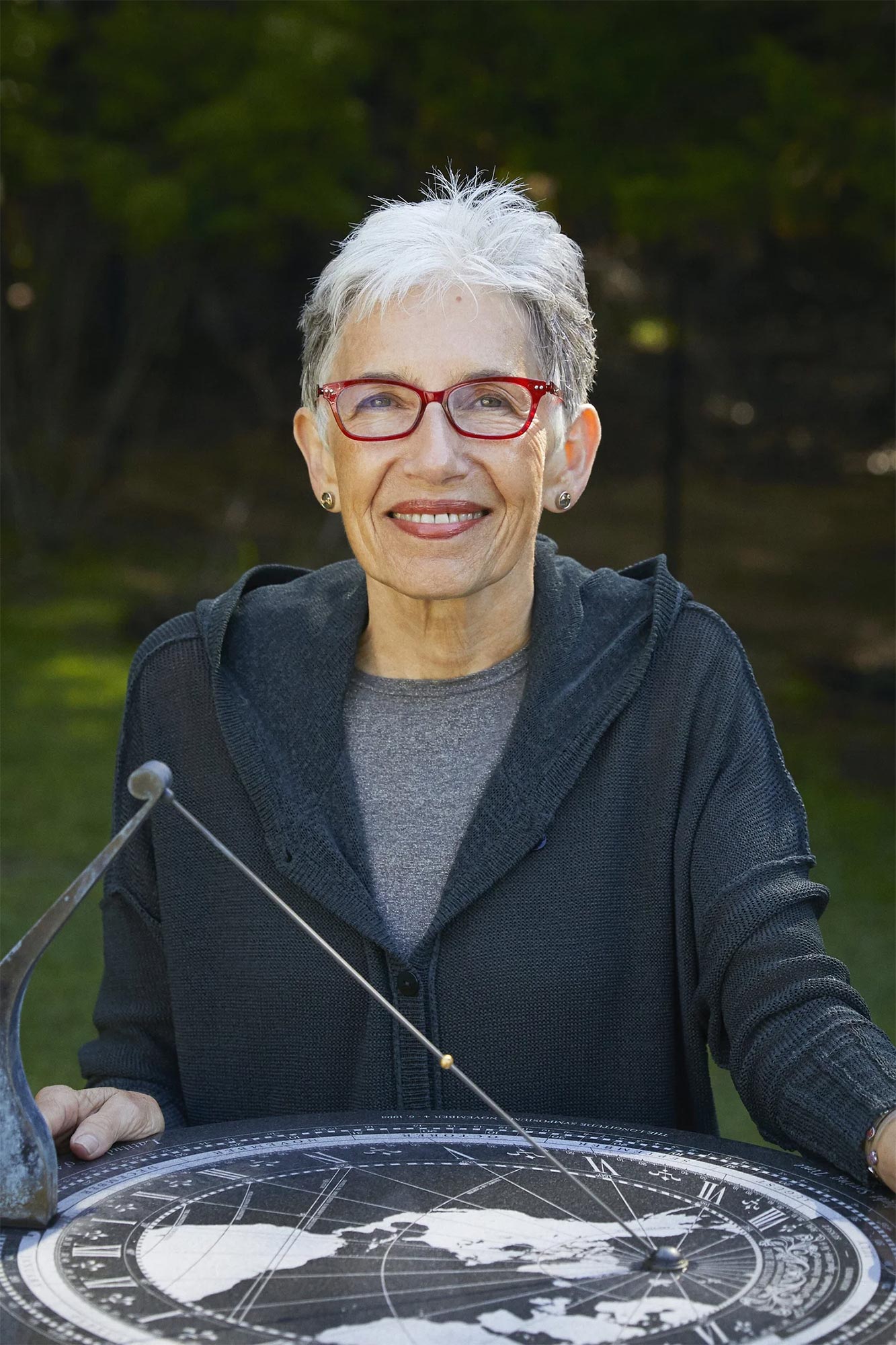
Dava Sobel is the author of Longitude (Walker 1995, Bloomsbury 2005), Galileo’s Daughter (Walker 1999 and 2011), The Planets (Viking 2005, Penguin 2006), A More Perfect Heaven (Walker/Bloomsbury 2011 and 2012), And the Sun Stood Still (Bloomsbury 2016), The Glass Universe (Viking 2016, Penguin 2017) and The Elements of Marie Curie (Grove/Atlantic 2024). She has also co-authored six books, including Is Anyone Out There? with astronomer Frank Drake, and currently edits the “Meter” poetry column in Scientific American.