





What does it mean to write about a country from the inside out, to bear witness to revolution, collapse and catastrophe, then find the words to enable readers to grasp the enormity of these experiences? That’s what Dr Theodore Ell, a poet, literary scholar and memoirist, explores in Lebanon Days: Memories of an Ancient Land through Economic Meltdown, a Revolution of Hope and Surviving the 2020 Beirut Explosion.
The central questions underpinning Theodore’s conversation with Dr Gabriella Kelly-Davies are how he structured the story when he was still inside it and how he wrote about living subjects with care and precision. Also, what did he owe to a country and its people when he was, at heart, an outsider drawn into their unrelenting struggle?
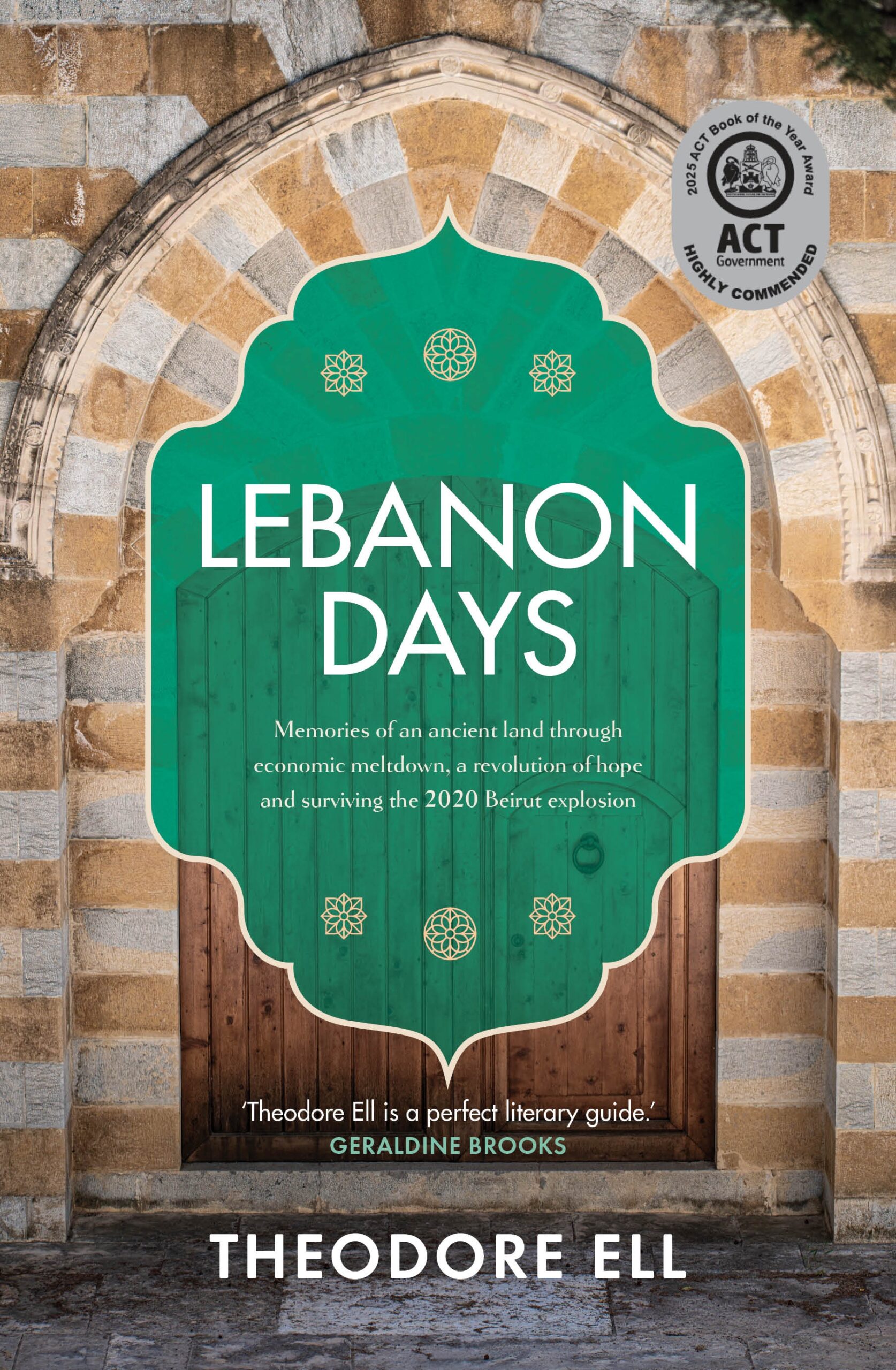
Highly Commended: 2025 ACT Book of the Year
Lebanon Days
Lebanon Days is a masterful hybrid of memoir, history, travel writing, journalism, cultural history and political analysis. This blended style, which wasn’t consciously chosen by Theodore Ell, mirrors the integrated and clashing forces of Lebanese society.
Theodore accompanied Caitlin, Australia’s Deputy Ambassador to Lebanon and his wife, on her Beirut posting between 2018 and 2021. Prohibited from paid work, he lived in a ‘pretence of sanctuary’, walking around Beirut and the Lebanese countryside. Everywhere he wandered, from calm cedar forests to crowded Beirut bars, Theodore listened to stories of the Lebanese people, beginning a quest to try to make sense of the maze of ideas, desires and illusions that create the Lebanon of their imagination, a place in sharp contrast to reality.
What unfolded around him was extraordinary. In 2019, facing economic meltdown, Lebanon’s people rose up in a thowra, a revolution of hope, against a government mired in corruption and economic mismanagement.
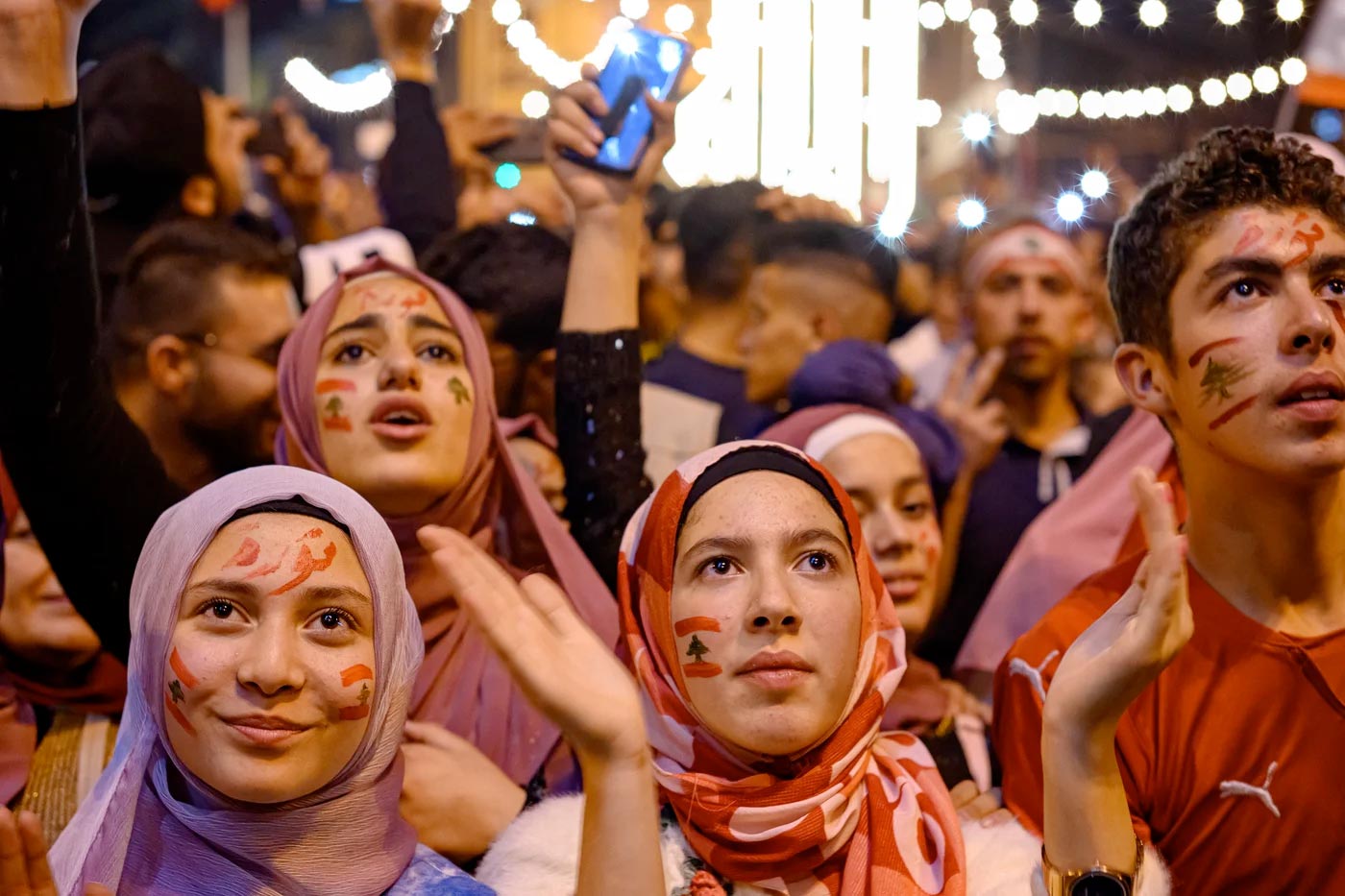
With the country on the precipice of war, COVID-19 swept in and the eerie quiet of lockdowns descended. Tragically, this silence was violently shattered on 4 August 2020, when Ell narrowly survived the largest ever non-nuclear peacetime explosion, which destroyed half of Beirut. A massive stockpile of ammonium nitrate stored at the Port of Beirut detonated, killing hundreds of people and wounding thousands.
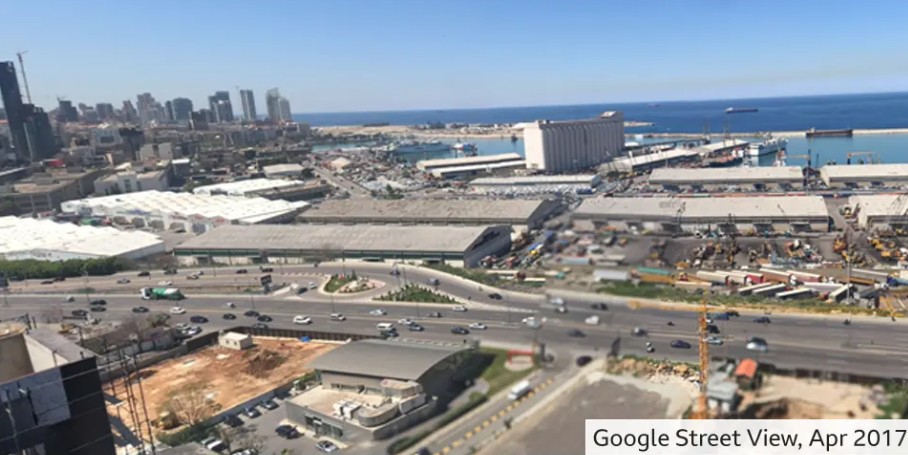
The Port of Beirut Before the Explosion
BBC
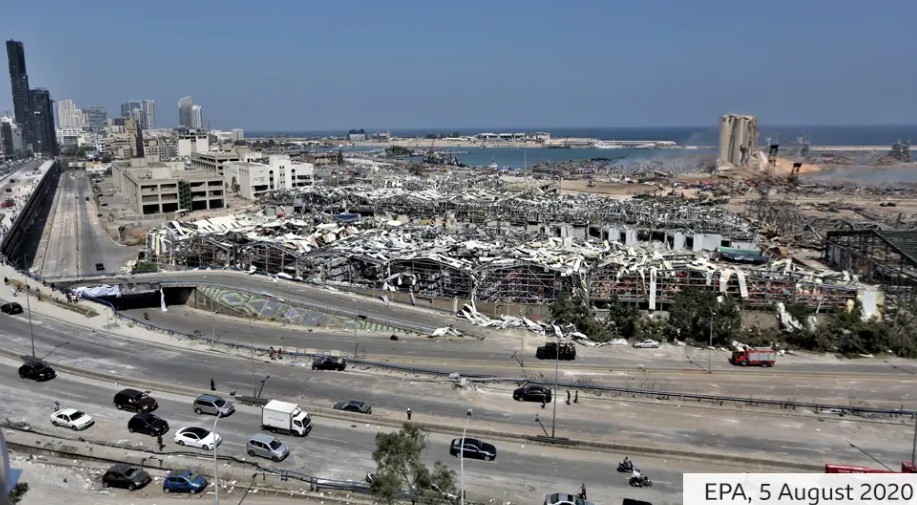
The Port of Beirut After the Explosion
BBC
Theodore’s immediate effort to process this tragedy was crafting Façades of Lebanon, which won the 2021 Calibre Essay Prize. However, he sensed the essay risked making the catastrophe seem inevitable, a narrative climax to Lebanese dysfunction. Lebanon Days grew from the essay, though Theodore intended the book to be an act of correction: a recognition that the explosion served no dramatic function and that the true drama was the Lebanese people’s own struggle for a more just society.
An Accidental Memoirist
Theodore drafted Lebanon Days backwards, beginning with Part Five and working toward the preface. He treated his memories ‘archaeologically’, clearing each layer of crisis before exposing the roots beneath. This approach enabled him to ensure Lebanon’s story, rather than his own emotional experience, dictated what belonged on each page. His discipline was central to navigating the ethical minefield of being an outsider writing about a nation in crisis.
‘Compelling… his prose is often beautiful, horrific and confronting at the same time.
The Saturday Paper
The remarks and dialogue in Lebanon Days are strictly factual; he avoided making up anything. ‘I conceived it as a kind of witness statement’, he explains, admitting the possibility of interpretative error, while being absolutely truthful about everything he had seen.
Theodore reflects on the narrative and craft decisions that shaped Lebanon Days and how he balanced personal witness with historical research. He also explains how he gave voice to the Lebanese people he encountered and how he rendered the emotional truth of an explosion that resists rational description.
This Country Is My Mind
Theodore’s latest project is ‘This Country Is My Mind’, an authorised biography of Les Murray, Australia’s greatest poet. Recently, he received a Highly Commended award as part of the Hazel Rowley Literary Fellowship to support his research for this biography.
In ‘This Country Is My Mind’, Theodore resists Murray’s self-fashioning as a lone prodigy by systematically privileging relationships, networks and social presence over the poet’s preferred image of isolation.
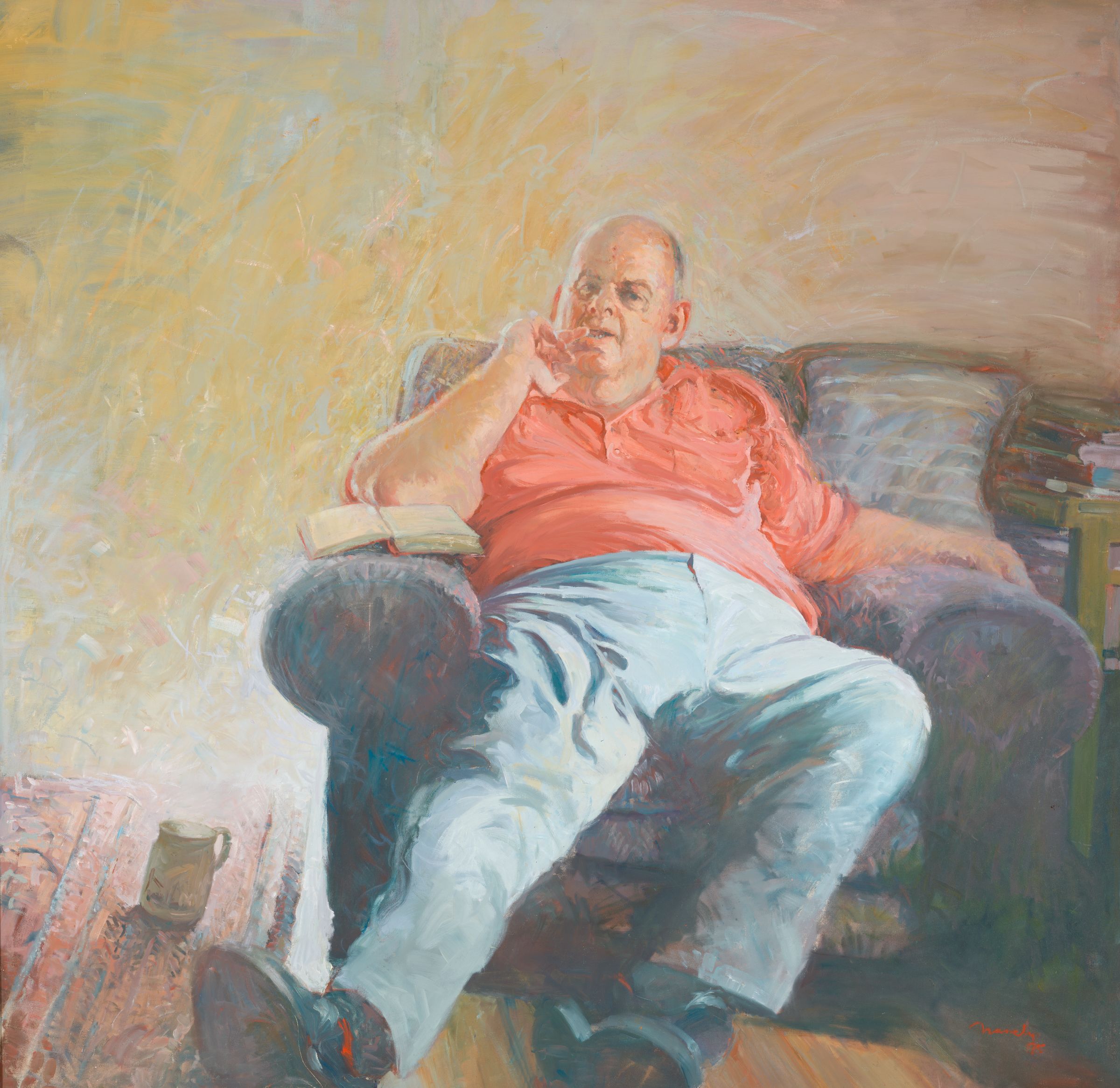
Portrait of Les Murray aged 57, 1995.
Artist David Naseby.
National Portrait Gallery
Theodore pursues ‘omnium gatherum’ research, delaying full-scale writing until he has surveyed a wide evidentiary field, which includes 65 boxes of manuscript/typescript poem drafts, personal correspondence, diaries and ‘The Great Book’ scrapbooks containing photographs and clippings at the National Library of Australia. His research also includes more than 60 interviews among Murray’s friends, foes and other witnesses.
Cautious of Murray’s strong authorial will, Theodore insists on testing and verifying the poet’s accounts of his own experiences and on continual cross-checking against letters, essays and third‑party observation. Theordore argues that his portrayal of Murray’s life must remain illustrative: a case study in how poetic vision, settler myth and contested national belonging intertwine, evolve and sometimes curdle into resentment.
Praise for Lebanon Days
‘A captivating memoir that unravels the emotional struggles of a nation the world has long overlooked. Through the eyes of an outsider, this story takes a deep dive into the intimate details of Lebanon’s hardships, providing a profound understanding of its people and their journey. Ell’s writing is compelling. The book is written from a personal viewpoint, which he combines with meticulous research that weaves in historical information and context…it is clear he has taken a lot of care to convey truth and accuracy. His prose is often beautiful, horrific and confronting at the same time.’
The Saturday Paper
‘Ell is a gifted writer: his prose is unaffected, precise and elegant. He has taken the drama of his three years in Lebanon to illuminate this fascinating country’s past.’
The Conversation
‘Lebanon Days is a meditation on a country that never leaves its visitors unaffected. Ell is a gifted writer: his prose is unaffected, precise and elegant.’
The Conversation
‘Riveting...His record of the time, often poetic in treatment, incorporates history, the deeply troubled politics of the country, as well as the stories of Lebanese people. The result is a vivid, thoughtful outsider’s portrait of the country through five, literally and metaphorically, explosive years.’
Sydney Morning Herald
‘A vivid, thoughtful outsider’s portrait of the country through five, literally and metaphorically, explosive years.’
The Age
‘[A] powerful and beautifully written memoir…Ell brings to memoir the skills of a published poet, a talent for the haunting vignette, and an extraordinary sensitivity to the chaotic palimpsest that is the history of this ancient place…One of the strengths of this memoir is that it leaves ample room for the reader’s imaginative collaboration.’
The Australian Book Review

Theodore Ell was born in Sydney in 1984. He studied literature and modern languages at the University of Sydney, spent periods of further study and research in Italy and was awarded a PhD in 2010. For several years he earned a living freelancing as an editor, translator and researcher, and co-founded the international journal Contrappasso Magazine, of which he was co-editor.
Ell moved to Canberra in 2015 to begin working in the public service. From 2018 to 2021 he lived in Lebanon, accompanying his wife on a diplomatic posting. Ell’s essay ‘Façades of Lebanon’, about Lebanese revolution and the Beirut port explosion, won the 2021 Calibre Essay Prize. His poetry collection Beginning in Sight shared the 2022 Anne Elder Award.
Ell’s poetry, essays, translations and non-fiction have been published in Australia, Italy, the United Kingdom and Lebanon. He is an honorary lecturer in literature at the Australian National University.
In 2026, Ell received a Highly Commended award from the Hazel Rowley Literary Fellowship to support his research an authorised biography of the poet Les Murray. He is also a Visiting Fellow at the State Library of New South Wales for 2026.
2 Comments
Fascinating insight into an author’s writing process in different genres
Thanks so much Liz. Yes, Theo’s hybrid writing style is fascinating. Rather than being a conscious decision this blend of genres occurred organically.