




In this episode of Biographers in Conversation, award-winning biographer Dr Sylvia Martin chats with Dr Gabriella Kelly-Davies about Double Act: Eirene Mort and Nora Kate Weston. This story is a richly illustrated dual biography of the artists Eirene Mort and Nora Kate.
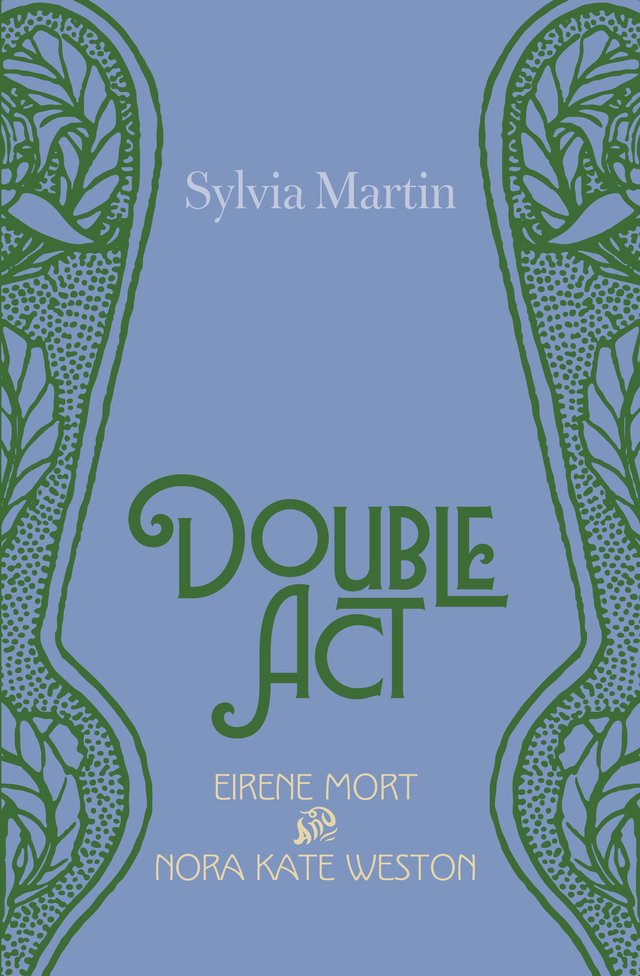
Double Act
Double Act is an illustrated dual biography of the artists Eirene Mort and Nora Kate Weston. With elements of meta-biography and memoir, Sylvia Martin crafts a rich portrait of the artists and their shared lives. It explores Nora and Eirene’s deep and enduring relationship that underpinned their creative partnership for over 60 years.
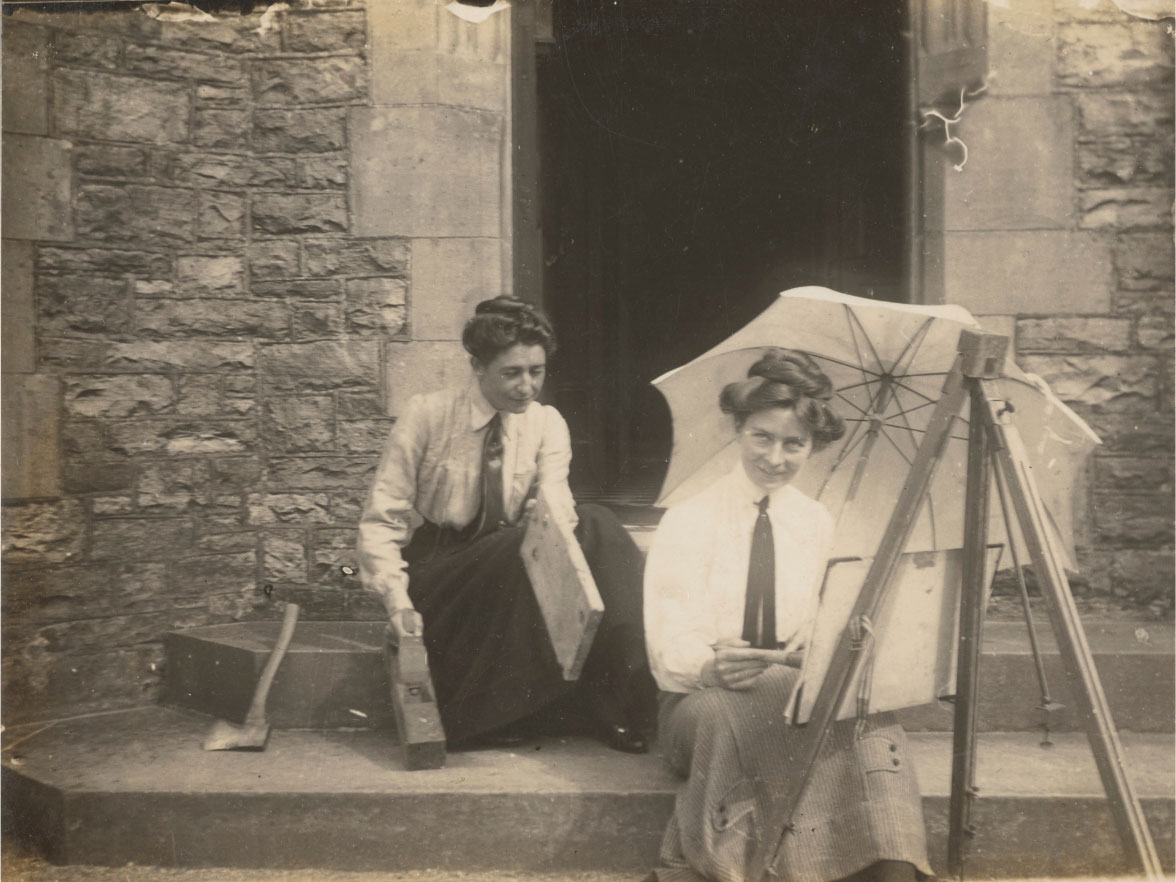
Eirene Mort and Nora Weston on the steps, c.1912
From the Papers of Eirene Mort, 1813 to 2003.
National Library of Australia
Eirene Mort was a celebrated multi-skilled artist—designer, black & white illustrator, watercolourist, etcher, tapestry worker and potter—who had studied in London at 19 and returned to Australia to become one of Sydney’s most admired applied arts practitioners in the 1910s and 1920s. Inspired by the British Arts and Crafts Movement, Eirene determined to adapt its principles for an Australian nation, drawing from native flora and fauna in her designs. Nora Kate Weston, known to Eirene as ‘Chips,’ was a carpenter, wood carver and metalworker who often executed the intricate designs Eirene created, including a stunning brass tray now held in the National Library of Australia, hammered with a technique known as repoussé.
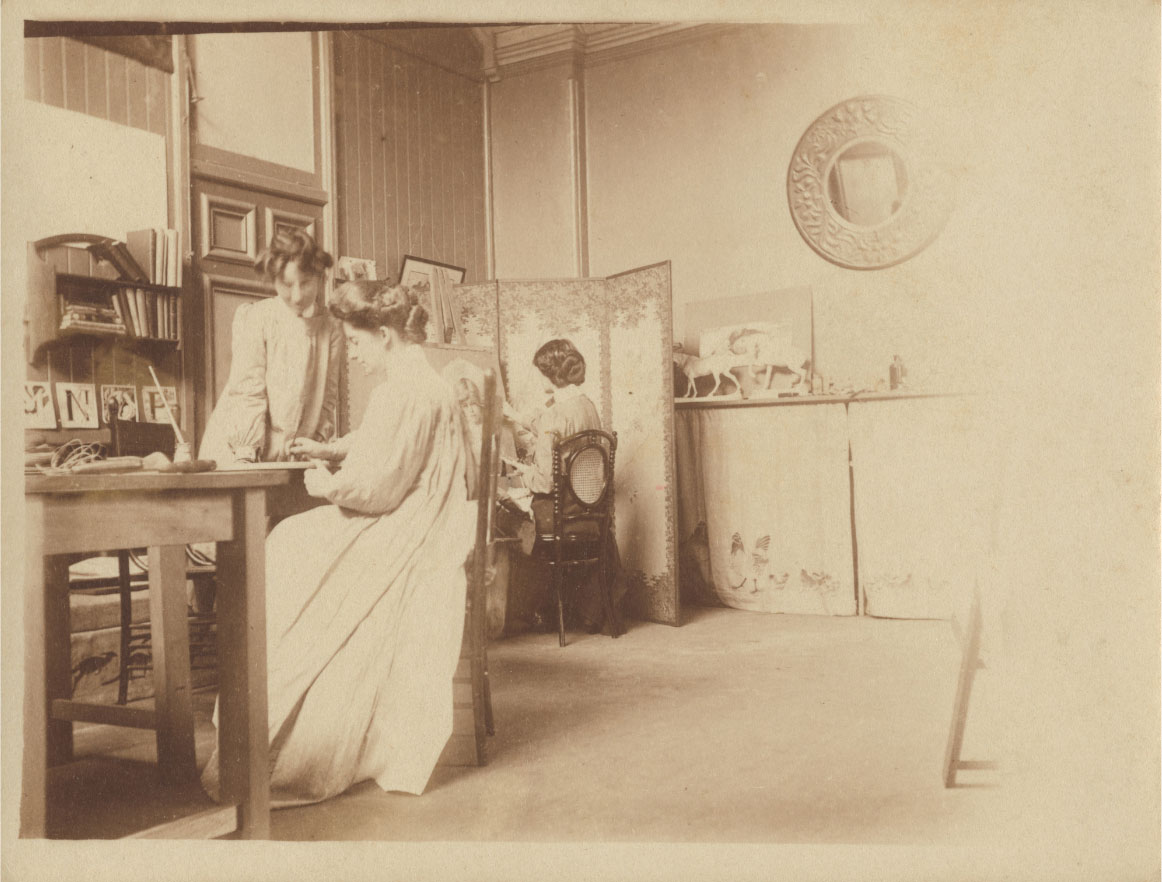
Eirene in her studio, c.1906 from the Papers of Eirene Mort, 1813-2003.
National Library of Australia.
Eirene and Nora were dynamic ‘New Women’ of the early to mid-twentieth century who made valuable contributions to art in Australia. They challenged gender conventions and were determined to be recognised as professional artists despite the societal conventions of the time. Eirene always regarded her work with Nora as collaborative, a sentiment Sylvia Martin embraces in Double Act. In this biography, Nora emerges from the shadows to take equal place in a relationship that she and Eirene considered complementary and intertwined.
Restoring Invisible and Forgotten People’s Visibility and Voice
Eirene and Nora lived together, worked together and travelled together. They built their own house together, a bespoke home they named Weld, meaning to join by fusion. For over 60 years, they were inseparable. Yet history remembered only one of them. Sylvia Martin’s richly illustrated biography sets out to correct this imbalance, and in doing so, raises searching questions about whose lives get recorded, and whose get erased.
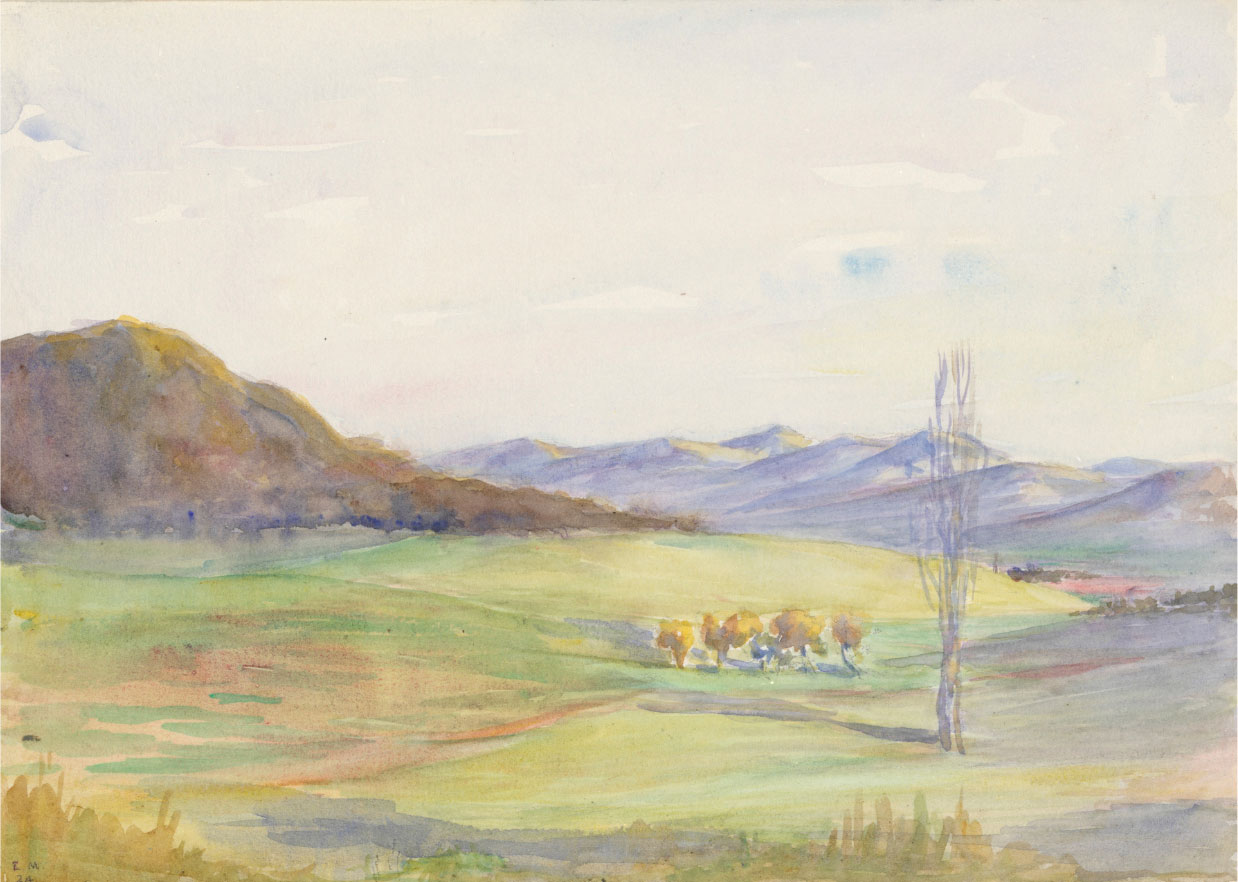
Eirene Mort, View from Gungahlin of the Canberra terrain, 1924.
National Library of Australia.
The biographical challenge was formidable. Eirene’s papers are held at the National Library of Australia, but they are almost entirely visual: over 20 sketchbooks, objects, drawings and crucially. However, the collection doesn’t include any letters between the two women because they were always together and didn’t need to write to each other. Sylvia built the women’s interior lives from the outside by reading sketchbook dates against shipping lists, cross-checking newspaper archives on Trove, interviewing surviving relatives and piecing together what she refers to as a jigsaw puzzle.
Avoiding Authorial Intrusion
When Sylvia discovered a pencil sketch of an Angophora tree in the Warrumbungles that she recognised as a tree on her former property, this ‘archival jolt’ sent goosebumps racing through her. It was also the moment she decided to be a visible presence in the story. Sylvia took great care in weaving biography and memoir because she is acutely aware of the fine line between personal presence and self-indulgence.
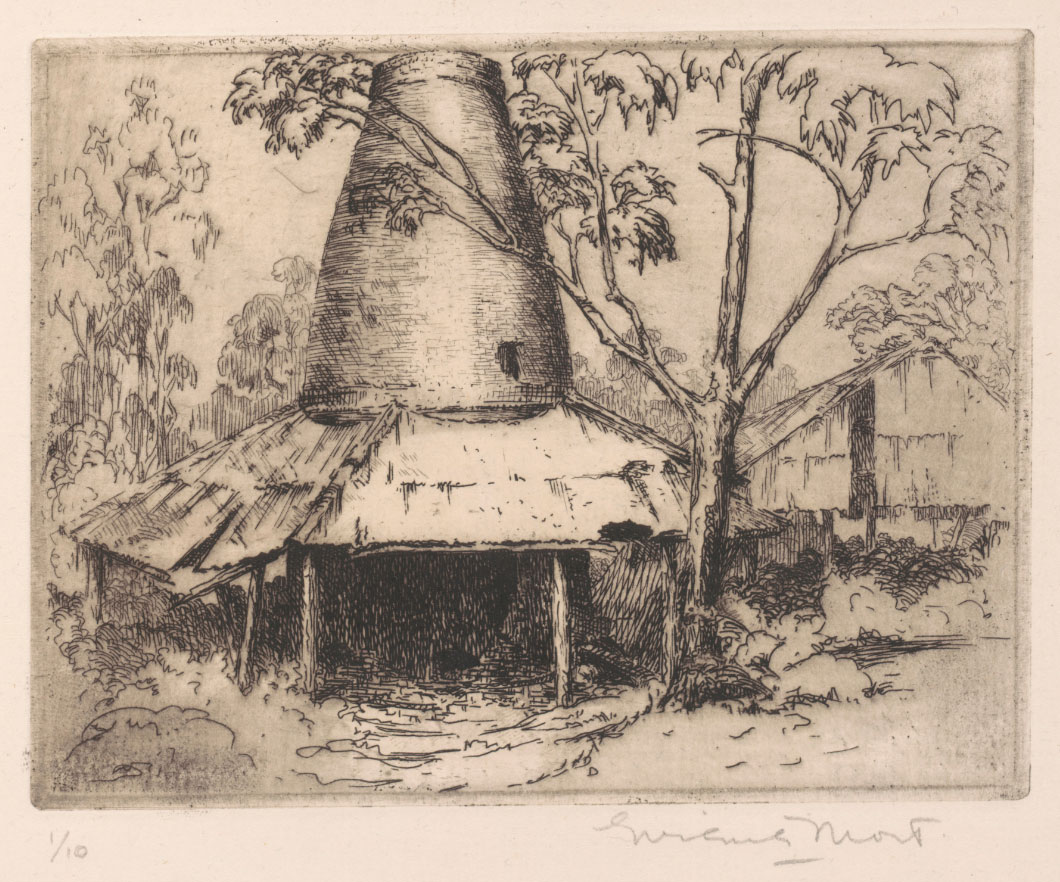
Eirene Mort, The Pottery, Longueville, NSW 1920.
National Library of Australia.
Eirene Mort and Nora Kate Weston are no longer a footnote, no longer simply ‘The Aunts’. They are fully, vividly present, two extraordinary women who built a life and a body of work of uncommon beauty. Now the National Library of Australia is digitising Eirene’s papers, a new generation of readers, researchers and admirers will eventually be able to discover Eirene and Nora. This is exactly the kind of ending that is really a beginning.
Praise for Double Act
‘An exploration of two Australian women’s long partnership in love, work, teaching, artistic creation ... a gently forensic master class in biographical research, writing, and interrogation of sources which sees accepted narratives upended and relegated to the dust heap.’
Rowan Cahill, author and historian.
‘Sylvia Martin has given us a brilliantly insightful and wonderfully readable study of two stalwarts of the Australian Arts and Crafts Movement. Her book is particularly welcome, as Arts and Crafts is an important area of our creative life that doesn’t normally get a lot of attention. I highly recommend this study.’
Alex Miller, author
‘Fabulous biography of early 20th Century Sydney pair, Eirene Mort and Nora Kate Weston. A beautifully presented book too, brimming with gorgeous images of their life, work and craft. One to return to often, I think.’
Michell Scott Tucker, author.
Double Act, Reviews
‘Martin’s exquisite prose has kept me coming back to her work…Most movingly, Double Act tells of the developing and enduring love between Eirene and Nora. Selections of Eirene’s writing taken from her letters, together with Martin’s intimate writing style make this an immersive and satisfying read. Eirene and Nora have been brought back into the light...Double Act is a superb addition to Sylvia Martin’s important body of work.
It is a book to savour.’
Stephanie Miller, Inside Story
‘This story will deeply appeal to readers with an interest in art, design, social history and queer history. The book draws on the extensive papers, artworks, photographs and more in the National Library’s collections to paint a rich portrait of the shared lives of these important and influential women.’
The Book Muse
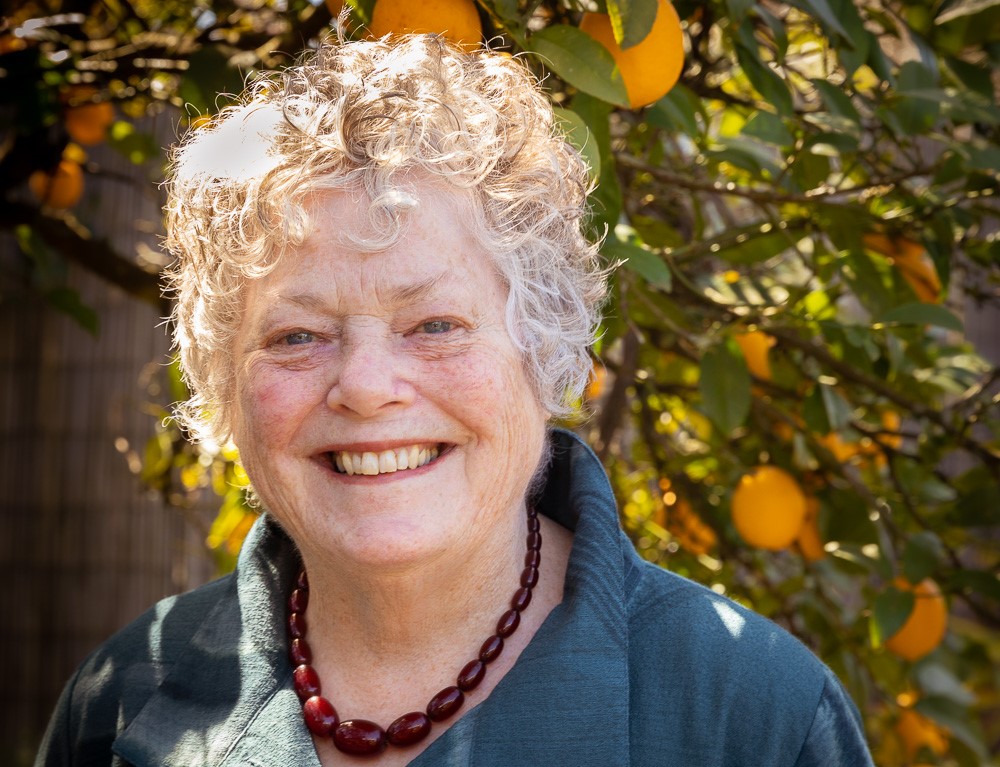
Dr Sylvia Martin is a former actor and author of four biographies of Australian women and a book of memoir essays. She holds a PhD in Women’s Studies from Griffith University’s School of Historical and Cultural Studies. Her works have been shortlisted for the ISAA Book Prize, the NSW Premier’s Literature Award and the Kibble Award. She was the recipient of the Magarey Medal for Biography in 2008. Dr Martin writes about the private lives of often under-recognised, immensely talented women, who may by modern standards be considered queer.