




The 21st-century landscape for biography is in a state of creative ferment. Experimentation is increasing, blurring boundaries between biography and other genres. Hybrid, genre-defying forms are emerging as life writers blend biography with memoir, fiction, essays, travel writing and feminist polemic. Many novelists write close to life, giving their fiction a powerful sense of truth, depth and emotional veracity. Just a few examples are Helen Garner, Kate Grenville, Julian Barnes and Toni Jordan.
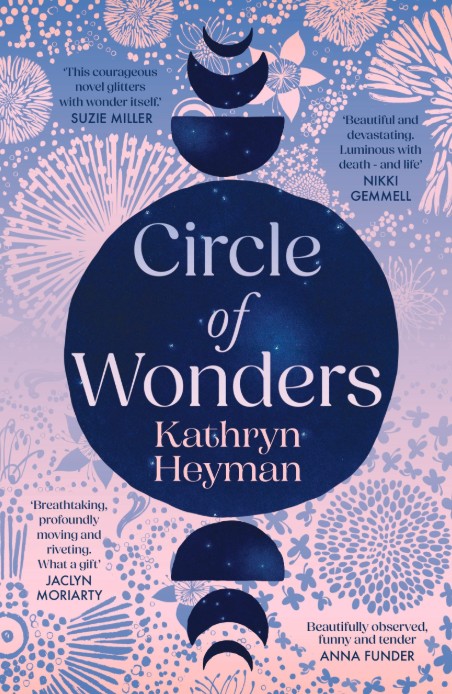
In this episode of Biographers in Conversation, Dr Kathryn Heyman chats with Dr Gabriella Kelly-Davies about her choices while crafting her memoir Fury and seventh novel, Circle of Wonders. She examines what it means to craft truth across multiple genres, the meaning of facts and truth in literature and the formal experimentation that defines Fury and Circle of Wonders. Kathryn also explores the distinction between memoir and fiction when both are woven from lived experience. Intriguingly, she examines why the most compelling fiction can sometimes reach a more profoundly truthful place than life writing.
Circle of Wonders began in grief’s rawest hour. Kathryn took notes as she kept a vigil by her dying sister’s bed then started drafting the manuscript a week after her sister died. In the same month and town, her mother lay dying. What emerged from these experiences was a novel: a group of women gathered in the Blue Mountains over one charged lunar month to circle their dying friend, Roni Blume, as she seeks a good death after a flawed life.
Writing fiction informed by a true story
The shift from memoir to fiction was the pursuit of truth, rather than a retreat from it. Vitally, Kathryn realised the story she needed to tell was choral, with many voices converging into one. This required abandoning ownership of a story that was no longer solely hers to tell. ‘Once I decided to include several voices, I could no longer craft a memoir’, she explains. ‘I no longer owned this story.’ This transformation felt like freedom, even as new creative problems emerged.
Truth Telling in Fiction and Memoir
At the heart of Circle of Wonders is a philosophy Kathryn holds close: facts and truth are not the same thing, an idea she borrows from William Faulkner. ‘A timeline of events, what happened when, can never capture the felt, nuanced experience underneath it’, she says. ‘Fiction, freed from strict fidelity to fact, can sometimes reach a more profoundly truthful place than memoir ever could.’ This belief shapes the novel’s extraordinary circular structure: a form built around the lunar cycle, where the last breath connects to the first. Kathryn wrote the final page first. It arrived, she says: ‘Like giving birth.’
Tell Your Story the Way You Want to Tell It
The result is a story less concerned with grief itself than with what stands beside it: presence, attention and wonder. Grief, Kathryn argues, belongs to the past and future, to what was lost and what will never be. Wonder is the counterweight: an author’s fundamental discipline of paying attention to the now. Circle of Wonders asks what it means to witness someone dying as one more turn of a wheel that keeps circling, indifferent to sorrow, endlessly beginning again.
Across Circle of Wonders and Fury, Kathryn refuses the simplistic opposition of truth and invention. Facts matter, but they’re only the beginning. The deeper task, she believes, is to find the form that can bear the weight of lived experience. Her writing suggests that the right question is whether we’re telling the truest story we can in the form that best suits it.
Praise for Circle of Wonders
‘A beautifully observed, funny and tender novel about
letting love in and letting love go.’
– Anna Funder, Wifedom
‘Mothers and daughters and sisters: Heyman understands every ache, every regret, every splinter of laughter and fury.’
– Toni Jordan, Tenderfoot
‘Kathryn Heyman’s novel about dying and
difficult families resists easy consolations.’
‘Circle of Wonders is a novel of deep courage and beauty, a serious act of witness to friendship, complexity, and the everyday wonders that sustain us. Kathryn Heyman confronts mortality and coercion without flinching yet insists on the small acts of love and attention that make life endurable. In an age scarred by lies and posturing masculinity, this important novel offers the radical reminder that honesty, tenderness, and solidarity are our strongest forms of resistance. A must-read for all who know the power of literature
to remind us of what we fight for.’
– Chris Cleave, Everyone Brave is Forgiven
‘Funny and deeply moving, Circle of Wonders reveals Kathryn Heyman at her most masterful, drawing the reader into a world of unbearable tenderness and unspoken hurt. Structured around Roni’s dying days, the novel examines how women hold grief in the body, how shame and resentments are inherited like heirlooms, and how practical love—bedpans, broth, painted cardboard coffins—can become sacred. With incredible grace, the novel refuses simple redemption in favour of a more profound recognition: that love, when chosen in spite of everything, is its own kind of wonder.’
– Ross Grayson Bell, producer of Fight Club
‘It is breathtaking, ruthless and healing. Beautiful and profoundly moving and riveting. I think this will be a very important book. And enormously meaningful to many people. What a gift.’
– Jaclyn Moriarty, Gravity is the Thing
‘A precious jewellery box of language, bravely capturing the imperfection of being human and probing the mysteries of what matters most.
This courageous novel glitters with wonder itself.’
– Suzie Miller, Prima Facie
‘Beautiful and devastating. Luminous with death – and life. Circle of Wonders observes the complicated bonds of friendship and family among women, with a wisdom and tenderness that is deeply observed. It is a novel of wild power that reminds me of Katherine Mansfield and Claire Keegan. I gulped it in a day, then ached that it was over.’
– Nikki Gemmell, Wing
‘A bright flare. Heyman’s writing makes us look up and savour life.’
– Chloe Hooper, Bedtime Story
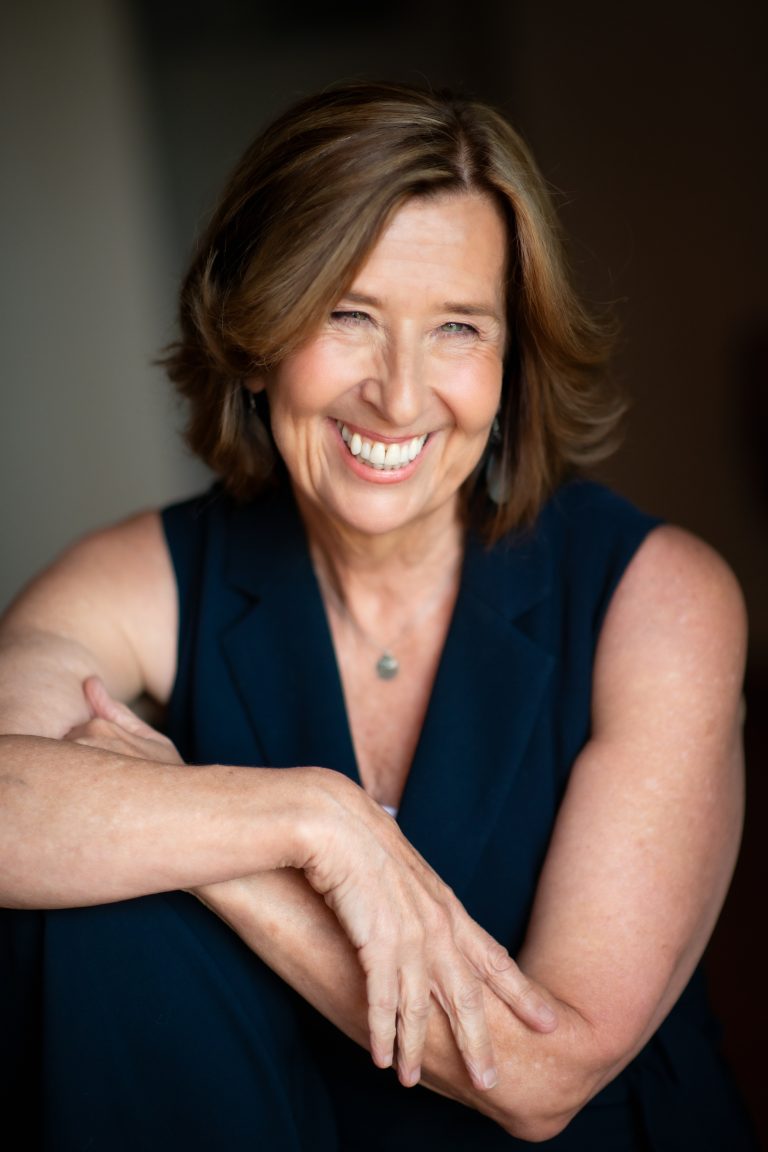
KATHRYN HEYMAN is the author of seven novels, including Circle of Wonders, published by HarperCollins in April 2026. She has won numerous awards including an Arts Council of England Writers Award, the Wingate and the Southern Arts Awards, and been nominated for the Orange Prize, the Scottish Writer of the Year Award, the Edinburgh Fringe Critics’ Awards, the Kibble Prize, and the West Australian Premier’s Book Awards. Her radio plays for BBC Radio include adaptations of her own work.
Dr Kathryn Heyman has taught writing for many years, including as Scottish Arts Council Writing Fellow for the University of Glasgow, and teaching fiction and poetry for the University of Oxford. From 2011 – 2013, she was the Senior Judge for the New South Wales Premier’s Literary Awards, and an advisor to the awards team in 2016. Kathryn Heyman was the founding director of the fiction program for Faber Academy Australia, and is the director of the Australian Writers Mentoring Program. Since 2016 she has been Honorary Professor of Humanities at the University of Newcastle. Kathryn was awarded the CAL Author Fellowship for work on her memoir, Fury.
Want to learn more about Kathryn Heyman? Click here.
Episode transcript
Gabriella Kelly-Davies
You’ve said that sometimes fiction can get to a more profoundly truthful place than memoir. I’d love you to explain this idea to us.
Kathryn Heyman
The sort of care that we might take as memoirists—or even as biographers—to get the facts right is appropriate care. Fact-checking is part of the job. But sometimes that means the nuance of emotional truth, of felt reality—and those two things have equal weight: reality and felt—gets missed. Removing the duty to external circumstances can allow that emotional, felt experience to come closer and therefore to be more true.
Gabriella Kelly-Davies
Hello, I’m Gabriella Kelly-Davies. Welcome to Season 5 of Biographers in Conversation.
In each episode, biographers chat about the multiplicity of choices they face while crafting life stories. I’d like to acknowledge Australia’s first storytellers, the Gadigal people of the Eora Nation. The Gadigal people are the traditional owners of the land from which I’m coming to you today.
You’ll find us wherever you listen to your podcasts and on our website, biographersinconversation.com. Let’s start the show.
The twenty-first-century landscape for biography is in a state of creative ferment. Experimentation is increasing, blurring boundaries between biography and other genres. Hybrid, genre-defying forms are emerging as biographers blend biography with memoir, fiction, essays, travel writing and feminist polemic. Equally, novelists are drawing on the tools of life writing to craft stories that are increasingly close to lived experience.
In this episode of Biographers in Conversation, Kathryn Heyman draws on her memoir Fury and seventh novel, Circle of Wonders, to chat with me about what it means to craft truth across multiple genres. She examines the meaning of facts and truth in literature and the formal experimentation that defines Fury and Circle of Wonders. Kathryn also explores the distinction between memoir and fiction when both are woven from lived experience. Fascinatingly, she examines why the most compelling fiction can sometimes reach a more profoundly truthful place than life writing.
Gabriella Kelly-Davies
Kathryn, welcome to Biographers in Conversation.
Kathryn Heyman
Thank you. It’s so good to be with you.
Gabriella Kelly-Davies
And congratulations on the critical success of Circle of Wonders. It’s been incredible.
Kathryn Heyman
Thank you. Yes, it’s been nice. It’s landed nicely.
Gabriella Kelly-Davies
Please introduce us to Circle of Wonders and Fury.
Kathryn Heyman
Well, let’s start with Circle of Wonders, because that’s the book most recently out. It’s a novel about a group of women who come together in the Blue Mountains, on the edge of Sydney, over one charged lunar month. They circle and protect their friend, sister and mother, Roni Bloom, as she is nose to nose, breath to breath, with the end of her life.
Roni is one of those people who has always lived searching for her bliss but never quite finding it. She has lived a flawed life, as we all have. Now, at the end of her life, she is grappling with what that means and what forgiveness might be possible. Her circle of women gather to help her, as she puts it, live a good death when she hasn’t lived a good life.
Fury was my eighth book and my first memoir. It’s about a year in my life as a young woman when I ran away to sea, basically, after a series of traumas culminating in a traumatic sexual assault trial. I ran as far away as I could with few resources and became a deckhand on a trawler in the Timor Sea during the worst season that, at the time, the Gulf had ever known. That experience of being at sea with five men was my salvation.
Gabriella Kelly-Davies
It was an extraordinary book. I thought you were so brave to go out there. Circle of Wonders draws on your sister’s death and began as nonfiction before morphing into fiction. How and why did this transformation occur?
Kathryn Heyman
I would say that it is very much informed by my sister’s death, more than by her life. In 2020, in that brief period between lockdowns—which is important because it affected how this experience played out—my mother and my sister both died in the same month, in the same town.
In the midst of that intense, devastating and distressing month of moving between caring for these two women, I found that I was experiencing a heightened awareness, a heightened sense of luminosity—what I thought of, and still think of, as a sort of radiant intensity. It was distressing and also really beautiful. Someone used the phrase “a thinning of the portal”. It felt as though I was standing on the edge of something. In the novel, I refer to standing at the volcanic edge. That was my experience: it was a moment when everything was clear, when I could see with a kind of intensity.
I started speaking with death doulas, who act effectively as midwives at the end of life. It’s fascinating. I think it’s a fairly new role. As I started to think about this extraordinary thinning of the portal, I wanted to know more. Was this just me? Was this something that happens? Many of these death doulas, who help people approach the end of life, talked about the same thing I had experienced: for the people surrounding the person who is dying, there is often this sharpening of vision. I wanted to write something that really captured that feeling.
When my sister was dying, she had lived a flawed life—again, as we all have; who among us hasn’t? As with Roni in the novel, my sister had the gift of friendship. She did friendship really, really well. Among many things she did less well, she did that incredibly well. She was indeed circled by a group of women and, if you like, protected as she died—protected from an ex-partner and allowed to have the death she wanted.
I began by writing something memoir-focused about that lived experience. It became clear to me very quickly that what I wanted to write about was both the shift from isolated separation to connection and community, and this thinning of the portal. To do that, I understood that it wasn’t one person’s story. It had to be an ensemble, a group piece—almost a choral piece, in which there are individual voices and then, at the moment of most profound beauty, everything comes together musically. I wanted that sense of “now we are one”. To achieve that, it had to have many voices.
Once I made the decision to use many voices, I could no longer do it as memoir because I no longer owned the story. It was no longer being told through the filter of my experience. I didn’t have the ethical right to take someone else’s story and do with it what I needed to do creatively to reach the emotional place I wanted to reach.
The moment it became fiction felt enormously freeing, but then a whole other set of problems emerged. How could I create the feeling I wanted to create? I wanted readers to experience the shift from disconnection to connection, from isolation to community, and from cloudiness to clarity. I wanted them to experience the moment of “I can see everything now”.
We don’t get many such moments in life. For my money, I think we get them, if we’re lucky, at moments of birth and death. Not everyone, not always—and, as they say, user experience may vary—but if we’re lucky. I wanted the reader to experience the profound solace, hope and wonder that I had experienced. I wanted to share that and gift it, and memoir was not going to do it.
Gabriella Kelly-Davies
How long into the writing journey did you make that transition? Did it happen very early in your process, or later?
Kathryn Heyman
It’s funny, because when you write a book, the story of how you wrote it becomes its own story.
Gabriella Kelly-Davies
That’s right.
Kathryn Heyman
And it becomes its own fiction, actually. The novel is set around a lunar cycle and structured around the waxing and waning of the moon. In early interviews, I had been saying—and believed—that I found the structure about halfway through.
Recently, I went back and looked at video footage of myself at a retreat centre ten weeks after my sister died. It became clear to me that, ten weeks after she died, almost to the day, I went to a convent—not to write, as I usually do; I spend a lot of time in convents—but to rest, recover and be restored. At one point, I went to the chapel with a bunch of cards and journals. Obviously, my way of finding solace is through writing, so I intended to do some journalling to make sense of things for myself. The caveat is that I knew by then that I was writing something. I knew from very early on that I would write about it, but I was trying to heal something.
In the midst of that, a structure came to me. Creating that structure became my prayer. That’s when it became a novel, so I can mark it to that day, ten weeks after my sister died. I had started writing it as memoir a week after she died, to be honest, which may sound unwise or callous. It may sound a little like Graham Greene’s aphorism that a writer must have a splinter of ice in the heart, which I don’t actually hold with. I think it is almost the opposite: that a writer has a fire, or something so tender, that they must capture what has occurred.
For me, it was always going to be something, and I had spoken to my sister about that. It became a novel ten weeks after she died, which I now think was early. I think that timing was great for the book. It is one reason the novel has an intensity and a structural or formal experimentation that people have commented on: it was being birthed as I was recovering. But I don’t think it was the best thing for me as a person, as a sister. Do you know what I mean? It was good for the book but not so good for me. In terms of my personal grieving, was it the wisest thing?
I wasn’t making the decision based on wisdom. I was making the decision like an animal, simply moving towards the heat.
Gabriella Kelly-Davies
You’ve written that facts are not truth, though they’re part of it. How do you define truth and facts, and what is the critical distinction between them?
Kathryn Heyman
I should say that I wasn’t the first person to say that. William Faulkner said facts and truth are not the same. I’m referring to emotional truth: the way we can change the facts of something—we can change the circumstances, certainly in fiction—to create something that strikes a truer emotional tenor and conveys more closely the emotions the writer is trying to reach.
I’m also talking personally about an experience I think we’ve all had in families: arguing about the facts of a situation or about events. “No, that can’t be right because it happened on this day,” or, “That’s absolutely not the case. You’re infuriating. How could you even think that? I know it’s not true because I was wearing the green dress and you said that.” You can tell that I grew up with a lot of sisters, right?
Those often become the places where we argue and debate. Again, it’s something I play out in Circle of Wonders, born of sisterly experience: the way we hang on to “I know you were wrong. You’re a great big liar because that was a Monday, and I know that’s the case because I never worked on a Monday,” or whatever it might be. None of those things gets to the truth that this hurtful thing occurred, or that we have been at each other for twenty years, or that I fell in love. Those things are true and have nothing to do with the facts; often, they contradict the facts.
Gabriella Kelly-Davies
Do you think we have different truths based on how we interpret the facts?
Kathryn Heyman
I think there’s a great deal of neuroscience that says this is not just my opinion: we actually experience reality differently. I always have a little headline in my head: “Science finally catches up with what novelists have known forever.” Science now understands what novelists have always known, which is that we live reality differently; our experience of truth is literally different.
When we have those arguments and debates, and experience that incredible frustration where we’re tearing our hair out and thinking, “How can you possibly think that? I know it was this other thing,” quite often we are reflecting an actual lived difference. Our reality is literally different. I think that’s mind-blowing, but I also think that’s what novelists have been reflecting on, certainly since Flaubert.
Gabriella Kelly-Davies
Yes, that’s right. You’ve said that sometimes fiction can get to a more profoundly truthful place than memoir. I’d love you to explain this idea to us.
Kathryn Heyman
I think that, in certain kinds of memoir, there can be a great—I wanted to use the word “defensiveness”, but it feels too judgemental. I don’t literally mean defensiveness, but the sort of care that we might take as memoirists—or even as biographers—to get the facts right. That’s appropriate care. Fact-checking is part of the job. But sometimes that means the nuance of emotional truth, the felt reality—and those two things have equal weight: reality and felt—gets missed.
When we line up a set of facts—if I say, “At 10.00 am, I woke up and had a cup of coffee. At 10.15, I walked outside and sat on the grass. At 10.30, I listened to my Argentinian neighbours shouting about the game”—that gives you a set of events. It doesn’t give you the nuance, the felt experience, of my morning.
I think fiction can allow us deeper in. Of course, the French have been doing autofiction forever—and not just the French; autofiction is a relatively new term. But that idea allows fiction to be more interested in the concerns of the inner world. I think that removing some facts—the duty to external circumstances—can allow the emotional, felt experience to come closer and therefore be more true.
Gabriella Kelly-Davies
You’ve described wanting Circle of Wonders to be about presence, attention, wonder and immediacy rather than grief. What are presence, attention and wonder, and why are they essential elements of all literary forms?
Kathryn Heyman
Whoa! That’s a very big question. When I said that, I was partly responding to conversations about grief. Grief is very much about—okay, I’m going to make some statements that I hope won’t sound too definitive or grandiose, and I may disagree with myself in three months; who knows?
I feel at the moment that grief is about the past and the future. We grieve because this thing that we had has gone, or the thing we wanted will never be. A kind of counter to grief is being present now. That is incredibly simplistic, because in this “now” I want my beloved to be with me. But there is something about “I am here”, which I think is the most fundamental call of the human heart, that is a sort of counter to grief.
I don’t mean a fix, because I’m not sure grief is something to be fixed. I think it is something to be lived with. I’m making the shape of a circle with my hands, and I see it as being another part of the whole.
For me, when I talk about attention and presence, I’m actually talking about wonder. I chose that word very deliberately. It captures curiosity, but a curiosity focused on attention, which is the writer’s most fundamental job: to pay attention, literally to attempt to attend to the moment—to attend to the now. For me, in that space we find creative curiosity, as well as the awe and delight that can provide—not a removal of grief, but a counter to grief; a kind of balm, I suppose.
Gabriella Kelly-Davies
You’ve talked about Circle of Wonders being structured as a circle, with the last breath connecting to the first breath in a continuing sentence. As you mentioned, the chapters also follow the lunar cycle. What drew you to a circular rather than a linear form, and why did you follow the lunar cycle?
Kathryn Heyman
The writing process was unlike any other writing experience I’ve had. I don’t want to suggest that things were not decisions. There was a lot of grappling, thinking and, literally, pacing. But much of it was also deeply felt and intuitive. As I said, it was a little like an animal: this is what it is. The circular form was one of those things. There was no discussion to be had. Some of that is intellectual and some intuitive.
I wanted to create a strong feeling that all time is now. Again, that is also intellectual. I was writing about time and the impossibility of being in the present—not as an exhortation, but as a celebration of the moments in which we are present. There’s also a sense that all time is now. I think that is a philosophical position I hold, and I wanted to capture it.
What structure most creates that sense that every ending is a beginning? The first and last pages came to me—or certainly the first line. I wrote the last page first; it was the first thing I wrote. That hasn’t changed. Then I wrote the first line.
I felt sure about having the sense of a circle, but I also thought: how do I create narrative momentum, which we need when we’re reading? I had set myself a problem. Readers know that Roni will die, so how do I create narrative momentum? How do I create propulsion? I had a technical problem. I had to create or find the narrative questions that would create momentum. What is it that we don’t know? What are we waiting for? What is the question?
I hadn’t been sleeping, unsurprisingly. I had just spent a month—we did, as is the case in the novel, work in shifts and care for my sister, and I was also caring for my mother with another sister. There was a lot of disrupted sleep and time. Somewhere in that, I was looking up at the moon. From memory, it may have been a final crescent, with the sense that tomorrow it would be a black moon, a new moon. Even the fact that they are both—that a black moon is the end and also the beginning of the cycle—I found, and still find, enormously comforting. Whatever else is going on, it just continues. I can’t do anything about it. I think I was literally drawing on that very personal solace.
Gabriella Kelly-Davies
I think our subconscious is always trying to solve puzzles that we might not consciously recognise at the time. When sudden realisations come, we feel in our bones that they are the right decisions. But I think they often come from our subconscious processing and processing while we are awake and asleep. That’s why these revelations come to us.
Kathryn Heyman
Absolutely. And there’s something about simply allowing that to happen.
Gabriella Kelly-Davies
You’ve mentioned this already. When you write about real people in your life, how do you reconcile your ethical obligations to them?
Kathryn Heyman
With Fury, I did a combination of things. I anonymised people who might have been identifiable. Because so much time had passed—I was writing Fury thirty years after the events—I tried to find some of the people I’d been on the trawler with, all of whom, I would say, I write about with a great deal of love, even the villain of the piece. But they were untraceable.
For people who might have been identifiable—for instance, my friend—I merged several people. The person I refer to in Fury as Sylvie, my closest friend, who comes through from high school into that period of life before I disappear to sea, was really a merging of two people, possibly with another person. Then I changed anything I thought might have made her clearly identifiable.
That said, I sent the manuscript to the main person—not to the two others who might also have been recognised. With other people in Fury, such as my family, I refer to my sisters almost in the third person plural: “the sisters”. That was also a true experience for me as a younger child in a big family—a sense that there was this group, all older, and then there was me. It felt emotionally true and also meant that no one could really be identified. Of course, people who know my sisters know they’re my sisters, whether or not they have the same names.
I also felt that it was my story. Honestly, if they had said to me, “How dare you?”, I would have said, “You are free to write your own memoir. Go ahead.” On and off the page, I acknowledged: this is my experience; this is how I experienced, remember and recall this. I made it explicit that this was the filter through which the story was told. That’s how I dealt with it.
With the novel—well, again, it’s a novel. When my sister was dying, I was sitting by her bed making notes. Of the people in the novel, Roni, the woman who is dying, is probably the closest in character to a real person in the real situation. My sister was funny. She said, “Are you expecting to get a book out of this?” I said, “Yes. I’m spending a lot of time here and I’m not in the world, so yes, I’m expecting to get a book out of it.”
We had that conversation when I thought it might be a memoir. I also had the conversation with those most affected by the situation, though I’ll keep their identities private. When it became clear that it was fiction, I told them, “Look, it’s actually fiction now.”
One of my sisters, to whom the book is dedicated, read it and said, “Where am I?” I said, “Look, it has gone through so many iterations. It really is fiction. I’m sorry. It’s not that you’re not interesting—you’re super interesting—but you’re not in it anymore. These people are invented now.”
Gabriella Kelly-Davies
How do you think about ethics in fiction—even fiction drawn from truth?
Kathryn Heyman
It’s shifty, isn’t it? There’s the famous example of Proust, who I would say was pretty shameless, frankly. A woman whom he had written about took him to task, and he said, “It’s fiction.” The woman replied, “She literally lives on my street.” She may even have had the same name—I can’t remember—but there was no disguise going on. Proust was perhaps a particular extreme of how that all played out.
For me, it involves having those conversations, but also being clear about what is my imaginative territory and what is my imaginative responsibility.
Gabriella Kelly-Davies
In closing, what advice would you offer authors wrestling with whether to craft biography, memoir, fiction or a combination of these forms?
Kathryn Heyman
Allow yourself to write as it arrives. Remove the restrictions if they are unhelpful, then become clear about the category later. That’s one possibility if the question is freezing your writing process.
If you’re writing something you think is memoir and you’re stuck because it didn’t happen in a particular way, try something different. Try thinking of it as fiction and see where that leads you. At the end of the process, you can decide: do I sell this as fiction? How much fiction do I allow it to become?
If you’re writing fiction informed by a true story and find yourself stuck, change a fact that may allow you to reach something more emotionally true. I mean really simple things: change the protagonist’s gender or age; change how many siblings they have; change the city or town where they live. Move those pieces around, because you may find that you are freed to tell the truth—which is the job.
If you’re writing biography, that has a set of—I am not a biographer. I think real biography is almost an academic skill and requires the same academic rigour as any other form of academic writing. Understand that it is not fiction; it does different work. For the most part—and I’m sorry to say this; I can feel the biographers coming for me—it will not do the work of a novel. It will not take you to a deep, emotional, felt truth. It is not transformative in the same way. It does a different job.
That isn’t to say a well-crafted biography can’t have moments of transformation, provide a narrative or inspire powerful feelings, but it does different work. Allowing it to do that means you can really do the work of biography, which is to reach the external truth. Your job is not to imagine. That’s the novelist’s job.
The memoirist is somewhere in between, right? I would say to a memoirist: remember that it is a literary form and you have permission to tell your story. To paraphrase Elizabeth Gilbert: I’ve written you a note. Here’s your permission note. You have my permission. You can write your story. It’s yours. Go ahead and do it however you want. Remember that it is literary, so you can tell it the way you want to tell it.
Gabriella Kelly-Davies
Many biographers today see themselves as storytellers first and foremost. They marry the tools of the novelist with corroborated evidence. That’s a trend that has really taken off in recent decades, and it’s so exciting to read biographies that read like novels. They’re incredible.
Kathryn Heyman
Yes, I think that’s a longer conversation. I’m not getting involved in that argument!
Gabriella Kelly-Davies
Kathryn, thank you so much for chatting with us about Circle of Wonders and Fury. Across both books, you refuse the simplistic opposition of truth and invention. Facts matter, but they’re only the beginning. The deeper task is to find the form that can bear the weight of lived experience.
Your writing suggests that the question is not whether we’re writing biography, memoir or fiction, but whether we’re telling the truest story we can in the form that best suits it. Thank you so much.
Kathryn Heyman
Thank you so much, Gabriella. It’s been a delight.
Gabriella Kelly-Davies
Thank you for listening to Biographers in Conversation. Special thanks to my producer, Andy Marr; web manager, Dylan Hamilton-Foster; and Sunny Nardidale for the music.
We’d love you to take a moment to rate the show on the website, across social media, on Apple Podcasts, Spotify or wherever you find your podcasts. If you enjoyed this conversation, please share it with your family and friends and on social media.
To discover more about my guests and their books, head to their show pages on biographersinconversation.com. There you’ll find all our episodes and ways of getting in touch with us.
I’m looking forward to our next conversation about the choices every biographer faces. I hope you are too.