





In this episode of Biographers in Conversation, the literary critic and biographer Dr Susan Lever OAM, chats with Dr Gabriella Kelly-Davies about her choices while crafting A.D. Hope: A Life.
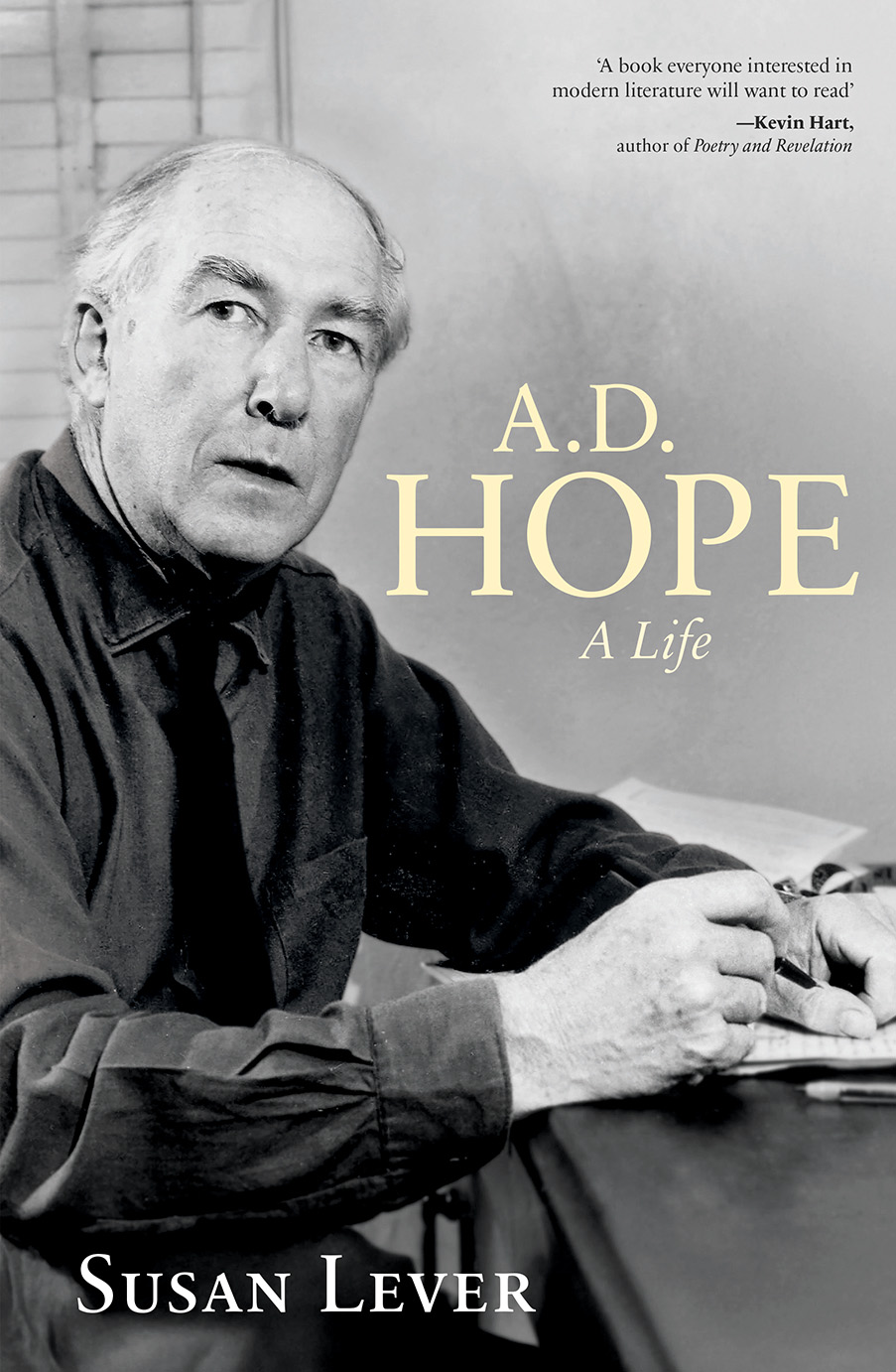
A.D. Hope: A Life
A.D. Hope: A Life is the first full biography of one of Australia’s most celebrated and contested poets. During her research, Lever grew alarmed at the way Hope had been reduced to a caricature known for three or four poems rather than the entire range of his creative oeuvre. She observed how the poet had been dismissed through a single critical lens she considers a serious misreading. The answer to Lever’s central research question, ‘Does the life illuminate the poetry?’ was a resounding: ‘Yes, it shaped everything.’
Preserving contradictions
Lever came to this project convinced that Hope’s mythological and classical subject matter had little to do with his conservative, suburban, Canberra existence as a husband and father. In the archives, she discovered something far more intimate: that Hope’s poetry was how he thought and that his inner life was hiding in plain sight within the verse itself.
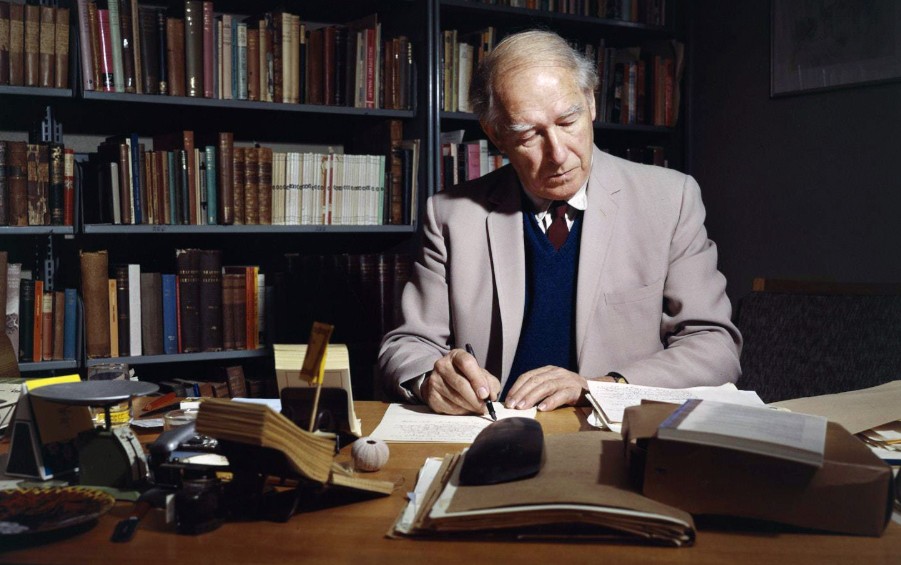
A.D. Hope in 1971, National Archives of Australia.
Lever navigated the famous complexity of Hope’s character with care. She knew him personally from her years at the Australian National University in the 1980s: the witty, generous, quietly private man who crafted letters full of warmth and wry self-deprecation. But she was equally alert to the other Hope: the satirist with a ‘streak of cruelty’ and the sensualist perpetually at odds with his Calvinist upbringing. ‘The disjunction between his Calvinist upbringing and sensual appetites’, she reads from the biography’s opening pages, ‘may be read in the contrast between the disciplined form of his poetry and its subjects and imagery’.
What affects his poetry is his habit of falling in love with women
Lever is measured on the question of Hope’s extramarital relationships and the ethical challenges they posed. ‘I don’t believe gossip is a reliable form of biographical information’, she insists. With living relatives including Hope’s son and grandchildren, she chose to name only what she could confirm, not because she was timid, but because, as she argues: ‘If the two people involved don’t tell you, then you haven’t got the right to say it happened.’
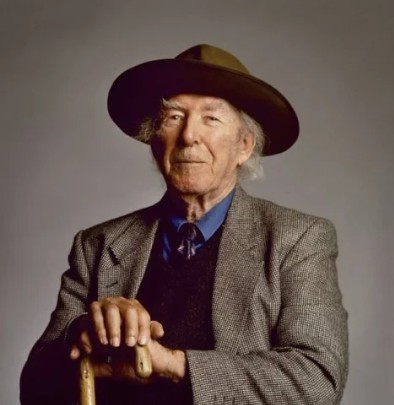
A.D. Hope
The archival challenges Lever encountered were considerable. Hope’s archive at the National Library of Australia holds more than 100 boxes, many still under embargo. Tragically, a 1953 fire destroyed a sizeable portion of his early manuscripts. However, scattered across the papers of Donald Horne, James McAuley and Gwen Harwood, Lever found the liveliest letters, full of the wit and intellectual playfulness that define Hope at his best.
Lever’s guiding principle was that a literary biography must serve the writing, not eclipse it. ‘A literary biographer can destroy a writer’, she warns. Her own ambition was the opposite: to attract readers back to Hope’s poetry, with fresh eyes and a fuller understanding of the human being who wrote it.
Praise for A.D. Hope: A Life
‘... a book everyone interested in modern literature will want to read.’
—Kevin Hart, author of Poetry and Revelation.
‘In this highly engaging biography, Susan Lever provides invaluable insight into one of Australia’s most important cultural figures, revealing A. D. Hope to be a poet of complexity, a generous promoter of other writers and an early advocate of Australian literary studies. This finely-researched book should generate much-needed fresh readings of Hope and his work’,
—Ann Vickery, editor of The Cambridge Companion to Australian Poetry.
‘Unsensational and clear-eyed.’
—The Saturday Paper.
‘[A.D. Hope] offers a study that is at once patient, exacting, and, at moments, quietly provocative.’
—Australian Book Review.
‘[Lever] provides invaluable insight into one of Australia’s most important cultural figures.’ —Rama Gaind, PS News.
A.D. Hope: A Life Interviews and Media Coverage
Susan Lever on A.D. Hope: A Life
Meet The Author
‘Grammarian of the real’
The making of poet A.D. Hope, Australian literary giant,
Late Night Live, Radio National.
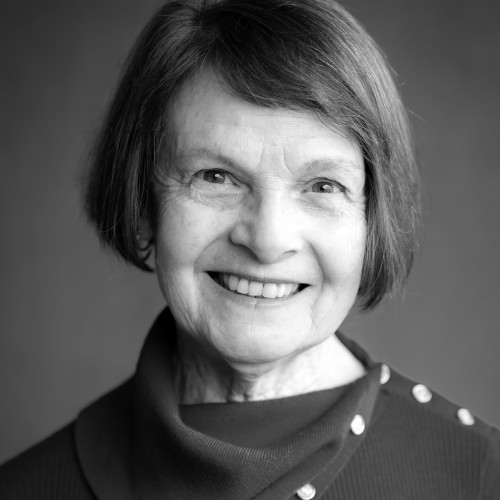
Photo credit: Georgie Greene
Susan Lever taught literature for many years at the University of New South Wales, Canberra, and she is the author and editor of several books, including The Oxford Book of Australian Women’s Verse and A Question of Commitment: Australian Literature in the Twenty Years after the War.
Episode transcript
Opening extract
Gabriella Kelly-Davies: What ethical choices did you make regarding his extramarital affairs, given that he and many of his former lovers have living relatives?
Susan Lever: This is one of the things raised in the Australian Book Review: that I’m timid and not frank about things. Well, I don’t believe that gossip is a reliable form of biographical information. But there are people alive: his son is alive, his grandchildren are alive, his daughter-in-law.
One woman talked to me about her relationship with him, which was sort of sexual, but she wasn’t going to be named. Why should she be? She just wanted me to understand the nature of his sexuality and the way he behaved.
Anyway, it doesn’t affect the poetry. What affects the poetry is his desire for women, his habit of falling in love with them and his enthusiasm for them, because that comes into the poetry.
Introduction
Gabriella Kelly-Davies: Hello, I’m Gabriella Kelly-Davies. Welcome to Season 5 of Biographers in Conversation.
In each episode, biographers chat about the multiplicity of choices they face while crafting life stories. I’d like to acknowledge Australia’s first storytellers, the Gadigal people of the Eora Nation. The Gadigal people are the traditional owners of the land from which I’m coming to you today.
You’ll find us wherever you listen to your podcasts and on our website, biographersinconversation.com. Let’s start the show.
In this episode of Biographers in Conversation, Susan Lever chats with me about her choices while crafting A.D. Hope: A Life. This is the first full biography of Alec Derwent Hope, one of Australia’s most influential and controversial poets. During the 1960s, Hope’s cerebral, formal and, at times, satirical verse was celebrated. However, when poetic fashion moved on, it left him behind, and new generations viewed his poetry as old-fashioned.
Susan, welcome to Biographers in Conversation.
Susan Lever: Thank you.
Gabriella Kelly-Davies: Congratulations on the critical success of A.D. Hope: A Life.
Susan Lever: Yes, I’m very pleased about it. I’m quite surprised. It’s lovely.
Gabriella Kelly-Davies: It’s so good. And the reviews are excellent. They’re really a joy to read because they went into such great depth.
Susan Lever: Yes, I was beginning to think that they were making my book seem a little more intellectual than it actually is, because I really hoped that general readers would find it approachable when I wrote it. But these very learned people are finding things there that I didn’t know I’d written.
Why write Hope’s biography?
Gabriella Kelly-Davies: It’s still accessible for a general reader, so I wouldn’t worry about that. What inspired you to craft this biography?
Susan Lever: Look, I was a friend of Alec’s back in the 1980s. When I worked at ANU, I became friends with him about 1984, and I was friends with him for about six or seven years.
I was one of the people who grew up reading him at school, and he was the great poet that I happened to know. I knew that there were biographers at work, and I expected somebody to write the biography. But 25 years have gone by since he died, and no one has.
He’s now being, I think, maligned a lot. “A caricature” is the term that somebody used in one of the reviews. He’s become a kind of cartoon version of himself in the general memory and, even among literary scholars, is known for about three or four poems instead of the full range of his work.
I waited and waited. I did ask David Brooks several times whether he would write it, but he said, “I’ve got other things to write. I think you’d better do it, Susan.” So I did.
I was very tentative. I’d never written a biography before, so I didn’t tell anyone that I was looking around the archives for some time, because I didn’t know whether I could do it, really, and whether I’d be interested enough.
This is a man who lived a very ordinary life in the suburbs. Was there going to be enough to say about someone? Writers sit at desks; they don’t do adventurous things. So that was one part of it: was there going to be a book’s worth of interesting things there? The second part was whether I could do it. But I’ve done it.
Learning to shape a biography
Gabriella Kelly-Davies: Well done, and you did a great job. I just want to go back to that idea that you’d never written a biography before. How did you learn how to write a biography, and did not having written one give you a certain freedom to experiment and do what came naturally to you?
Susan Lever: Well, the first thing was that nobody else had written a biography of Alec. So I felt my duty, in the first place, was trying to get the chronology: what happened when.
People kept saying, “Oh, look, there are all these wonderful new subjective biographies and fictional biographies and all these other modes.” And I thought, “Well, I can’t. I’ve got to just do a workmanlike thing.”
I have several friends who are biographers, and I asked their advice. Several of them, like Judy Brett and Bernadette Brennan, gave me good advice about how they were approaching it.
Chronology is one thing, but it’s pretty dull as a way of writing a biography. Bernadette said, “Well, you’ve really got to make the reader want to read on. You’ve got to contract with the reader.” I had that in mind: I had to start shaping it. It couldn’t just be a chronology. I had to shape it so that it focused on different things in each chapter and led on to something.
Likewise, Judy Brett was extremely good because she’s not a literary critic. She’s a political historian. She just said, “Look, you’ve got to understand the audience won’t know as much as you, and you have to actually think about them all the time.”
So they were the two great bits of advice I got from friends. Away I went, really.
Gabriella Kelly-Davies: And they’re great biographers, both of them.
Susan Lever: Oh yes, and really good friends. Good friends are the people who tell you what you got wrong and how you need to revise this or that, I think. So I’m really lucky to have friends like that.
Writing about a friend without creating a saint
Gabriella Kelly-Davies: As you’ve mentioned, you and Hope were good friends. How did you maintain a biographer’s independence to prevent crafting a hagiography?
Susan Lever: That’s a really interesting question, Gabriella. I didn’t want to write a hagiography, and there were moments when I thought he was Saint Alec.
I didn’t put in the numerous times he gave other people money. He rescued his younger sister when her husband abandoned her. He rescued William Hart-Smith when he didn’t have the money for his rent. He was constantly giving money away to people who he thought were in trouble.
I thought, “I can’t put that stuff in because that turns him into Saint Alec.” He wasn’t a saint, and he wouldn’t have wanted to be seen as one.
But what I had in mind was: what is the point of writing this biography? The point is, he was a poet. He wrote poetry. That’s the only reason that people should want to know about him, so I kept that in mind. I’m a critic. I can say critical things about poetry when I need to. Some of the poems are better than others.
I have read a number of biographies of late that have made me not like the subject that I liked before I read the biography. The biography of Sylvia Plath, which is 1,500 pages long, left me thinking she was a drama queen. It destroyed the poem “Tulips” for me because she wrote it when she had appendicitis. Sorry, that didn’t justify the drama in that poem. I’m a very practical person.
So I didn’t want to do that to him. I didn’t want someone to finish reading this book and say, “Well, I’m glad I don’t read his poetry.” Now, that might lead to hagiography, but because I think I could be critical about the poetry as well as putting it in context, I think I avoided it. I hope so, anyway.
Gabriella Kelly-Davies: It didn’t read as a hagiography. What truth about Hope were you driven to uncover?
Susan Lever: Of course, I knew him as the funny, polite, witty, quiet man who was generous to everyone he knew, really. And, of course, I had to deal with some of that undergraduate humour that he still had in his thirties: that kind of smart-arse stuff those clever graduates would write. That was what was revealed, really.
One of the interesting things, I think, is that his complexity is even in the poetry. The polite man’s there. It’s also in the reviews, I might say, in the satirical reviewing he did. There’s the polite man here and this really clever, really smart person.
So there’s the personal and the written, and the written is where the interior life is on display, I think. I think he wrote poetry as a way of thinking.
He cut things out of his notebooks. He destroyed all the letters from his lovers and blocked out their names. We don’t know about his relationship with his wife, et cetera. But what we have got is this amazingly internal thing, which is his poetry, which was how he thought. So that’s what I think I had to bring together.
I found lots of odd little things. His involvement in sex education in the early thirties was a revelation. He fell in love so quickly with people like Glen Tomasetti and Fay Zwicky. But he was always in love, really. It helped him write.
Gabriella Kelly-Davies: It gave him the raw material to write, didn’t it?
Susan Lever: Yes, but Marion Halligan has a little cameo of a person like him in one of her novels. She talks about how he writes love poetry, but it’s really about him being in love, not about the person he’s in love with. I think that was part of it. Being in love was part of how he wrote and how he felt creative.
I had a letter too, late in the piece.
Gabriella Kelly-Davies: He sent you a love letter.
Susan Lever: It wasn’t a love letter. It was about 1989, and I was in America on study leave. He said, “Come back. I need you.” His wife had died. He was alone at that point, and he said, “I can’t go to Manning Clark’s for dinner every night of the week. I need you to come back.”
Gabriella Kelly-Davies: That’s actually a lovely insight into a person. I like that.
Choosing the title: a suburban Dionysus
Gabriella Kelly-Davies: Why did you choose A.D. Hope: A Life as the title?
Susan Lever: Well, the publisher chose it. My working title had been Suburban Dionysus, and I kept that as my private working title because I think that fits him. He lived in the suburbs, living an ordinary life, and yet he had this Dionysian kind of activity and desire for love and life and wine and good times.
But I knew no one would understand that. When I said it to people, they were just stumped. So the title I sent to the publisher was A.D. Hope: The Australian Life of a Poet.
I’m also the editor of a series of literary books, and the publishers there have always said, “You’ve got to put the name of the subject up front because people Google.” They’ll forget Suburban Dionysus or all these other titles, but they will remember it’s about A.D. Hope. So you have to have that name up front.
I was quite happy about that: just the simple A.D. Hope: A Life. The only one so far, but yes, A.D. Hope: A Life.
My title was trying to emphasise that this is one way of being an Australian. He’s constantly being called a spiritual expatriate or a Europhile or Eurocentric. But he lived in Australia. Except for those two years at Oxford University, he lived in Australia until he went overseas again in his fifties.
Everything about him was really Australian: being witty, being bawdy, being educated. You can be Australian and educated. Guess what?
Gabriella Kelly-Davies: I like simple titles.
Susan Lever: I do too. I have been baffled in the past by other people’s titles.
Wit, sensuality and the darkness in the poetry
Gabriella Kelly-Davies: In the introductory chapter, you introduce readers to Hope’s poetry. I’d love you to read these passages.
Susan Lever: “Hope accepted that a poet’s personality emerges in poetry, even if unintentionally. His writing in all forms looks to entertain his readers, full of wit and comic playfulness. It reveals his humorous perspective on life.
“Satire may be read as an expression of a personality type, clever and critical. This personality is apparent in Hope’s satires and book reviews, as he sometimes failed to hold back a streak of cruelty. His sensuality, too, is evident in his choice of language and metaphor, and it is impossible to ignore his interest in sex and desire for women.
“Hope enjoyed all the physical pleasures: music, good food, wine and whisky, and the company of friends, particularly clever and beautiful women. The disjunction between his Calvinist upbringing and his sensual appetites may be read in the contrast between the disciplined form of his poetry and its subjects and imagery.
“Critics have long noted the tension between Hope’s formally controlled poetry and its often savage content. Most readers notice the darkness under its humour and satire. Some are impressed by the poetry’s sophisticated language and reference to a vast range of classical history and canonical literature, but they also see its bleak contemporary perspective.
“Few readers can miss the way his early work confronts a harsh material reality, or its pessimism about human endeavour and the hope of love. Hope occasionally admitted that his poetry disguised his personal crises. Sensitive readers have recognised elements of guilt and shame and occasional self-disgust in poems presented as the rewriting of myths or imitations of earlier poetic styles.”
Gabriella Kelly-Davies: Thank you. What’s the significance of this excerpt?
Susan Lever: Well, I was trying to get that balance in: that he was someone who was funny and humorous, but constantly had this satirical urge in him to undermine. He hated sentimentality.
I think that sometimes people actually like sentimental poetry. I don’t. But sometimes people seem to want sentimentality to come out of poetry. They want to have a cry over it or feel sad. He’s not that poet. He’s going to undercut emotion. He’s going to be cruel sometimes.
I wanted to make that clear up front: that people saw they weren’t going to get a poet who was going to make them feel lovely feelings about nature, for example. If you think of, say, “Moschus Moschiferus”, the poem about the little deer being slaughtered, it’s a beautiful poem. It is aesthetically perfect, I think.
Yet what it is telling us is that human beings destroy things. We’re cruel. We will destroy nature for a bit of money, basically. Well, it’s our survival, but we do. We’re cruel. We cannibalise the world around us.
That’s constant in his poetry, that feeling. I think it’s important to try to help the reader understand that that’s the truth, in a way. That’s kind of brave but savage of him, to say it to us so often.
Philosophy, science and the refusal of easy answers
Gabriella Kelly-Davies: What does his savagery and cruelty in the poetry say about his character and personality?
Susan Lever: I think it’s a philosophical position. Actually, no, he wasn’t cruel personally. It comes from his early education, I think. He says he was an atheist from the age of about twelve. Was he? He was teaching Sunday school when he was nineteen for his father. He didn’t tell his father that he was an atheist until he was in his forties.
But he went to university, and John Anderson, the professor of philosophy at Sydney University, was an unbeliever. What he taught was: don’t accept religion, politics, ideologies of any kind, sentimentality, social rules. Everything has to be examined. Everything has to be questioned. You have to accept science and the material world as it is. You can’t find easy ways out.
He took that on as a rule of life, really, and that’s the intellectual approach he has. In his 1940s poetry, it means utter materialism sometimes: the poems about sex, where sex is just a physical urge, a biological urge. “Love is a slime that lubricates the way of the phallus.” It’s tough stuff, but it comes out of that kind of acceptance of science, refusal of religion and of any other kind of easy way out of things, I think.
It became a bit of a dead end for him by the end of the forties, but a lot of his most savage poetry is coming out of that. He believed in science. He thought that was the absolute thing that had to be accepted: that the material discoveries of science were real and true, and we couldn’t pretend they weren’t there. We couldn’t find nice explanations that got us out of them, basically.
Which is why, in a way, “Moschus Moschiferus” is a sort of environmentalist poem. It’s saying, “This is how humans destroy things.” He didn’t say, “This is what we’re going to do about it,” though. He didn’t have the answer.
Gabriella Kelly-Davies: Well, he was a poet, not an environmentalist.
Susan Lever: Well, he said he was a conservationist, and his son became Professor of Environmental Studies at ANU.
Gabriella Kelly-Davies: Oh, that’s interesting.
Susan Lever: So there is a family connection there.
Gabriella Kelly-Davies: How interesting.
Connecting the life, the poetry and the twentieth century
Gabriella Kelly-Davies: What was your major research question when you embarked on the project?
Susan Lever: It was really: how do the life and the poetry connect? Does the life reveal anything about the poetry? At the beginning, I didn’t think it would. I thought that poetry was so disconnected from ordinary life: writing about Ulysses or Lot’s wife or all these people he’s writing about. What relationship do they have to his life as a suburban Australian? I thought I wouldn’t find much, but I think, in the end, I did. That was really the question.
Gabriella Kelly-Davies: It’s really good to have a firm research question and then, by the end of the book, to have come to a conclusion and to some form of answer.
Susan Lever: Well, one of the things that got me going was realising that he lived through almost the entire twentieth century. He was born in 1907, so everything that happened in that century.
He was kept at school for six weeks because of the Spanish flu pandemic after the First World War. His father went to the First World War. He came back to the Depression. He lived through all those major things: the Second World War, the Cold War. They were all going on through his life.
He himself was very aware that he’d been born in the country, into a horse-and-cart kind of life. There wasn’t radio in 1907 or 1910 or 1915, even. He writes about riding in a car when he was in England in the late twenties and going to the talking movies. He wrote back to his mother saying, “I’ve just seen a talking picture. You’d be better looking at the British ones because their voices aren’t as annoying as the American ones,” that sort of thing.
So he’s living through all that, and he’s very consciously aware of the technological changes going on around him, how vast they are and how they must be affecting everyone.
That was one of the strands. The other, of course, is what’s going on in his personal life. The two strands, really: the bigger picture of the whole world and the little picture of Alec, what job he had, what he was doing, what he was writing and so on.
Finding the life in letters and notebooks
Gabriella Kelly-Davies: Hope’s archive in the National Library of Australia contains more than 100 boxes of documents. Which sources were most revealing?
Susan Lever: I didn’t read them all. That’s what I’ll say first. I haven’t got that much life in me left to do that.
Look, I realised pretty quickly that the letters were the key: the letters and the notebooks. Quite a lot of them aren’t even available to researchers still, unfortunately. There are still embargoes. Those papers are a mess in terms of what you’re allowed to read and what you aren’t. Every time I went to the library, they seemed to have different rules about what I could look at.
Most of the others are lecture notes, things that end up being published in one form or another, which I could read. His published work was fine. Other scholars can go in and look at the variations on individual poems: where did he put his punctuation the first time, the third time, that sort of stuff. So it was the liveliness of the letters that really got me.
Now, one of the things that happened to him was that, in 1953, his office was burnt down at Canberra University College. There was a fire, and he lost all his manuscripts and lecture notes and so on. So there is that gap.
The great thing for me was that a friend said, “Oh, you’d better read Donald Horne’s autobiographical trilogy.” I’d read it. “You’d better read it again because Hope appears there.” I’d read it so long ago that I didn’t realise this.
But Donald Horne kept every letter that anyone sent him. It’s a massive archive in the State Library of New South Wales. Fantastic. So there are these wonderful letters from Alec in Donald Horne’s papers. And, of course, there are wonderful letters from Alec in James McAuley’s papers. There are wonderful letters from Alec in Gwen Harwood’s papers.
He hasn’t got the letters from those people, or he has some of them, but not that many. In a funny way, the fact that other people kept his papers was the important thing, not him, apart from the notebooks, that is. He kept the notebooks.
His parents kept his letters from Oxford. Jill Hellyer, who wrote to him for twenty years, kept all his letters and deposited them in the library. Hilary Webster, her daughter, realised that her mother had this amazing archive of letters from Alec, and she put them in his papers. So that was what kept me going, really.
I get a bit bored by too much of that kind of textual research. I share his view about that kind of research a bit. Burrowing through the archives, it’s not me, which is one of the reasons I was a bit frightened about writing it, actually.
Letters as performance, friendship and advice
Gabriella Kelly-Davies: Were his letters performative?
Susan Lever: Oh, always directed to an audience. Always. You could see he was poverty-stricken in Oxford, but he knew he couldn’t bother his parents too much, so he’s trying to joke about it all the time.
In letters to Gwen Harwood, he’s writing poems to her that are funny, sending her clippings out of a newspaper. She’s saying, “Can you cheer me up? I’m feeling down.” So he’d write a cheer-up letter.
But then, of course, when she got into trouble with the Bulletin, when she had those acrostic sonnets published in the Bulletin under pseudonyms and people realised she was the one, she then turned to him for support. He wrote her really serious letters. She couldn’t trust Donald Horne, he said. “This is what you’ve got to do. Don’t talk to the journalist. Don’t do this. Keep quiet.”
It’s a very serious letter. So that’s the sort of performance: some people he knew needed him to give them advice and help.
Some of the letters to Vincent Buckley are like that too. Amazingly frank letters, the ones to Buckley: “You’re spending too much time socialising with students, and your colleagues don’t like that. That’s why they’re giving you the cold shoulder.” Really fatherly advice. So yes, it’s directed to each recipient, really.
Gabriella Kelly-Davies: Did you ever have a sense that he was trying to curate his image through the letters?
Susan Lever: I don’t think he was that vain. He didn’t keep his own letters. What I think was that he was actually a very quiet, not introverted, but a private kind of person.
There’s one account where there was an exhibition at the National Library, and they included a letter of his that he’d sent to the president of the Poetry Society, alongside a drawing of him. When he went to the exhibition opening, he was shocked that suddenly he was this public person, that there was an image of him and his letters were on display.
I think that was what he was more worried about than anything else: that somehow his sense of privacy would be destroyed by people going into his archive. That’s an interesting thing because he knew he was a public figure, and at the same time it was uncomfortable for him to be that.
So he was self-mocking about it a lot of the time. In his notebook, he said something like, “Oh, come off it, mate. It’s not that bad. Get over it.”
Privacy and composition in the notebooks
Gabriella Kelly-Davies: As you’ve mentioned, he meticulously kept notebooks, though he was guarded about his emotional life. To what extent did he curate his archive for a future biographer? If he did curate it, how did that influence your research process and your interpretation of his character?
Susan Lever: Well, I don’t think he did curate it to that extent. I know he cut out anything personal about his affairs or the family. We can see the notebooks: they’re cut out completely.
One of the things he said in his notebook when he started was, “I know a notebook, a diary or journal of any kind, should be spontaneous. It should have the feeling of the moment. I can’t write like that. Everything I write is composition.”
So it’s a stage earlier, in a way, than curating the collection. It’s actually saying, “What I write in this notebook is composition for a potential public audience. I can’t write spontaneously, so I’m not going to.” There isn’t very much that is spontaneous.
Conversations, email and the work of remembering
Gabriella Kelly-Davies: He died in 2000, as you said, a quarter of a century before your book appeared. What role did interviews play in the research?
Susan Lever: Well, again, I feel a bit guilty, but I did a book on television drama which was based on interviews. That was the last book I wrote. They take a lot of time. They are sometimes not very useful. There are dozens of interviews with Alec himself where he tells the same stories over and over again.
I was also once on an ethics committee in the university, and I realised that if you do a formal interview, you’ve got to get the permission of the person you interview. I didn’t want that.
So my solution, and I offer it to anyone, was that I just had conversations with people, and I might take notes. If I used anything from that conversation, I would write to the person and say, “Look, I’m going to say that you said this to me. Is that what you understand that you said, and is it okay for me to say it?” They always said yes.
One of the great advantages is email, because if you email someone, as you did with questions, they have the time to think about it. Some of the best material I got was from people who had been his students or knew him. I knew they knew him, and I just said, “Can you tell me what you thought about this or that?”
In one case, I got several pages of really intimate material that I know I wouldn’t have got face-to-face or with a microphone, or certainly not with, “This is the form you’ve got to fill out.”
There were several people who were really generous. His surviving son, Andrew, didn’t want to be interviewed, and he didn’t want to meet me. So I just wrote to him and said, “Look, could you just confirm that it was a station wagon your father drove?” He came back with all of the cars, the colour, the make and what year they bought them, et cetera.
Then I said, “And what about the house you lived in, in Yarralumla?” He found a photograph of a similar house. He talked about what it was like living there when they first moved in. He gave me all this material by email, which meant he didn’t have to confront me, and we didn’t have to have the difficulties that that might have had.
So I’m just going to recommend it to anybody who’s doing a biography. Email is awfully good.
Gabriella Kelly-Davies: Yes, it is good.
Susan Lever: For people to give you detail, because then you’ve got it in front of you. When you write it up, you can just say, “Look, this is what you said. Is that okay?” And they come back.
Gabriella Kelly-Davies: That’s great. And, as you said, that gives them time to think about it. Whereas when you do an interview, it’s a top-of-mind, instantaneous reaction, and people sometimes say things just off the tip of their tongue without really thinking about it.
Susan Lever: Well, one of the things I found interviewing television writers was that they were trying to remember things that had happened decades ago. The process of talking to me made them start to think, and then, a week later, they’d remember the things that they couldn’t remember when I was talking to them.
If you’re trying to delve that deep into someone’s memory, it takes time to find it somewhere in their brain. Again, email was very useful that way. We’re talking about the sixties.
Gabriella Kelly-Davies: I often feel like it’s opening the drawers of the filing cabinet. You’ve got to give your brain time to work out which drawer it was in and find it within the drawer.
Susan Lever: Yes. There’s so much in someone’s brain after sixty years or fifty years. Also, it’s very emotional for people. A number of the people who wrote to me said, “Well, it’s taken me all day to write this. I’ve been crying,” with all these memories of what life was like fifty years ago.
It’s a difficult thing. If it’s someone you loved, and these people all loved Alec, to try to bring it back is quite a hard thing to do.
Reading the poetry through the life
Gabriella Kelly-Davies: A central challenge in literary biography is avoiding the temptation to read an author’s creative works as autobiographical. How did you navigate this issue?
Susan Lever: That was the thing. I decided that I had to not read the life through the poetry, but to read the poetry through the life. I wasn’t looking to see what the poetry told me about his life. I wanted to see what his life told me about his poetry. That’s how I navigated it, basically.
For example, he came back to Australia in October 1930, got back from Oxford having basically failed. The Depression was on. He couldn’t get a job. His father had to support him, and he’d already called on his parents to give him money while he was away. He was in a miserable state.
You think, “Well, what poems came out of that?” “The End of a Journey” was not published until decades later, but you can see this is someone writing about Ulysses coming home and finding his wife and no god left in the world. It’s all pushed out into a myth, but the emotion in it, I feel, is the emotion of someone coming back home having failed, basically.
The thirties are a bit of a mystery, his thirties, because I haven’t got letters from there. I haven’t got much material at all. The poetry changes. He writes a thing called “Saint Mary the Gypsy”, which begins to have those savage views of this female body, of the woman’s body as being both desirable and disgusting. Then he writes “The Damnation of Byron”.
So there’s this shift from this innocent graduate student to someone who’s writing about sexual desire and its problems. I thought, “Well, how did that happen? How did he change from this sort of poet to that sort of poet?”
By a miracle, I’m a friend of Frank Bongiorno’s, who wrote The Sex Lives of Australians. He casually said, “Of course, he was a director of the Institute of Family Relations in 1931 when it was set up.”
This institution was a sex-education body, trying to teach people about contraception and venereal disease, telling women what sex is, because women weren’t even allowed to know that. They’d get married, and no one had told them what was what. Here he was, at twenty-five, a director of this institution. So obviously he was suddenly involved in this sex world.
Maybe that stimulated the shift in that poetry, in “The Damnation of Byron” and “Saint Mary the Gypsy”, which is a strand of his poetry for the rest of his life. So that’s one thing.
There are other moments like that. Of course, a lot of it in the fifties is his reading for teaching. That’s not life so much, it’s reading, but it’s still there. How he adjusts something he’s read into something that’s happening around him is really interesting.
Balancing the human story and literary criticism
Gabriella Kelly-Davies: How did you balance his human story with literary criticism of his poetry?
Susan Lever: I tried not to be too critical. I wrote my PhD thesis into a book back in 1989, and Alec read it for me. At the time, he corrected my grammar and laughed at my mistakes. I was quite tough on him. I don’t like “Standardisation”, sorry. There are some of “The Brides” I don’t like either. There are some of his poems I don’t like, and I’d said so.
That’s typical of Alec, really. He read it, took this on the chin and said, “I kiss the rod.”
But I tried not to be judgemental of the life and not too judgemental in the poetry. One of the things I think I did wrong: I think those last stanzas of his most famous poem, “Australia”, aren’t as good as the first stanzas, which are brutal. I love them because they are just satire. He’s spitting out at Australia with everything he’s got.
Now, I’ve found that other people have quite the opposite view. They hate that criticism of Australia that is there: the robber state, where second-hand Europeans “pullulate” on alien shores. “A parasitic robber state”, that’s what he calls Australia. I think that’s fabulous.
So I’ve made critical comments about how I thought it was a bit of a backdown to suddenly say, “Well, maybe the prophets will come from the deserts,” that Australia might be the place where culture will happen. I thought that was just evasive.
Other people see it the opposite way. So maybe I shouldn’t have been so judgemental. Maybe I should have just left it. I am a critic, and I tried not to do too much of that. As I said, I tried not to be judgemental about him, mainly. Again, another friend said to me, “Well, I would have been more judgemental than you are.”
Gabriella Kelly-Davies: Every biographer has their own way of interpreting the evidence, and it’s really up to each biographer to decide what they have and what works best for them.
Challenging reductive readings of Hope
Susan Lever: One of my motivations in this was the number of misreadings I’ve seen of the poetry. I think they’re misreadings, but, as you say, every reader has their own reading.
The simple reading that says it’s all misogyny, for example. Well, that’s not getting anyone anywhere. It’s just dismissing and being judgemental. It’s saying that the man is a misogynist and his poetry is misogynist. It’s not helpful. It throws away some very, very beautiful and good poems by dismissing and simplifying.
One of my desires was really to fight his corner in that respect. A feminist came up to me once and said, “Oh, that terrible poem, ‘Advice to Young Ladies’, which says that women should be submissive.” I said, “No, it doesn’t say that. It says the opposite.”
How can you do that? You’ve already got a frame for reading, which you apply. The frame is: this man is a misogynist, so all his poetry is, even when it is the opposite to that. That was one of my motivations in writing the biography, really.
Gabriella Kelly-Davies: It’s happening so often nowadays.
Suburban life, sensuality and unresolved contradictions
Gabriella Kelly-Davies: A central theme in the book is the tension between Hope’s life as a family man in suburbia and his emotionally complex inner life, as you’ve mentioned. How did you reconcile his contradictions?
Susan Lever: I don’t think I did. I think I just left them there for people to see, because I think that’s part of the creativity of the man: that he’s living this life and trying to be an ordinary Canberran, but he knows he’s got this other part of him.
Andrew, his son, said to me, “Look, we had a part of the backyard so he could sunbathe naked.” And he told Glen Tomasetti how he used to go at lunchtime, he’s the professor, the dean, and dive into the bushland on Black Mountain and take his clothes off.
It wasn’t a reconciliation. He had to reconcile that somehow. He said at one point that he’s constantly being the person other people want him to be. Now, I think a lot of us do that, but he was more public about it: “I’ve got all these roles to play,” which aren’t reconcilable in any easy way.
It comes out in the poetry. I think that’s the output that he’s got, in the end, of these contradictions.
Gabriella Kelly-Davies: How did you interpret the recurring cycle of guilt, self-disgust and sense of loss in his poetry?
Susan Lever: Again, it’s not about reconciliation of those things. If you’re going to be as tough on yourself in terms of your thinking, you have to acknowledge it.
There was a very interesting interview by a woman called Teresa Mannix, who knew him quite well. She said something about how he’s too self-conscious to be a complete sensualist. He’s a sensual man, but he’s self-conscious about it.
Likewise, as an intellectual, he’s a dilettante. He’s not a specialist. He’s got those two elements in him, but he has to play the game, basically, of keeping that sensuality under control. He’s aware of it all the time.
In the poetry, that’s not intended, I don’t think, but you can feel it when you’re reading it. Some of the poetry he didn’t publish, “Private Screening” is a good example, where he’s talking really about a masturbatory fantasy and how it makes him feel. I can see why he didn’t publish it in the end.
But that’s clearly got shame and guilt in it: “This is how I am.” Or the speaker of the poem is saying, “Here I am in my thirties, and I’m just like a teenage boy in the way I imagine women.” It’s very obvious there.
Keeping Hope’s voice at the centre
Gabriella Kelly-Davies: Hope interacted with the most prominent members of Australia’s literary community in the mid-twentieth century. How did you portray these strong secondary characters to ensure he remained in the foreground?
Susan Lever: Well, that’s interesting because one of the things I was aware of is the ability to quote. You have to get permissions to quote from other people’s work. I did get permission from the family to quote Alec’s poetry and his letters.
But the idea of having to go through and get permission for every single letter all these other people had written in was quite daunting. I didn’t want to have to go through that process. So I always paraphrased letters from other people, by and large, and they don’t have the same voice as him.
I felt at some points that he was writing that biography, not me, because his voice in the letters was so strong. I did try to make sure the reader could hear his voice in those letters.
That’s how he got to be centre stage, really, because, in a way, he’s the brilliant writer, not me. He’s the one writing these very funny letters, thinking about Manichaeanism as he talks to McAuley and writing funny poems to other people. He really dominated, mainly because his voice is so clear in his own writing, which I did use more than I did other people’s.
Controversies, savage reviews and the shaping of reputation
Gabriella Kelly-Davies: He was at the centre of several controversies that defined his public reputation and personal life. How did you portray these controversies and his role in them?
Susan Lever: Well, he loved to exaggerate his Malley role and so on as he got older. I found that Samela Harris, who is Max Harris’s daughter, is writing a biography of her father. She wrote a thing last year that said that Alec was the secret mastermind behind the Malley affair. Well, he wasn’t. He did, I think, exaggerate his own role.
So I tried to pull back from that. I tried to explain some of those controversies and how they affected his publishing career. I tried to make sure I was seeing things from his point of view, really, at those moments.
Everybody knows his review of Patrick White’s The Tree of Man: the “illiterate verbal sludge” that he said White wrote. Now, he also wrote funny, witty but pretty devastating reviews of a whole lot of other people: Miles Franklin, the Jindyworobaks and Douglas Stewart. He wrote dismissive reviews of everything Douglas Stewart wrote in the forties and fifties.
Now, it’s Alec’s fault that those were kept in mind, because in Native Companions he republished a selection of his own reviews. He reprinted the one attacking Max Harris, the zombies one. He reprinted the “verbal sludge” review of Patrick White.
This is in the early seventies, so that didn’t go away. Normally, a book review disappears into the ether, doesn’t it? They’re ephemeral. But he didn’t republish the Douglas Stewart reviews because he’d become a friend of Douglas Stewart.
I don’t know. There was something in him that made him want to reprint those and have another go. He was really careful: he wrote The Dunciad Minor, which used A.A. Phillips, the critic, as the starting point for this send-up of criticism in Australia. He wrote to Phillips before he republished that.
At every point, because Phillips was a friend, he made sure that Phillips didn’t mind, but was part of the joke. He didn’t do that with Max Harris or Patrick White. They weren’t his friends.
So he kind of made decisions about how those controversies were remembered. I suppose that’s curating memory, isn’t it? If you decide your Patrick White review and your Max Harris review are the ones that are going to be available to people who read, but not your reviews of Douglas Stewart or Norma Davis or the other people that he had a go at.
So, if it comes to what I did, I just decided to keep an eye on what his perspective was.
The ethics of writing about intimate relationships
Gabriella Kelly-Davies: What ethical choices did you make regarding his extramarital affairs, given that he and many of his former lovers have living relatives?
Susan Lever: This is one of the things raised in the Australian Book Review: that I’m timid and not frank about things. Well, I don’t believe that gossip is a reliable form of biographical information. There’s lots of gossip, usually about one woman who I know wasn’t the most important lover in his life.
But there are people alive. His son is alive, his grandchildren are alive, his daughter-in-law. I have a little private list of the women I think he fell in love with. Whether or not they were physical affairs, I don’t know. I reckon if the two people involved don’t tell you, then you haven’t got the right to say they had an affair.
But the notebooks make it clear. He talks about having lovers who always became his friends. One woman talked to me about her relationship with him, which was sort of sexual. But she wasn’t going to be named. Why should she be? She just wanted me to understand the nature of his sexuality and the way he behaved.
I think Glen Tomasetti, in her novel Man of Letters, is giving us a hint about what he was like. I think a lot of it was in his mind.
There are some women I know were in love with him. I think I can say Jill Hellyer was in love with him, but he didn’t have an affair with her. She was disappointed a bit. I’m sure Anne Edgeworth loved him dearly. Whether she did physically or not is another question.
But there were others. I did quote that Cecily Burton was infatuated with him, because that’s in her daughter’s biography of the Burtons. But when I approached Pam Burton, she said, “No, it wasn’t a sexual affair.” So I’m not going to say it was. I don’t think I had the right to.
Anyway, it doesn’t affect the poetry. What affects the poetry is his desire for women, his habit of falling in love with them and his enthusiasm for them, because that comes into the poetry.
Sometimes you think, “Oh, that’s a bit vulgar, Alec. Don’t write that, please.” But what can you do? He belonged to that generation who thought “you’re a splendid girl” or “a fine girl”, that it was a compliment if he desired you. I’m sure all of the other men of his type were like that too.
The role and responsibilities of a literary biographer
Gabriella Kelly-Davies: Just in closing, what do you believe is the role of a literary biographer?
Susan Lever: Well, I think that a literary biographer can destroy a writer. I’ve read many. Someone just mentioned the biography of Hal Porter, which has now meant that no one can read Hal Porter anymore because he’s revealed as a paedophile in that biography.
As I said, I felt that the biography of Sylvia Plath I read, interesting though it was, made me less sympathetic to her than I was before I read it.
I think the other thing is that I wanted the biography to reveal aspects of the poetry. I didn’t want to destroy the poetry. I wanted it to support the poetry.
I really think if you’re a literary biographer, you have to remember why you’re writing it. Why is this person interesting? They’re interesting because they wrote interesting things. Your role is secondary, I think, and not to be judgemental of them.
Not that Heather Clark is judgemental about Sylvia Plath. I’m the one who’s judgemental about Sylvia Plath. But it is not the role of the biography to make the poetry or the writing unreadable now.
We’re in this society where we’ve recently had writers just not being able to be put in libraries because of their personal lives. That is not worth doing as a biographer, I think.
Closing reflections
Gabriella Kelly-Davies: Susan, thank you for chatting with us about A.D. Hope: A Life. What strikes me most is how you wrote about a friend with both warmth and rigour, neither shielding him from scrutiny nor reducing him to his most notorious moments.
Hope emerges as a poet genuinely wrestling with the tensions between desire, idealism, a conventional suburban life and the emotionally complex inner life he concealed. Hope spent the last decades of his life watching his reputation fade and his poetry dismissed as outdated. Your biography encourages us to reconsider his poetry because the questions he asks about sexuality, guilt and the imagination remain alive and unresolved.
So thank you so much.
Susan Lever: Thank you, Gabriella. That’s lovely. Thank you.
Credits
Gabriella Kelly-Davies: Thank you for listening to Biographers in Conversation. Special thanks to my producer, Andy Marr; web manager, Dylan Hamilton-Foster; and Sunny Nardidale for the music.
We’d love you to take a moment to rate the show on the website, across social media, Apple, Spotify or wherever you find your podcasts. If you enjoyed this conversation, please share it with your family and friends and on social media.
To discover more about my guests and their biographies, head over to their show pages on biographersinconversation.com. There you’ll find all our episodes and ways of getting in touch with us.
I’m looking forward to our next conversation about the choices every biographer faces. I hope you are too.