





In this episode of Biographers in Conversation, Dr David Veltman, Dr Daniel Meister and Professor Hans Renders chat with Dr Gabriella Kelly-Davies about Biography Across the Digitized Globe: Essays in Honour of Hans Renders.
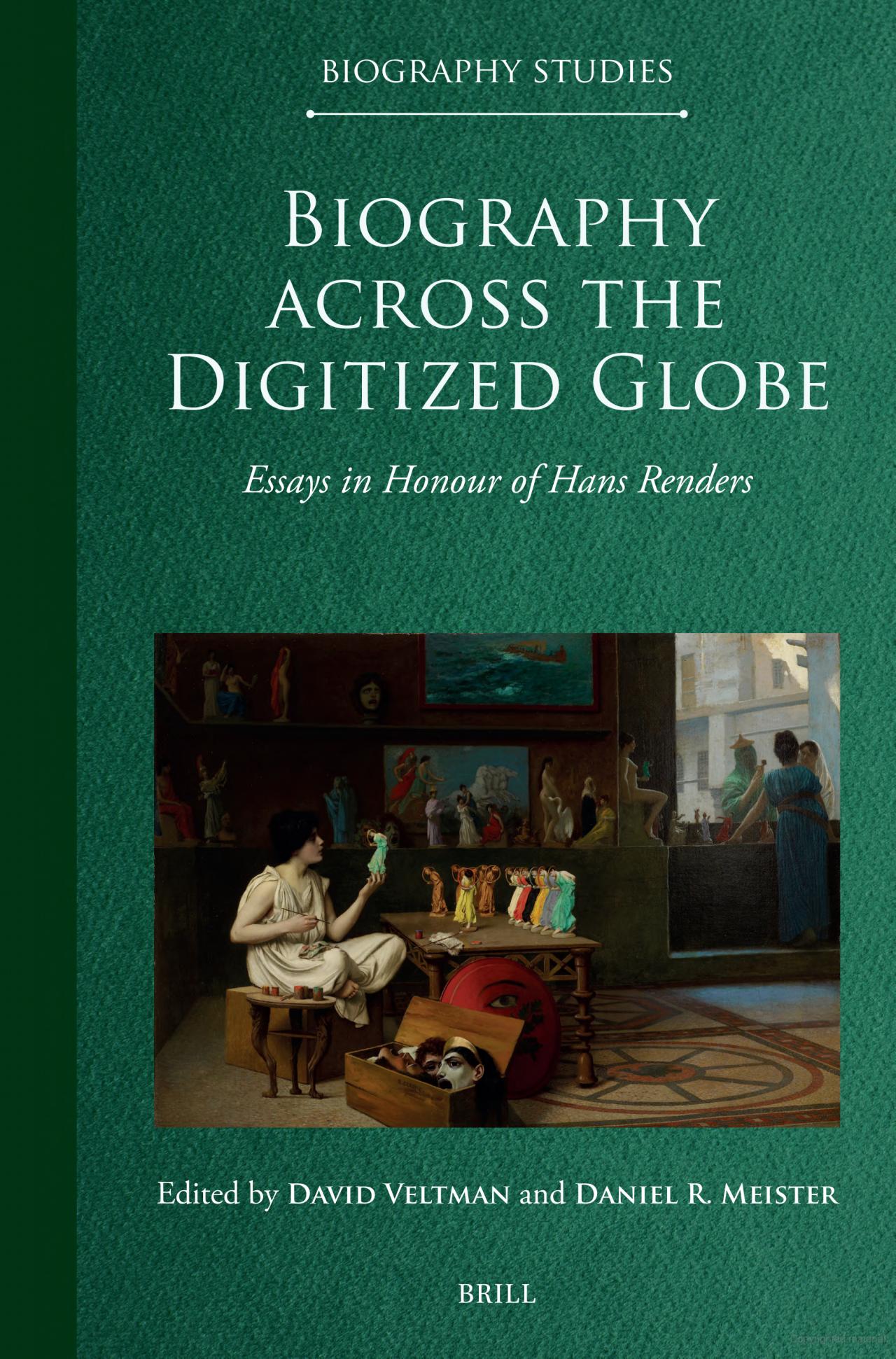
Biography Across the Digitized Globe
David Veltman spearheaded Biography Across the Digitized Globe to honour his mentor’s retirement with a volume of essays. He teamed up with Daniel Meister, a fellow biographer, to bring the project to life. Together they invited 13 contributors from around the world, each echoing Hans Renders’ question-driven approach and building on the foundations he laid.
Professor Hans Renders is founder of the Biography Institute of the University of Groningen in the Netherlands. Throughout his academic career, he witnessed a reflexive turn in historical research: biographers became more open about the limitations of their sources and the subjective nature of their selection. Over this same period, however, the availability of digital sources has increased exponentially, which has profound implications for biographical research and the transnational framework used to approach the genre.
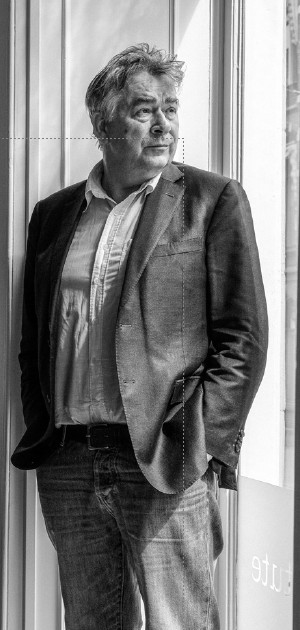
Hans Renders
Photograph by Jan Willem van Vliet
Through its thirteen thought-provoking essays, Biography Across the Digitized Globe examines how biography is evolving in the digital era and why it remains vital despite widespread disinformation. The essays range from collaborating across borders and navigating digital archives to embracing global perspectives and finding a balance between truth and storytelling in an AI-driven age.
Digital Research vs. Archival Discovery
Digital technology has transformed biographical research. The digital turn vastly expanded access to sources, from born-digital data to scanned archives, allowing biographers to gather material from across the globe. Yet not everything is digitised and David and Daniel warned that if something isn’t online, it might still exist offline.
Hans Renders on Digital Archives
Unfortunately, an avalanche of online material can overwhelm and hinder the serendipitous discoveries in traditional archives. Veltman referred to digitisation as a blessing in disguise, a double-edged sword that provides access but also tempts biographers to rely on the same sources.
At the same time, nothing replaces old-fashioned archival research. Only by visiting archives in person can biographers find certain hidden treasures no-one thought to digitise, discoveries that might transform a story. A biographer is part detective: in the archive you soak up the atmosphere, follow paper trails and stumble on documents nobody knew existed. ‘You can’t turn every page if you stay behind your desk’, Hans Renders noted. In short, dusty archives still hold a magic that Google cannot replicate.
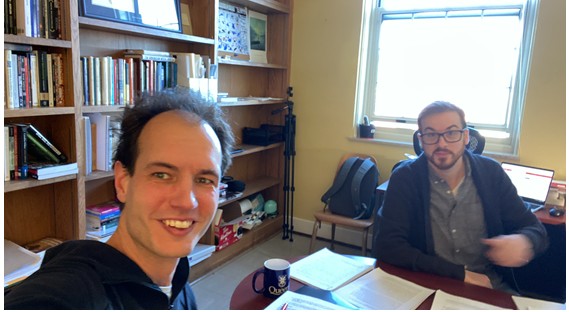
David Veltman and Daniel Meister in Daniel’s office in New Brunswick, Canada.
AI and the Future of Biography
Speculative Lives and Truth-Telling
During our conversation, we discussed speculative biography, using imagination to fill gaps when evidence is scant. Renders cautioned that such speculation must be handled carefully and only after deep research. One must know the sources inside-out, to ‘dream in your sources’, as he put it, before attempting any leaps. Only after absorbing the facts can a biographer responsibly extrapolate beyond them. Even unreliable personal memories can offer clues, though writers must mark clearly where documented truth ends and conjecture begins. In an era awash in misinformation, being transparent about what’s fact and what’s imagination is more crucial than ever.
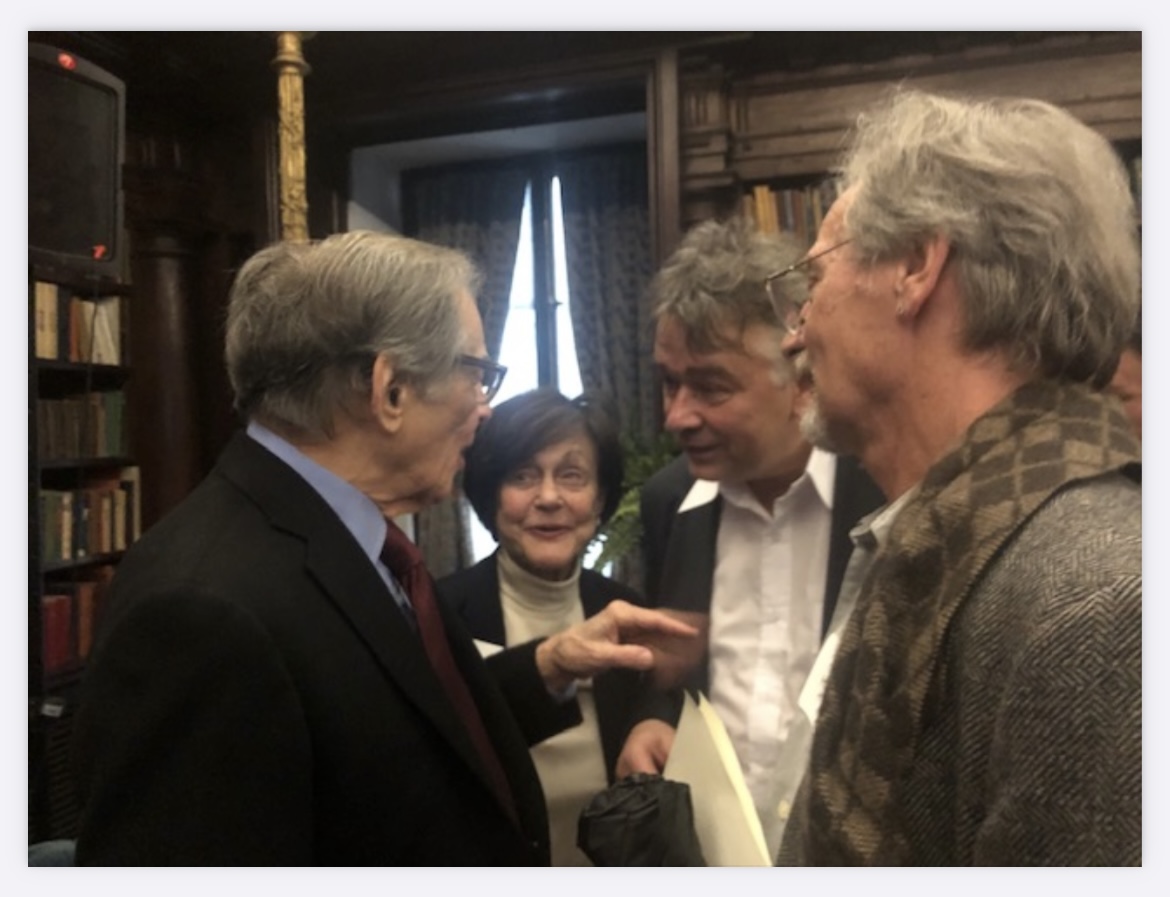
Robert and Ina Caro, Hans Renders and Nigel Hamilton
Bridging the Scholarly and the Popular
The trio highlighted how contemporary biography bridges academic rigour and popular appeal. Once dismissed by academics as mere popular history, biography has gained respect as an academic discipline. Renders noted that scholarly and popular approaches are increasingly intertwined, with today’s readers expecting that biographies are both well-researched and engaging. This reflects Renders’ view that a biographer should marry rigorous research with compelling storytelling, maintaining factual fidelity while keeping the narrative vivid.
Biography remains a beloved genre because it speaks to something deeply human. Daniel Meister observed that it’s comforting to see how someone else, even from a different time or culture, tackled the same questions as us in the 21st century. By following lives across borders and eras, biographers create a handshake across time and cultures, connecting readers with worlds beyond their own. Crucially, this human-centered craft is one thing no algorithm can replicate. As Meister noted, a biography ‘can’t be recreated by a machine or artificial intelligence’ a reassuring sign for biographers today and into the future.
Praise for Biography Across the Digitized Globe
While Biography Across the Digitized Globe is not a biography of Mr Renders, in its own way it is biographical, paying tribute to him not merely as a scholar of biography but as a journalist, a biographer, a book reviewer on radio and in print, and an organizer of conferences on biography that have made the genre more centrally important as a form of knowledge in itself.
Carl Rollyson
Biography Across the Digitized Globe Media Coverage and Podcasts
‘Robert Frost and the Future of Biography’, Carl Rollyson, New York Post, 4 April 2025.
A Life in Biography podcast, Carl Rollyson. ‘Don’t Be Afraid! We’re talking theory here.’ A discussion with David Veltman and Kerstin Maria Pahl about their contributions to a new book about biography, Fear of Theory, 3 February 2022.
A Life in Biography podcast, Carl Rollyson. ‘The Role of Interpretation: A Discussion with the Inimitable Hans Renders’, 21 October 2021.
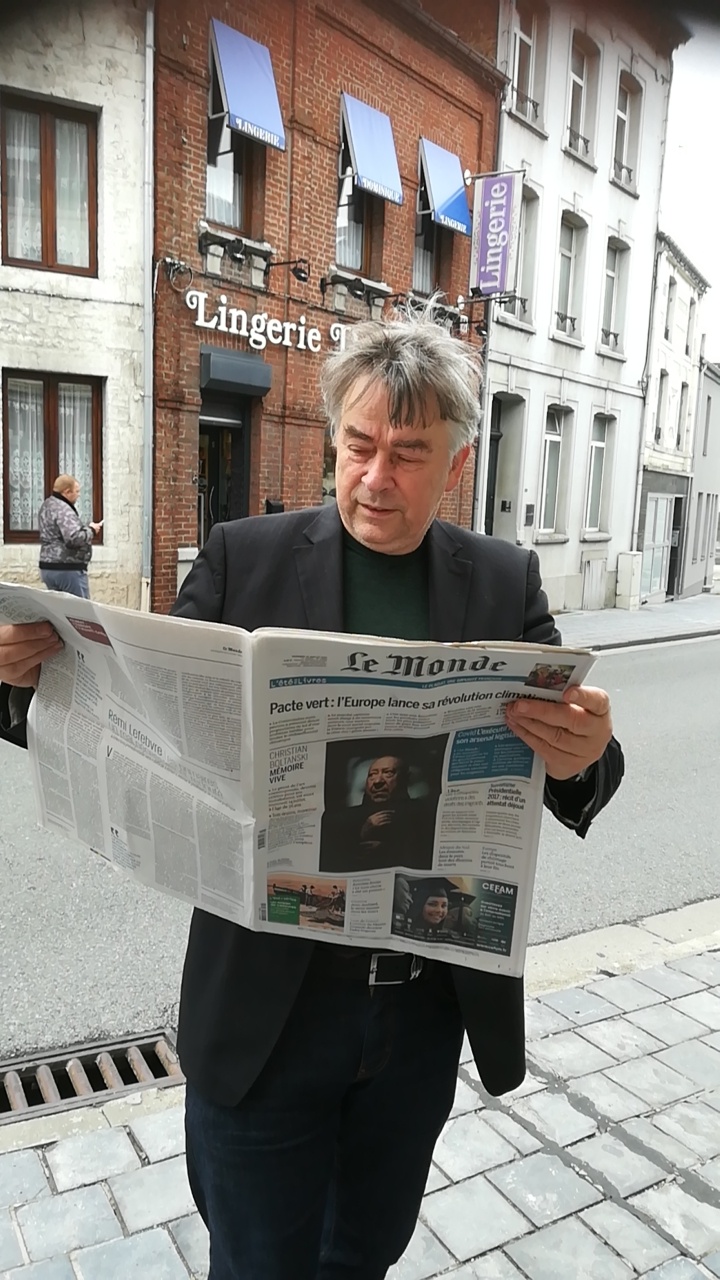
Hans Renders holds a chair ‘History and Theory of Biography’ and is Director of the Biography Institute (Groningen University); acted as promoter of more than thirty dissertations that were brought at the same time as biographies to the general book market; Chair of the national digital Biographical Portal; Book reviewer of EW Magazine, since 2016 he has a monthly column on biographies with his ‘A Life in Letters’, which can be heard every third Sunday of the month on the national radio npo1 program Met het Oog op Morgen.
Renders is publishing on theory and biography, e.g. Theoretical Approaches to Biography (Brill, Boston/Leiden 2014) and The Biographical Turn, Lives in History (with Binne de Haan and Jonne Harmsma, Routledge, London/New York 2017, also translated into Turkisch); Different Lives (with David Veltman, Brill, Boston/Leiden 2020) and Fear of Theory (with David Veltman, Brill, Boston/Leiden 2021). Published three full length biographies (Jan Hanlo, 1998), Jan Campert (2004) and Theo van Doesburg (2022, co-author). Together with Nigel Hamilton he published in 2018 The ABC of Modern Biography, translated into Dutch and into Persian. In 2023 appeared Het universum van Willem Frederik Hermans (co author).
Further information on https://hansrendersarchive.org/
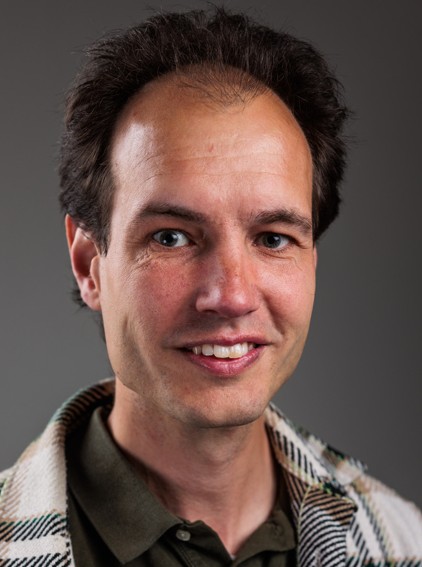
Photo credit: Ronnie Zeemering
David Veltman obtained his PhD in 2021 at the Biography Institute (University of Groningen, the Netherlands) with a thesis entitled ‘Dying in the bed in which I was born’, a biography of the Belgian painter Felix de Boeck (1898-1995), which was published in 2021 at Verloren. The biography was praised widely, for example in Journal of Belgian History: ‘the book is the result of in-depth research, handling sensitive issues with the necessary delicacy, characteristic of a true homme de métier’ (Peters).
Veltman teaches in the Contemporary History department, University of Groningen. He also works as a collection specialist in the Special Collections department of the University Library of Groningen. After completing his dissertation, Veltman was involved in various publications on the theory of biography, mostly in collaboration with Hans Renders. The first was Different Lives: Global Perspectives on Biography in Public Cultures and Societies (2020), a ‘salient and compelling’ (Kadar) collection of essays about national traditions in biography.
The second was Fear of Theory. Towards a New Theoretical Justification of Biography (2021), an ‘exciting new volume about biographical theory and methods from some of the field’s leading practitioners and critics’ (Meister). Together with Kathrin Pahl, Veltman was interviewed about this book in the podcast A Life in Biography. Recently, Veltman co-edited Biography Across the Digitized Globe. Essays in Honour of Hans Renders (2025) together with Daniel R. Meister.
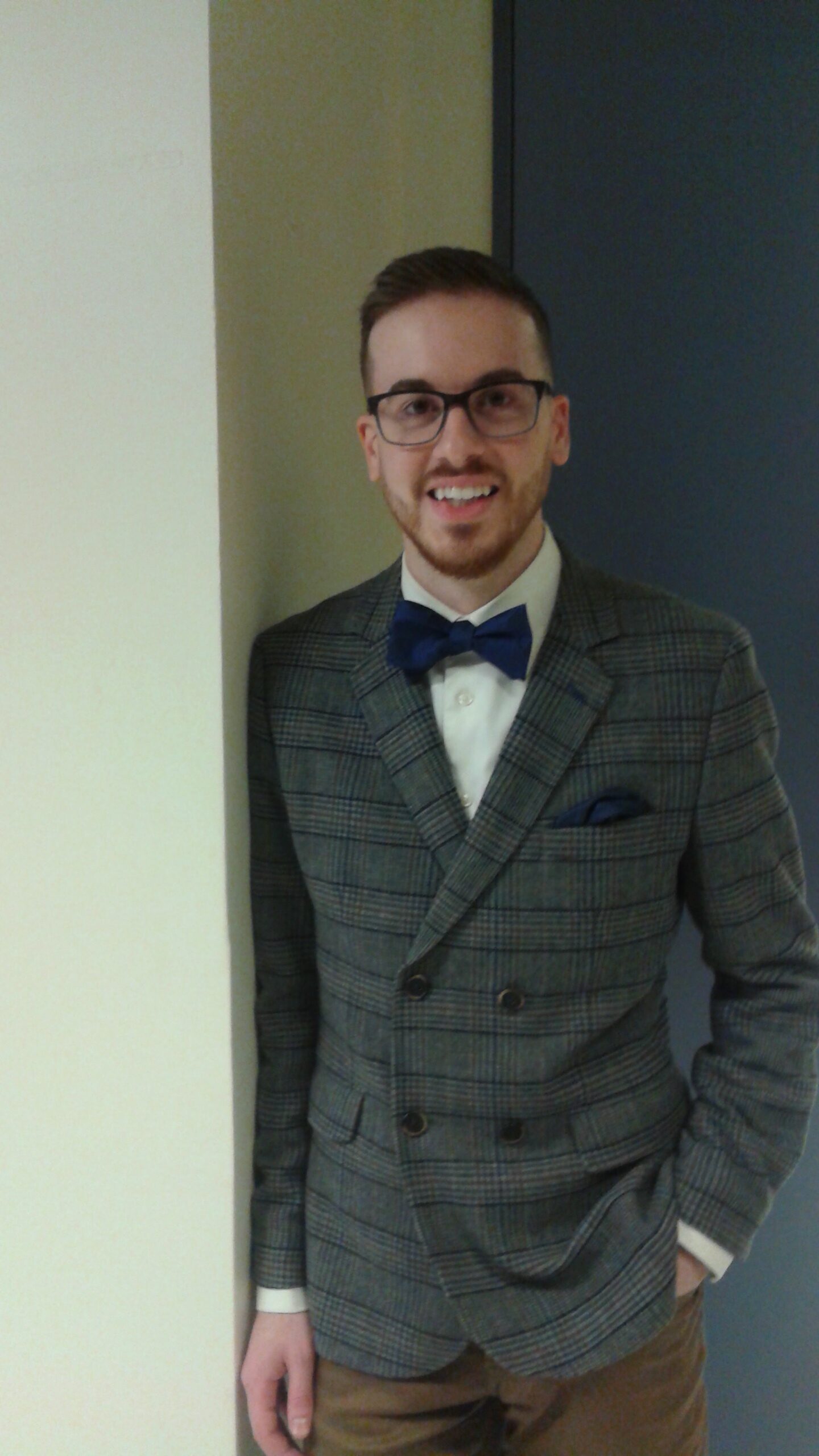
Daniel R. Meister, PhD is an Adjunct Research Professor in the Department of History at St. Thomas University and an Archivist (Private Sector Records) at the Provincial Archives of New Brunswick. He is, with David Veltman, a co-founding editor of H-Biography, where he also served as Book Reviews Editor. He has published on biographical theory and method, and he has taken a biographical approach to his studies of the history and politics of “race,” “whiteness,” immigration, and multiculturalism in Canada.
In addition to his book, The Racial Mosaic: A Pre-History of Canadian Multiculturalism (2021), his publications include articles in the Canadian Historical Review, Canadian Military History, Études canadiennes/Canadian Studies, Settler Colonial Studies, History Compass, the Canadian Encyclopedia, the Dictionary of Canadian Biography, and The Walrus.