




In this episode of Biographers in Conversation, Drusilla Modjeska, one of Australia’s most distinguished authors, chats with Gabriella Kelly-Davies about her choices while crafting A Woman’s Eye, Her Art: Reframing the Narrative Through Art and Life.
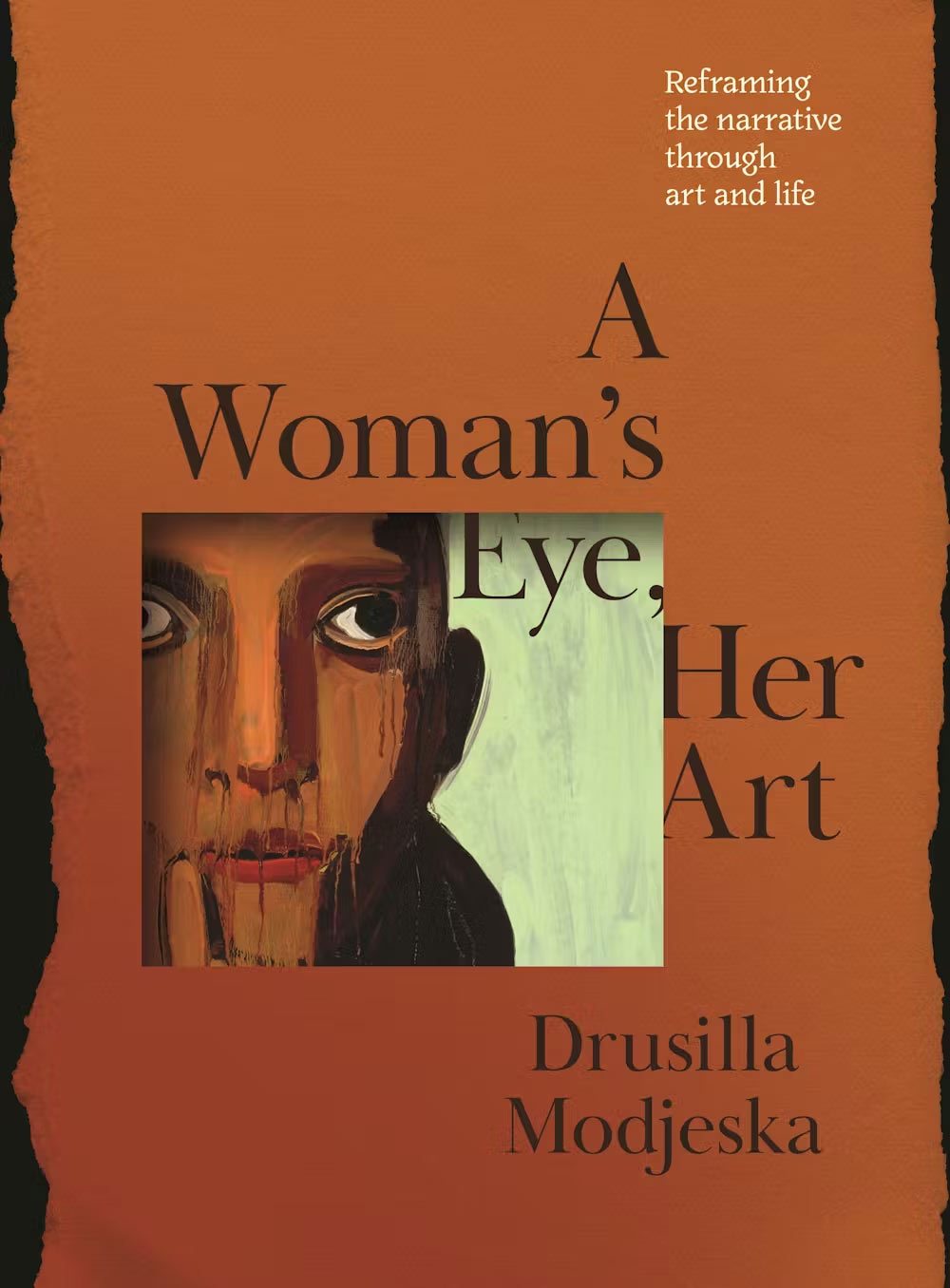
A Woman’s Eye, Her Art
In A Woman’s Eye, Her Art, Drusilla Modjeska illuminates the radical vision of women artists from early in the twentieth century who challenged and recast how women’s bodies and lives could be seen and represented. From self-portraits to Surrealist art and radical nudes of photo-artists, these European Modernists reframed the narrative through their art and lives.
Beginning with Paula Modersohn-Becker’s groundbreaking 1906 nude self-portrait, in which she painted herself seemingly pregnant when she was not, Modjeska traces a lineage of creative courage that extends from the dawn of the twentieth century through two world wars and into our contemporary moment.
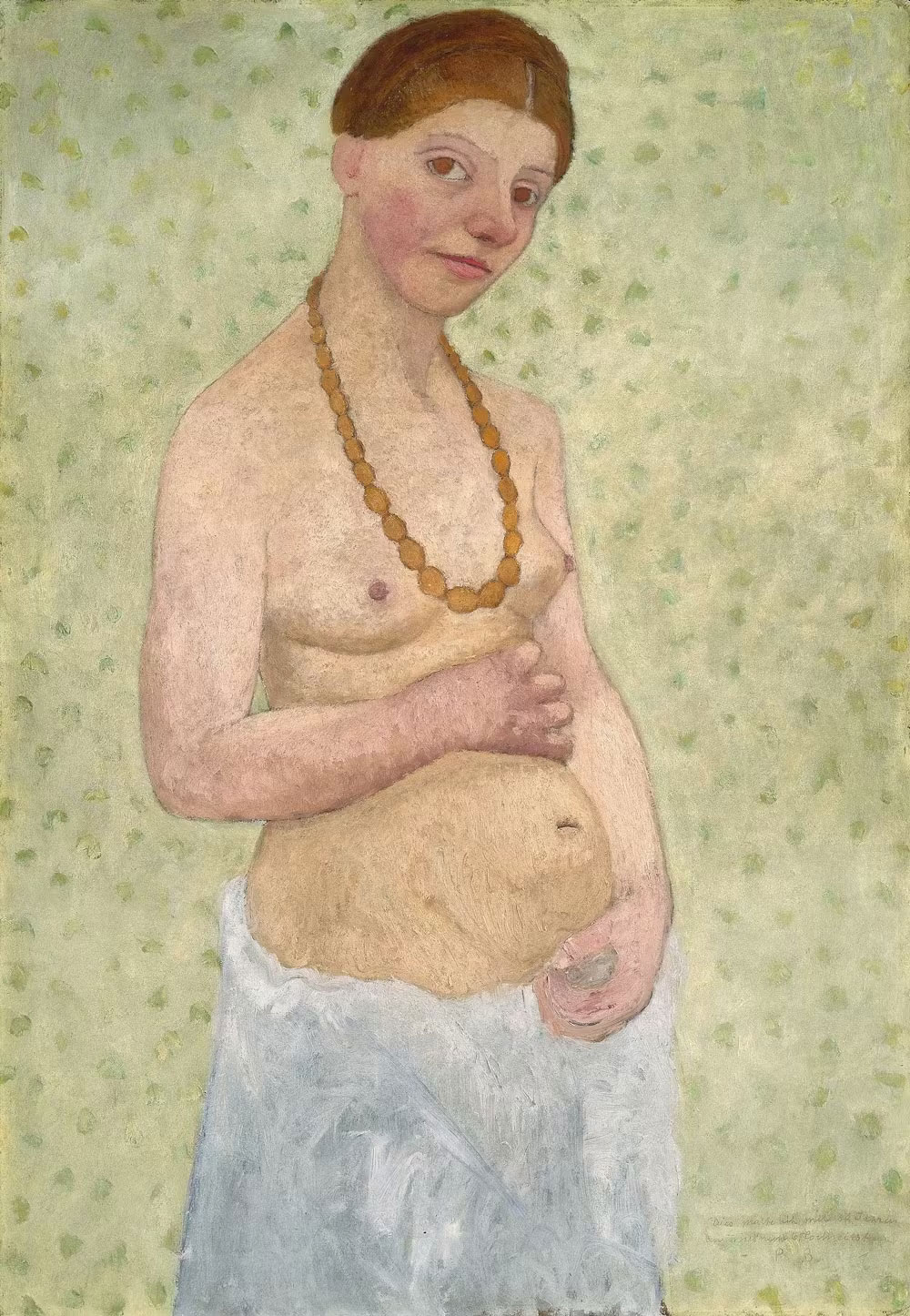
Paula Modersohn-Becker, Self-Portrait on My Sixth Wedding Day, 1906
Ludwig Roselius Collection, Bremen.
At the heart of Modjeska’s narrative lies what she refers to as ‘the grammars of gender’ – the deeply embedded social expectations that shape how women are perceived and permitted to exist. Without the language provided by later feminist thinkers such as Simone de Beauvoir and Virginia Woolf, artists like Modersohn-Becker struggled to articulate their predicament, describing their artistic compulsion as ‘fate’, or viewing themselves as ‘a puzzle’. Yet through their art, these women found a visual language to paint themselves as they were, rather than as they were seen through the male gaze.
Modjeska’s choice to write a collective biography rather than focus on a single artist reflects her conviction that context and community matter profoundly. The friendships, rivalries and support networks among these artists—Paula Modersohn-Becker, Clara Westhoff, Claude Cahun and her step-sister lover, Lee Miller and Dora Maar—enabled their work in ways that an individual life story can obscure.
This approach also allows Modjeska to explore how the camera revolutionised artistic practice in the 1920s and 1930s, offering female photographers like Lee Miller opportunities to earn a living through fashion and advertising while pursuing their own radical photo art in their studios.
What did freedom mean for the artists?
Perhaps most compelling is how Modjeska connects the past to present through what she calls ‘contemporary echoes’—living artists whose work continues these earlier conversations. British painter Chantal Joffe encountered Modersohn-Becker’s pregnant self-portrait around 2000 while grappling with the same question: can a woman be both artist and mother? A century later, this question remains urgent. In the late 1970s and early 1980s, Julie Rrap, whose artworks focus on representations of the body, knew the male Surrealists but not Claude Cahun or Lee Miller, their female contemporaries, as their archives had been boxed up in attics after World War II and only rediscovered decades later.
The disappearance of so many artist-women after the war haunts Modjeska’s narrative. This was a generation that had pushed back against those deep grammars of gender, and then, with the outbreak of war had to find new forms for their art, new forms of courage. Claude Cahun’s resistance work landed her in a Nazi jail. Lee Miller, who became a war correspondent for Vogue, travelled with the Allied forces, photographing, among much else, the horrors of Buchenwald and Dachau, though many of her most important photographs from the concentration camps were considered as too confronting for a world eager to celebrate peace.
In the decades following the war, these women who had risked everything, their safety, their sanity and their artistic vision, were erased from view, their contributions forgotten until feminist art historians began recovering them.
Questioning the prevailing assumptions of art history
Modjeska structures A Woman’s Eye, Her Art as form of collage, moving non-linearly between past and present, between different artists and moments, in a form that mirrors both Surrealist practice and the fragmented nature of some women artists’ archives. This choice reflects her conviction that biographical narratives must hold a double perspective: understanding historical figures within their own context while also asking what they mean to us now, in our increasingly polarised world where questions of freedom and authoritarianism echo the 1930s.
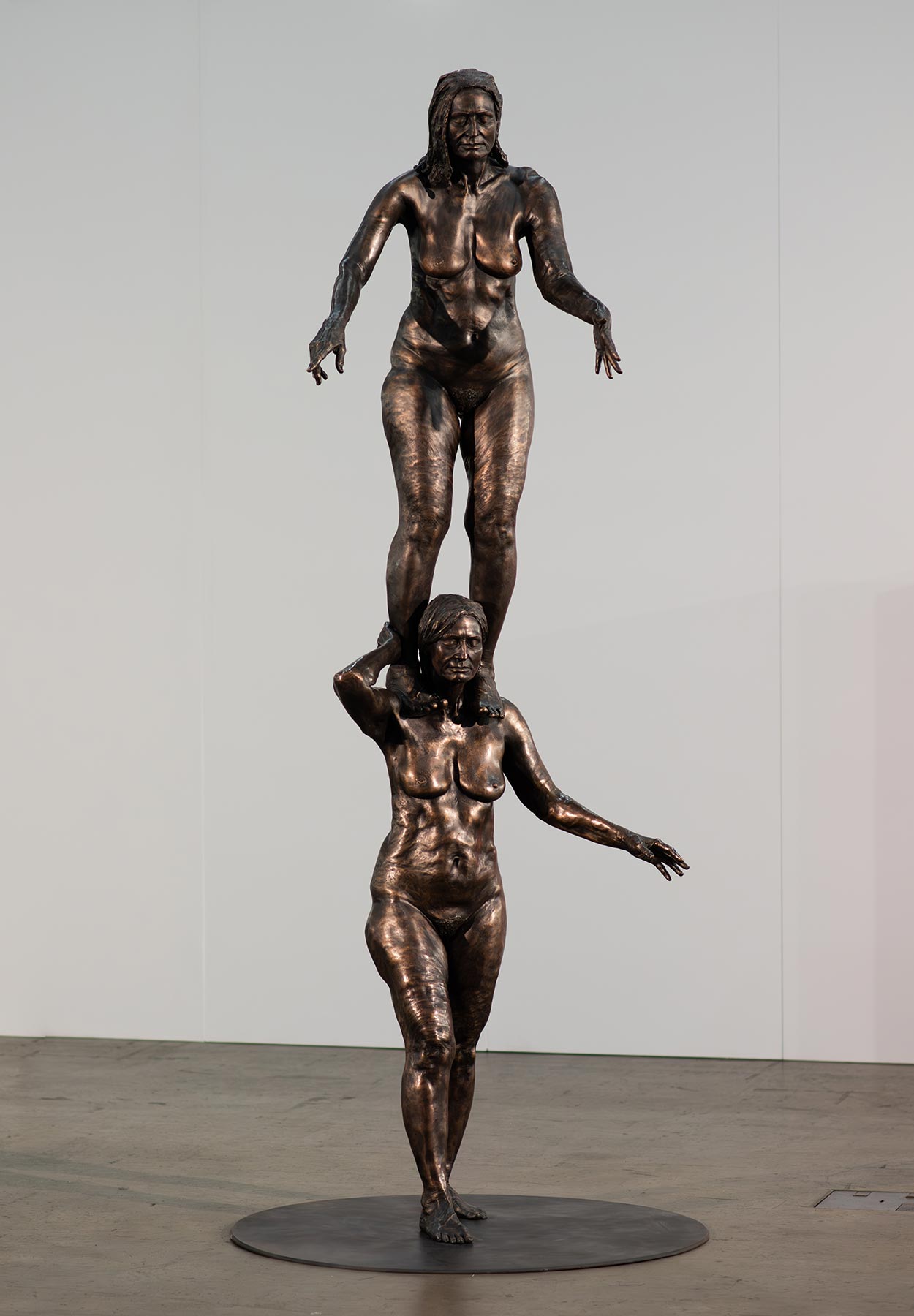
Julie Rrap, SOMOS (Standing On My Own Shoulders),
2024. Life-size bronze sculpture,
Art Gallery of Western Australia.
A Woman’s Eye, Her Art closes with a powerful epilogue that focuses on Julie Rrap’s sculpture SOMOS (Standing On My Own Shoulders).SOMOS is a life-sized bronze of the artist naked, impossibly balanced on her own shoulders, crystallising Modjeska’s central insight: in creating art, women must find strength within themselves, yet that strength is built from the legacy of those who came before. Both truths matter.
As Modjeska writes, art ‘can do the impossible, ask the impossible,’ and in this moment when our world grows more precarious, we need to ‘breathe in the courage of those who’ve gone before’ while finding our own balance. Through this powerful meditation on seeing and being seen, Modjeska makes visible not just these extraordinary artists, but also the ongoing struggle for creative and personal freedom that connects their lives to ours.
A Woman’s Eye, Her Art stands as a powerful testament to the creative courage of extraordinary women artists. Modjeska brings these women into focus as visionaries in their own right, reframing how women’s art is seen and valued. By illuminating their once-overlooked contributions, she highlights the spirit it took for these women to create against the odds and claim their place in art history.
A Woman’s Eye, Her Art reviews
The text reflects Modjeska’s questing and reflexive response to its central question of what it meant to live as a woman and an artist.
‘A Studio of One’s Own’
Maria Nugent, 14 November 2025
Inside Story
As Modjeska takes the reader through the early 20th century, looping forwards and backwards to show repeated patterns of Great Artist behaviour, she comes to a natural punctuation point – World War I. The world was reconfigured, and art recognised the madness of it all with dada and surrealism.
‘The daring women artists of last century were often forgotten’
Joanna Mendelssohn, 16 October 2025
The Conversation
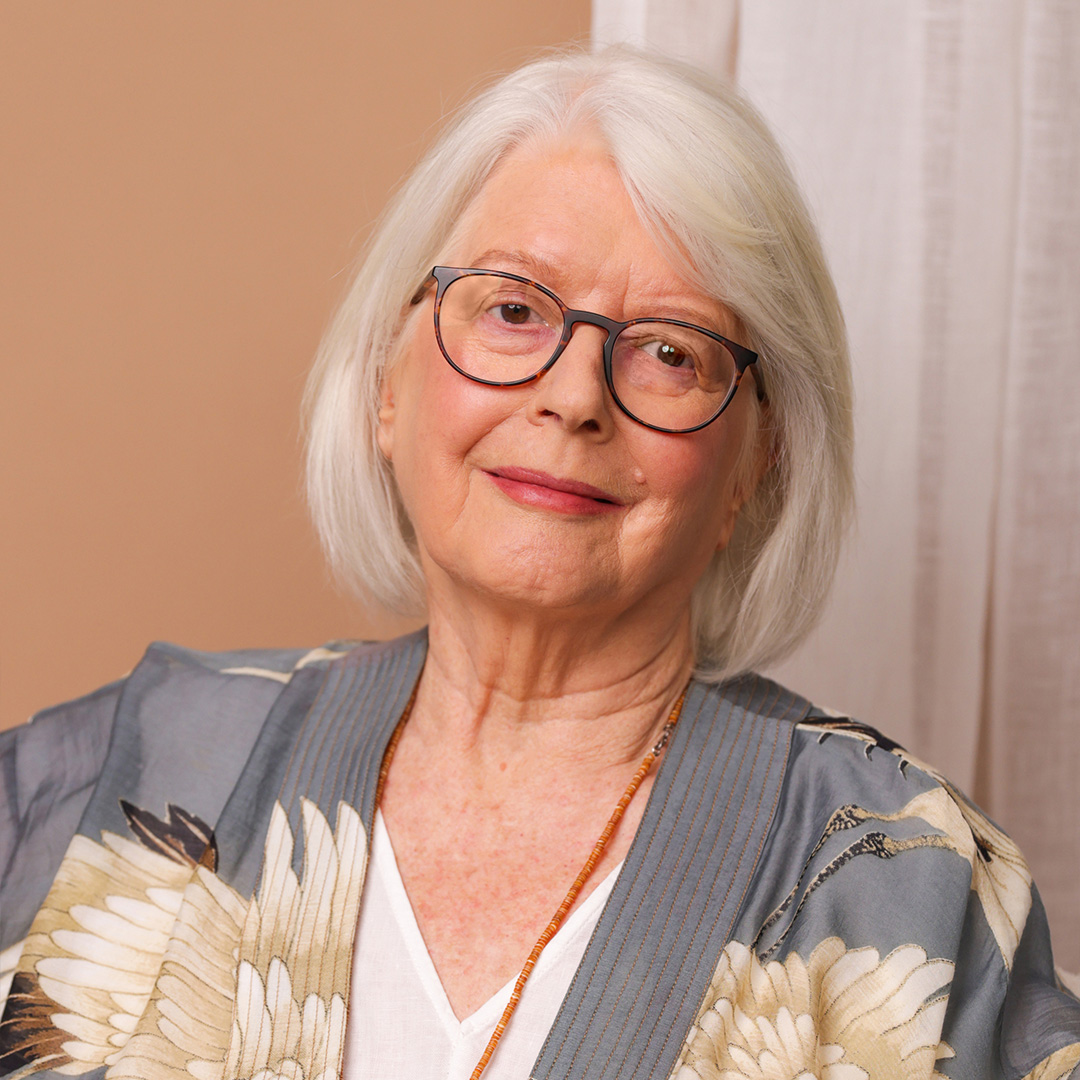
DRUSILLA MODJESKA is one of Australia’s most acclaimed writers. Her books include the award-winning Poppy and the bestselling The Orchard and Stravinsky’s Lunch, which won the New South Wales Premier’s Literary Award for Non-Fiction. Her novel The Mountain was critically acclaimed and shortlisted for a number of awards; and in 2015 she published her memoir, Second Half First, which was also shortlisted for several prizes. She lives in Sydney.