





In this episode of Biographers in Conversation, Nicholas Boggs chats with Gabriella Kelly-Davies about his choices while crafting Baldwin: A Love Story. James Baldwin was one of the major literary figures of the 20th century. In 1953, he rocketed to fame with the publication of his first novel: Go Tell It On The Mountain. Two years later, he published his debut collection of essays, Notes of a Native Son, and the following year, his second novel, the controversial, Giovanni’s Room.
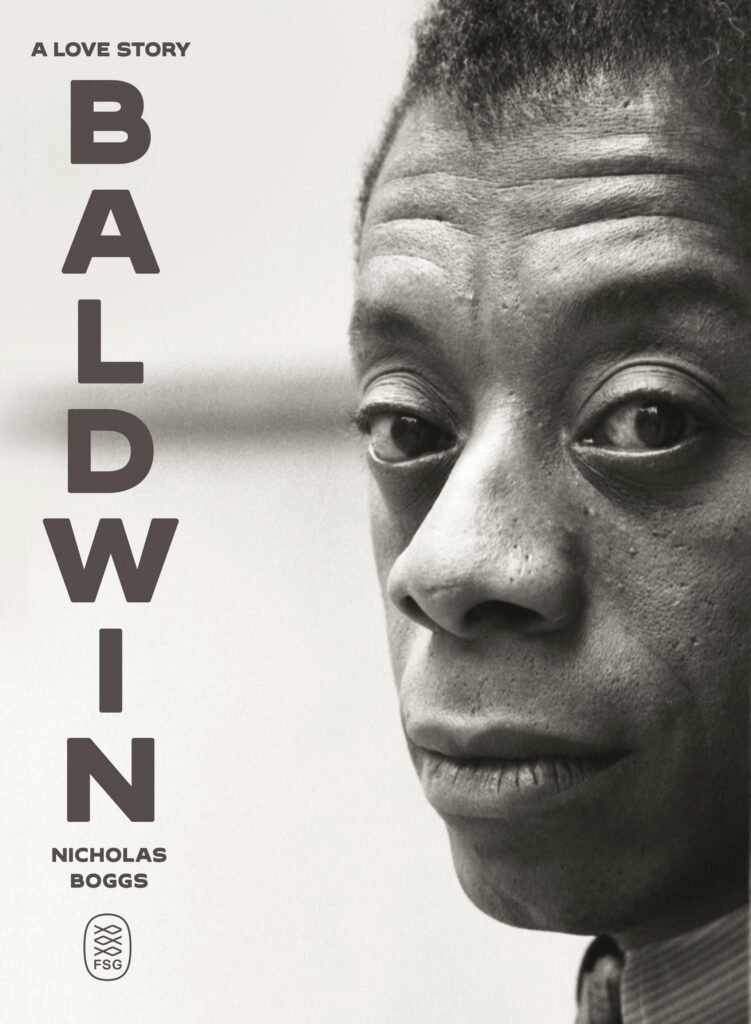
A TIME TOP 10 BOOK OF 2025
AN ATLANTIC TOP 10 BOOK OF 2025
A NEW YORK TIMES NOTABLE BOOK OF 2025
AN INSTANT NEW YORK TIMES BESTSELLER
AN AMAZON BEST BOOK OF THE YEAR
FINALIST FOR THE NBCC JOHN LEONARD PRIZE
Baldwin: A Love Story
In Baldwin: A Love Story, Nicholas Boggs shares the overlapping stories of James Baldwin’s deepest intimate relationships, revealing how they shaped his life, novels, plays and essays. Baldwin drew on the complex forces within these relationships, alchemising them into creative works that had a profound impact on the civil rights movement and Black and queer literary history.
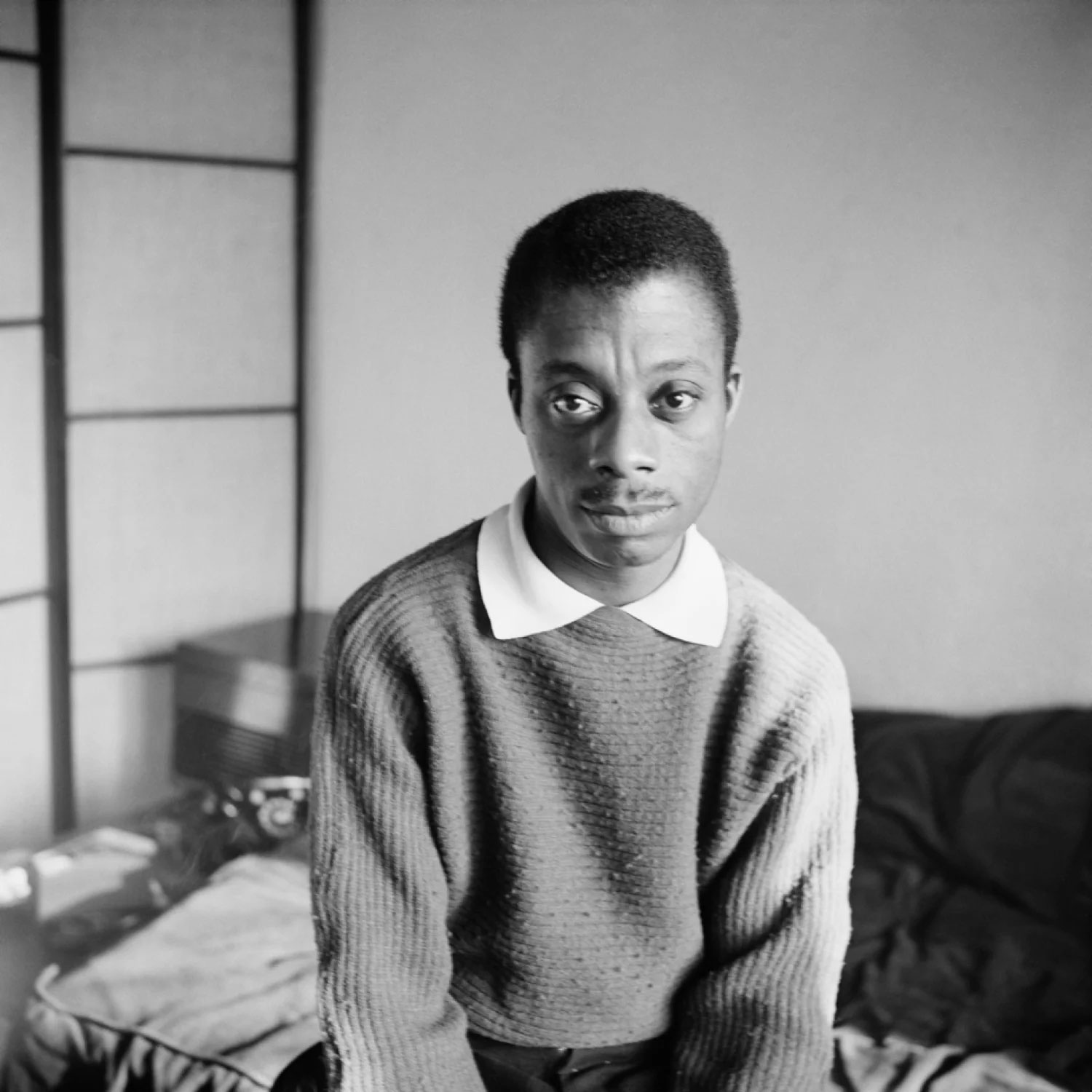
A young James Baldwin
Estate of Paula Kotis and The Schoolhouse Gallery.
In 2003, while researching Baldwin’s out-of-print children’s book Little Man, Little Man, Nicholas sent emails to French historians asking about Yoran Cazac, the artist who illustrated Little Man, Little Man, a person he believed to be dead. Weeks later, his Brooklyn phone rang: ‘This is Yoran Cazac. I’m alive. Come to Paris. I have many stories to tell you about Jimmy’.
Baldwin: A Love Story reframes Baldwin’s life through the four great loves who sustained and shaped him: his mentor and spiritual father, the Black American painter Beauford Delaney; his lover and muse, the Swiss painter Lucien Happersberger; the famed Turkish actor Engin Cezzar; and the iconoclastic French artist Yoran Cazac, whose long-overlooked significance as Baldwin’s last great love is explored for the first time.
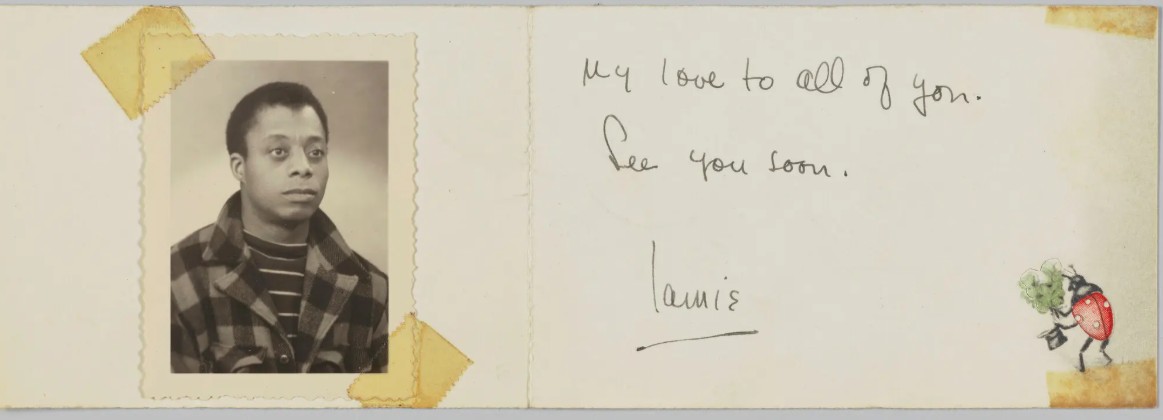
A snapshot Baldwin sent to his family from France, signed Jamie.
For Baldwin, love was never saccharine. It was risky, demanding the terrifying willingness to truly ‘see’ another person. This was how he understood race relations in America: ‘Black and white Americans had to come together, like lovers, metaphorically, in order to see each other and change the world.’ This philosophy was embedded in Baldwin’s novels, essays and intimate letters.
An Accidental Biographer
Nicholas’s research drew on newly available archives at the Schomburg and Berg Collections in the New York Public Library as well as the Beinecke, including letters, manuscript drafts, and untranscribed interviews. He also retraced Baldwin’s footsteps across continents to Corsica, where he and his mother located the house where the author contemplated suicide before experiencing an artistic and political epiphany. Together they travelled to Istanbul and the South of France, where Nicholas jumped over a back wall of Baldwin’s former home to see the author’s ‘Welcome Table’ before the property was demolished.
Even the FBI proved useful. While Nicholas distrusted the FBI’s characterisations of Baldwin, the Bureau’s meticulous tracking of the author’s flights solved a persistent biographical problem: keeping track of a transatlantic commuter who was perpetually in motion.
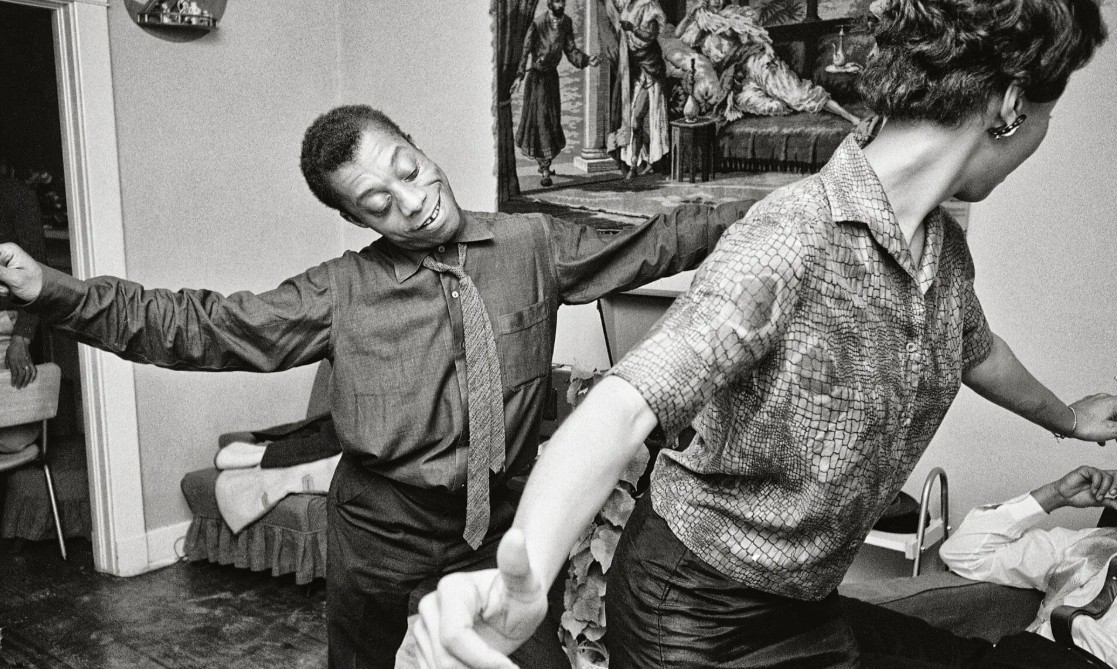
Baldwin dancing with Doris Jean Castle in New Orleans in 1963.
Steve Schapiro, via Fahey/Klein Gallery, Los Angeles.
Nicholas balanced Baldwin’s voice with his voice as the narrator by storyboarding each section with cards before arranging them like a jigsaw puzzle. The result honours Baldwin’s insistence that truth and love are inseparable. As Nicholas writes in the final line of the biography: ‘I always knew it was a love story.’
Praise for Baldwin: A Love Story
“[This] sensational new biography . . . [expands] on what we know of Baldwin’s gifts and suffering, his writing life and his love life . . . Boggs handles all of this with a commanding, sure-footed authority and comprehensiveness, subtle and solemn at once, that dazzles and awes . . . [Baldwin: A Love Story] demonstrates the kind of masterly narrative ability that can be achieved only with deep research and deep understanding of a subject . . . A stunning book.”
—Charles M. Blow, The New York Times
“Lively and vigorously researched . . . Boggs has dug much deeper than his predecessors . . . Baldwin: A Love Story is superlative, and it should become the new gold standard for Baldwin studies.”
—Marc Weingarten, Los Angeles Times
“A lucid, propulsive, compassionate and deeply researched portrait of a writer and thinker whose wisdom the country has too often failed to heed . . . Boggs comes about as close as anyone has to wrapping his arms around Baldwin, embracing him, if you will, in his entirety.”
—Chris Vognar, The Boston Globe
“Boggs’s biography makes a hugely important contribution.”
—Louis Menand, The New Yorker
“Every step in his life is reconsidered in Nicholas Boggs’s moving biography, Baldwin: A Love Story. Boggs has immersed himself . . .”
—Darryl Pinckney, The New York Review of Books
“Nicholas Boggs’s monumental biography considers James Baldwin through the prism of love, placing four beloved men at the center of his writing, his activism, his political consciousness, his philosophy, and his life. We have been presented with many partial Baldwins over the years, but here is the whole loveable man: the radical and the celebrity, the civil rights hero and the downtown playwright, the cosmopolitan jetsetter and the son of East Harlem. Compulsively interesting and beautifully written—there is something to treasure on every page. I absolutely loved it.”
—Zadie Smith
“Magnificent. Nicholas Boggs’s Baldwin is a formidable achievement, beautifully written, engrossing, and extremely intimate. Boggs’s long journey as the biographer becomes a wild and most improbable treasure hunt where he unearths more than one poignant love story. James Baldwin’s life is revealed in all its triumphs and agonies.”
—Kai Bird, Pulitzer Prize–winning biographer of J. Robert Oppenheimer
A Snapshot of Interviews about Baldwin: A Love Story
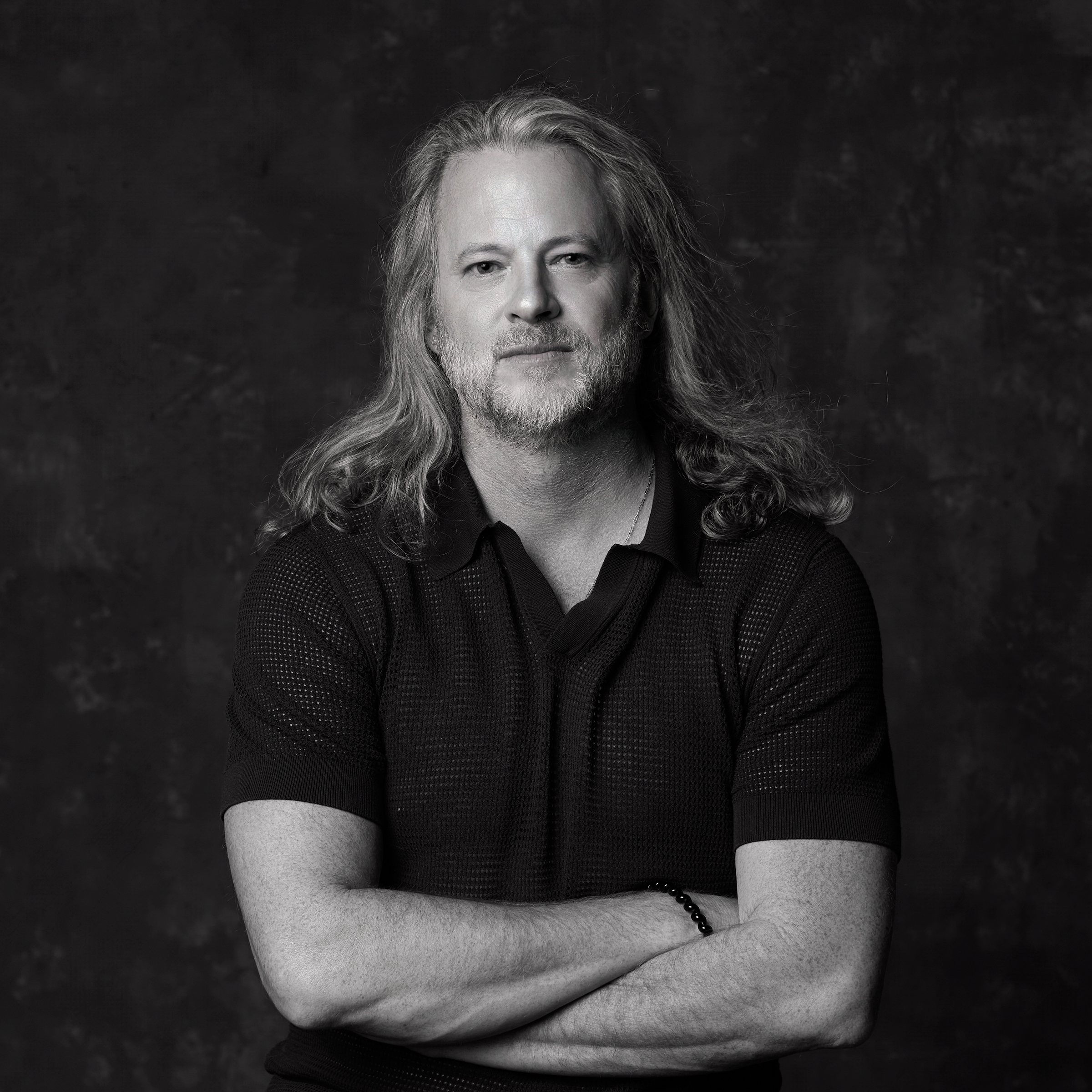
Nicholas Boggs is the New York Times bestselling author of Baldwin: A Love Story, the first major biography of the iconic figure in over three decades. He also co-edited a new edition of Baldwin’s collaboration with French artist Yoran Cazac, Little Man, Little Man: A Story of Childhood (2018). He is the recipient of a 2023 Whiting Creative Nonfiction Grant and fellowships from the Leon Levy Center for Biography, the Scholars-in-Residence program at the Schomburg Center for Research in Black Culture, the Gilder Lehrman Center and Beinecke Library at Yale, and the National Endowment for the Humanities, as well as residencies at Yaddo and MacDowell. Most recently he was the 2024-2025 John Hope Franklin Fellow at the National Humanities Center. Born and raised in Washington, D.C., he received his BA from Yale and his PhD from Columbia, both in English, as well as an MFA in Creative Writing from American University. He now resides in New York City.
To Learn More About Nicholas Boggs, You can Find Him Here:
https://www.nicholasboggs.com/