





In this episode of Biographers in Conversation, Ian Hembrow chats with Dr Gabriella Kelly-Davies about his choices while crafting Celsius: A Life and Death by Degrees, the biography of Swedish astronomer and Earth Science trailblazer, Professor Anders Celsius.
Anders Celsius was the world’s first true Earth scientist.
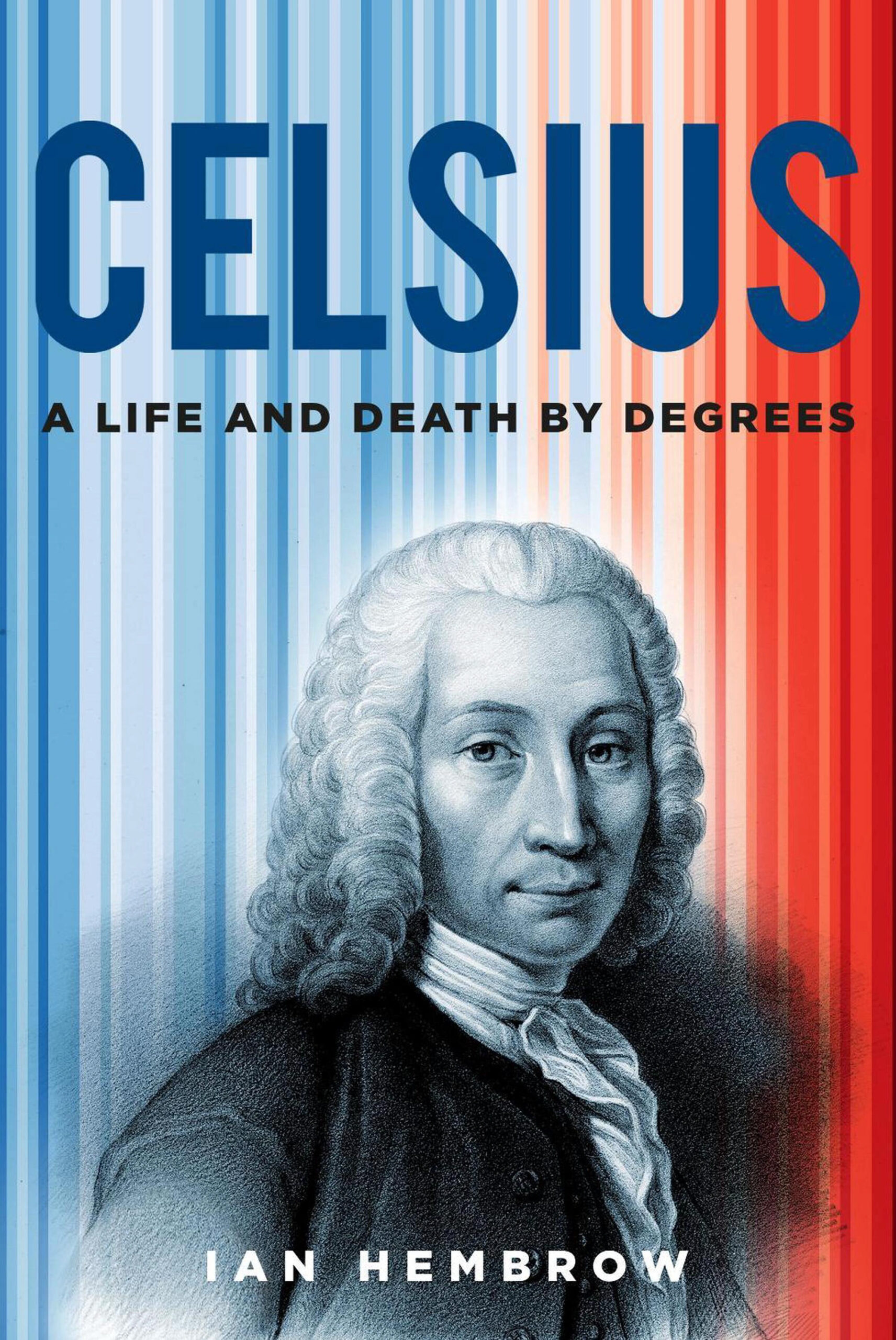
Celsius
Celsius: A Life and Death by Degrees, is the first, full-length English language biography of Swedish astronomer and Earth science pioneer, Anders Celsius. Ian Hembrow reveals how our modern understanding of many of the Earth’s most awe-inspiring phenomena owes much to Anders Celsius, a modest and quietly spoken, 18th-century Swedish astronomer, who died of tuberculosis aged just 42.
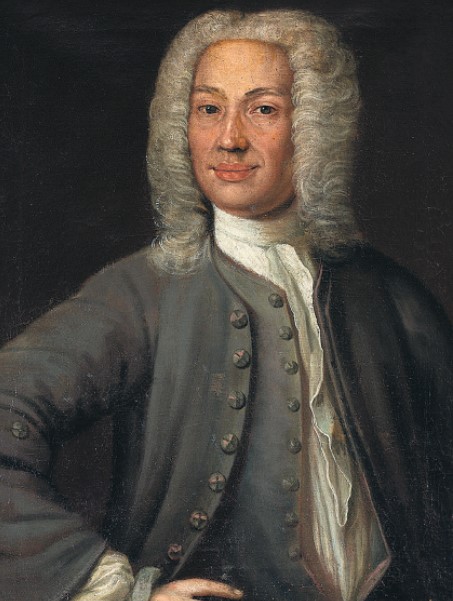
Anders Celsius aged 39, after his return from the Arctic
c. 1740 by Johan Henrick Scheffel,
Image courtesy of Martin Ekman.
From the Northern Lights, air pressure and magnetism to the shape of the planet, sea levels and early studies of climate change, Celsius unravelled some of the greatest mysteries of his time. Best known for inventing the 100-point ‘centi-grade’ scale, Celsius’s name also now frames humanity’s future in the international targets to limit average global temperature increases. As our world faces this life-or-death struggle, there’s much we can learn from Celsius … if we will listen.
Sweden’s Enlightenment genius and his lessons for a world in crisis—
discover the man behind the temperature scale that governs our lives.
Ian reveals how Anders Celsius’s revolutionary scientific studies at the peak of the European Enlightenment helped him to unlock fundamental mysteries of the natural world. He also reflects on Anders’s contributions to science, his personal struggles and the broader context of the 18th-century scientific community.
The biography brings to life a scientific genius and a mercurial thinker, inviting us to consider the enduring relevance of Anders’s legacy.
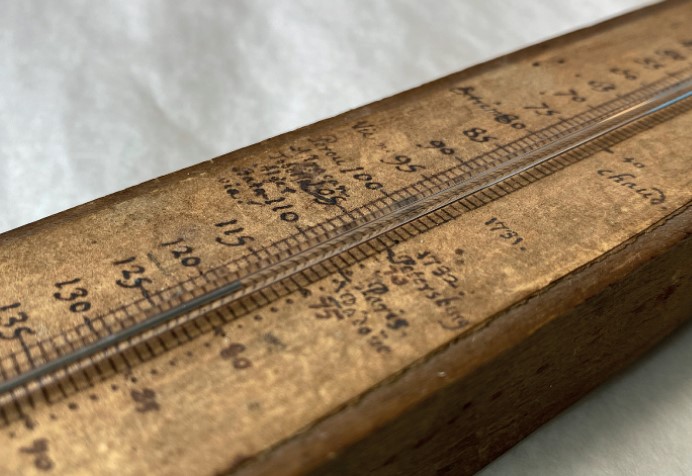
The surviving thermometer made and sent by Delisle in 1737
with the new temperature scale annotated by Anders Celsius,
Photo courtesy of Pippa Sherval.
This biography is a poignant reminder of the personal struggles and triumphs that often accompany great scientific achievements. Ian Hembrow’s portrayal of Anders’s world, set against the backdrop of the Enlightenment Era, provides a rich historical context that enhances our understanding of him as a fellow human being and his contributions to scientific knowledge.
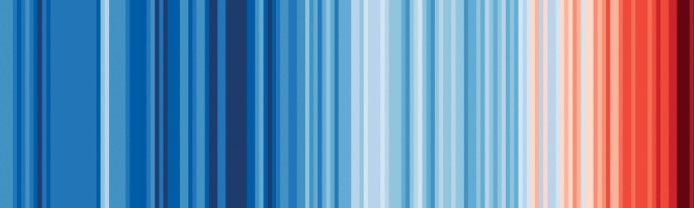
Book cover image: The warming stripes graphic developed by Ed Hawkins. Each vertical line represents a single year’s global average temperature compared with the overall average since 1850.
As our world confronts the potential catastrophe of climate change, the lessons from Anders’s life are crucial to recognise. In Celsius: A Life and Death by Degrees, Ian Hembrow reveals what Anders’s extraordinary, but tragically short life and career can teach us about our today and humanity’s tomorrow. Celsius reinforces the vital importance of scientific inquiry and the enduring legacy of those who have dedicated their lives to expanding our understanding of the natural world.
Celsius reinforces the power of science biography to illuminate the complex interplay between character, science and society.
Celsius invites readers to reflect on the impact of scientific advancements and the responsibility we all share to use this knowledge for the betterment and even survival of humanity.
Praise for Celsius: A Life and Death by Degrees
Celsius is beautifully structured and elegantly told – the story of a man whose name has become an urgent byword for today’s climate crisis … the chronicle we need for our times.
Dr Charlie Lee-Potter
University of Oxford
Ian Hembrow is a skilled storyteller. This is not a dry history of a temperature scale but a carefully researched and entertaining life of an Enlightenment astronomer, scientist and explorer who gave his name to the Celsius temperature scale. Ian guides us through the events that shaped his personal and professional life in Uppsala, and the Grand Tour of Europe, to provide a fascinating pen-portrait of the times and of this remarkable man.
Dr Julian Mayes, Former Vice-President, Royal Meteorological Society
This is a beautifully written masterwork of science biography, covering the life and times of the great Swedish astronomer Anders Celsius. Ian Hembrow provides a gripping narrative that details his search for a man who was very much embedded in his city and landscape, who now remains relatively obscure even though he left an indelible mark above and beyond his invention of the Celsius temperature scale. This biography not only sheds light on a brilliant polymath and the colourful world of eighteenth-century science and its many characters; it also raises larger and more contemporary questions around global warming and the relevance of Celsius to the world we live in today.
Sarah Covington, Professor of History, Biography and Memoir,
City University of New York

Ian Hembrow is a freelance writer, researcher and former visiting scholar at the Oxford Centre for Life Writing at Wolfson College, University of Oxford. In 2016, while working in Sweden on a book about medicine safety, he stumbled across the story and legacy of Anders Celsius – the largely unknown man with the extremely well-known name. Ian’s research took him to the Arctic Circle to retrace the steps of the pioneering 1736–37 expedition on which Celsius helped to prove the shape of the Earth.
In 2023, Ian published Ralph Edwards: Rare Events with Springer.
He lives with his wife in Bristol, England.
Conversations and Interviews
In Celsius’ Footsteps, a daily blog by Ian Hembrow while retracing the route of the 1736-37 Arctic Circle expedition in Lapland to establish the shape of the Earth, Scientific Instruments Society, 5 May 2022.
‘Wildfires humanity has to face’, 28 August 2024.
Review: ‘Setting the scale: the life and work of Anders Celsius’, by Tom Tierney, Physics World, 4 December 2024.