





In this episode of Biographers in Conversation, award-winning political biographer and journalist Troy Bramston chats with Dr Gabriella Kelly-Davies about his choices while crafting Gough Whitlam: The Vista of the New. Published 50 years after the dismissal of the Whitlam government, this is the first full biography of Gough Whitlam since the former Prime Minister’s death in 2014.
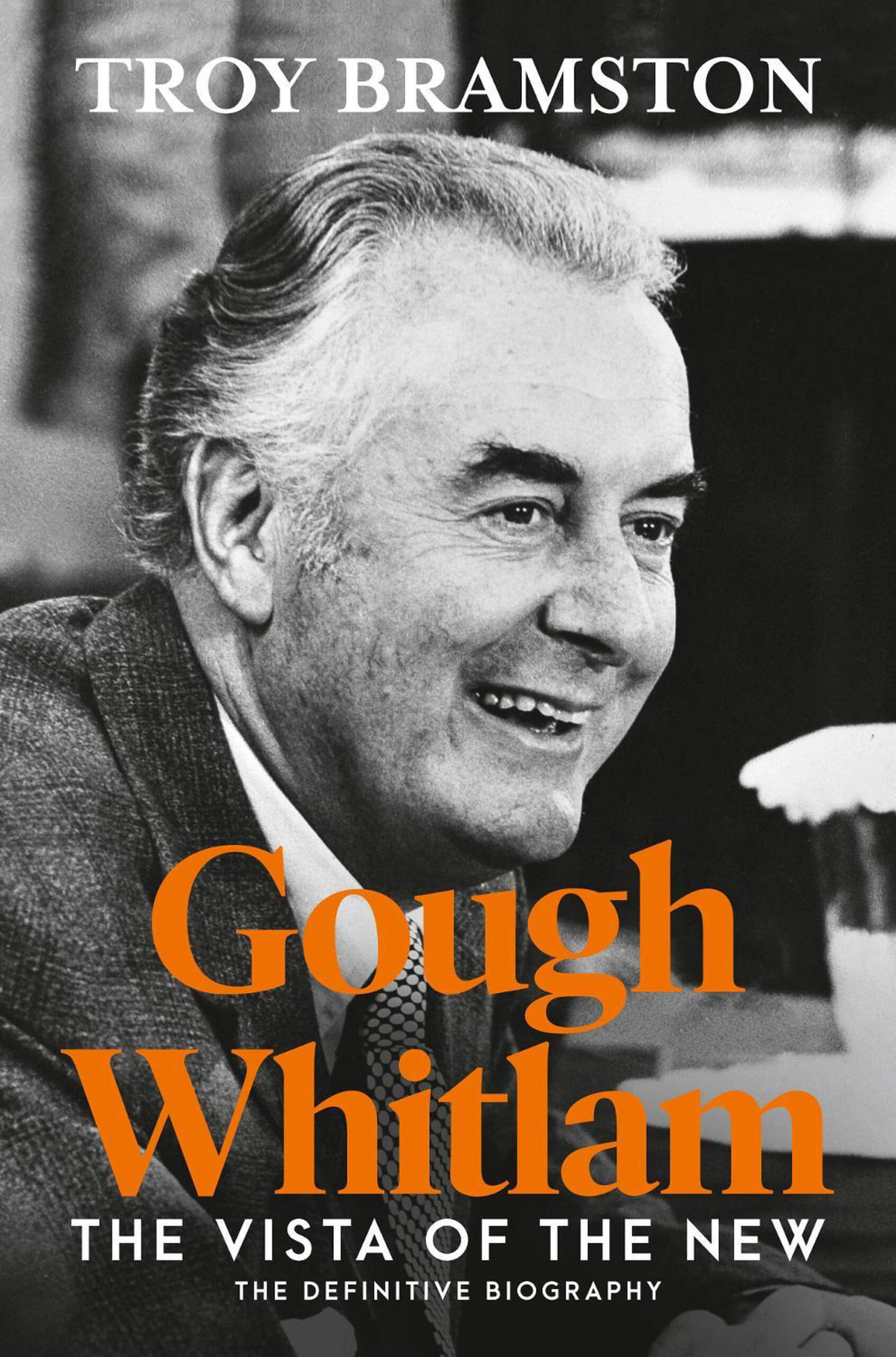
Gough Whitlam: The Vista of the New
Gough Whitlam: The Vista of the New is an epic story of triumph and tragedy, crisis and confrontation, courage and defiance, mistakes and misjudgements. The Gough Whitlam Troy Bramston portrays is not a saint or martyr. Instead, he is a human being of immense talent and real limitation, a figure whose legacy, half a century on, remains largely intact because the reforms he drove have proven durable across governments of both persuasions.
Challenging Myths
The biography’s title The Vista of the New came from a remarkable archival discovery: a poem Gough Whitlam wrote as a student in 1934 imagining a new generation craving a younger atmosphere and a bolder, brighter future. The phrase, ‘the verdant vista of the new’, seemed to Troy to perfectly encapsulate his biographical subject’s animating vision. Unlike Bob Hawke, who believed the prime ministership was his destiny, Whitlam, Troy argues, was driven by a hunger to shape history itself: ‘He wanted to leave his mark on it. He wanted to turn the history of the country in a new direction.’
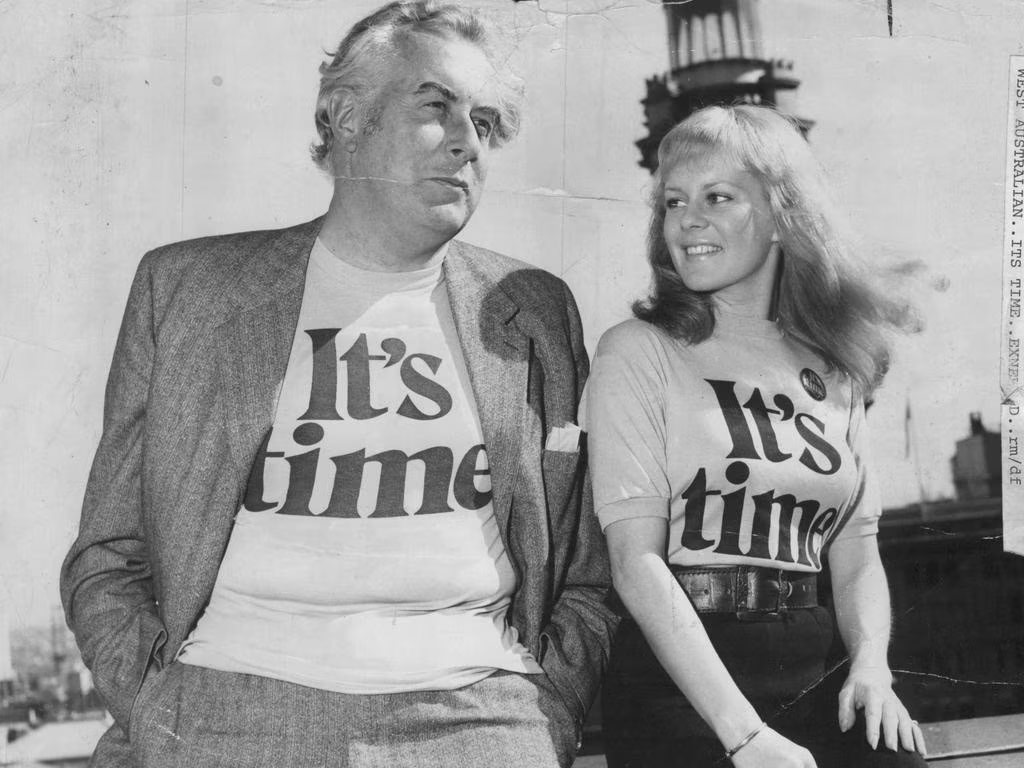
Gough Whitlam and Australian pop singer Little Patti during the Labor Party’s 1972 federal election campaign
An iconic black-and-white photograph captures the spirit of Whitlam’s poem. It shows him and Australian pop singer Little Patti side-by-side during the Labor Party’s landmark 1972 federal election campaign. Both are wearing matching ‘It’s Time’ T-shirts, the slogan that became the defining rallying cry of Whitlam’s campaign and one of the most iconic phrases in Australian political history. The mood they depict is buoyant and informal, a deliberate projection of energy, optimism and transformation. The pairing of a political giant with a beloved entertainer in this photo reflects the campaign’s savvy embrace of celebrity and popular culture to reach a fresh generation of voters. The photograph encapsulates the spirit of a moment that felt, to many Australians, like the dawn of an inspirational era in Australia’s political landscape.
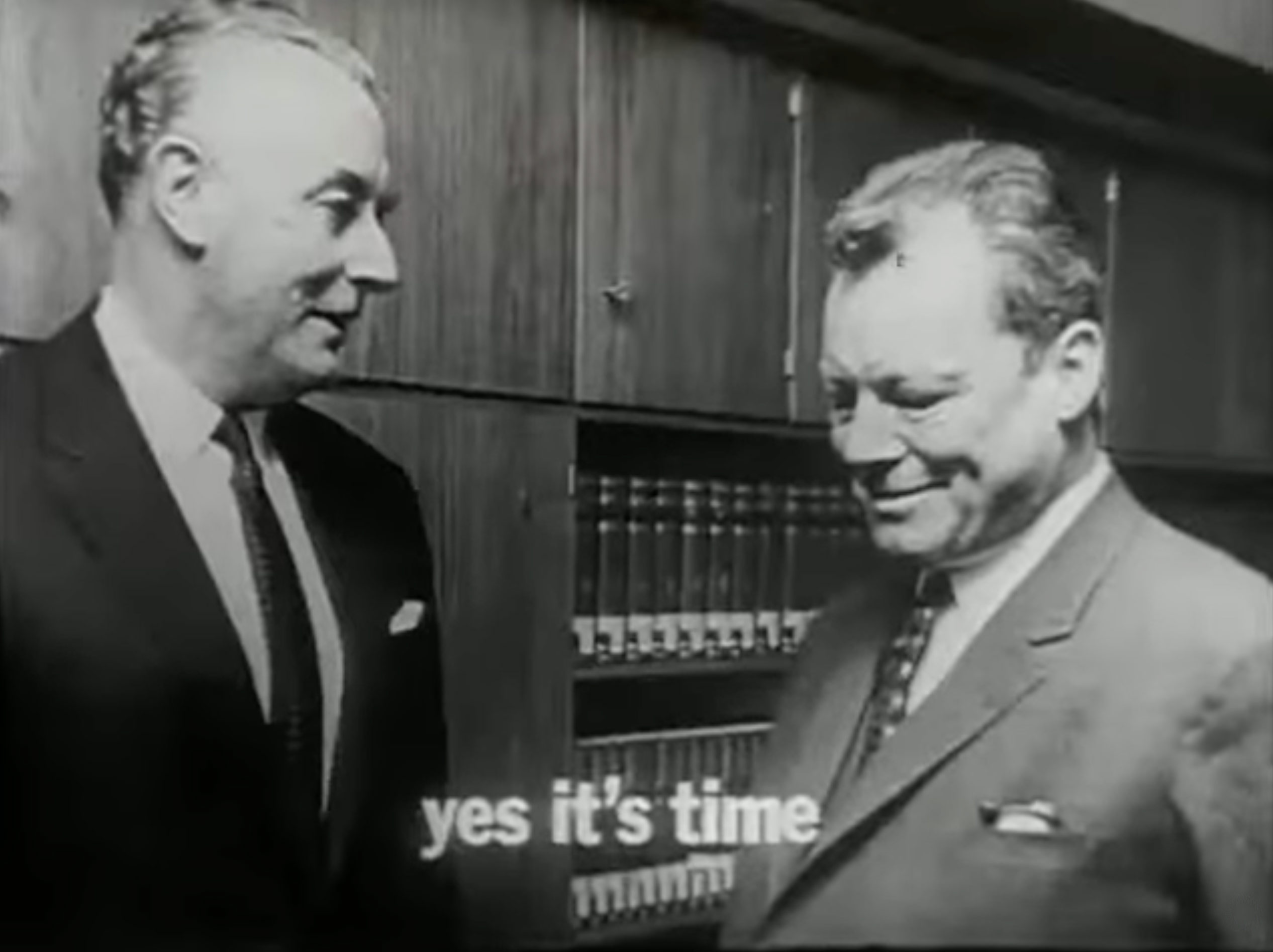
Labor Party ‘It's Time’ political campaign for the 1972 federal election campaign
Charismatic and a force of nature, Whitlam was a visionary leader. The election victory of 1972 unleashed the reformist tide that had been building inside the ALP since the 1960s. Within days of taking office, the government abolished military conscription and released draft resisters from prison. As well as abolishing university tuition fees, the government introduced Medibank, a universal scheme that began on 1 July 1975 and evolved into today’s Medicare. For the first time, millions of uninsured Australians, many on low incomes, had access to medical care regardless of their economic means.
The Whitlam era also marked a revolution in social equality. In 1973, the government formally abolished the ‘White Australia Policy’, replacing it with a multicultural framework. It also extended the adult minimum wage to women, introduced no-fault divorce and created supporting mothers’ pensions.
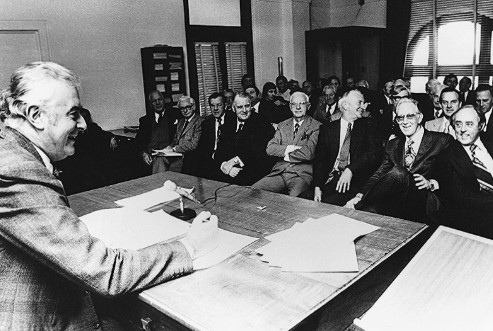
New Labor Government in 1972.
For Indigenous Australians, Whitlam moved toward self-determination and, in a gesture of enormous symbolic power, returned traditional Gurindji lands at Wave Hill Station in the Northern Territory. The government enacted 508 bills in 1,071 days, legislation impacting education, health, Indigenous rights, women’s equality, the environment and the arts. Whitlam’s legacy endures today. His government did not merely change Australia’s laws; he changed how Australia understood itself.
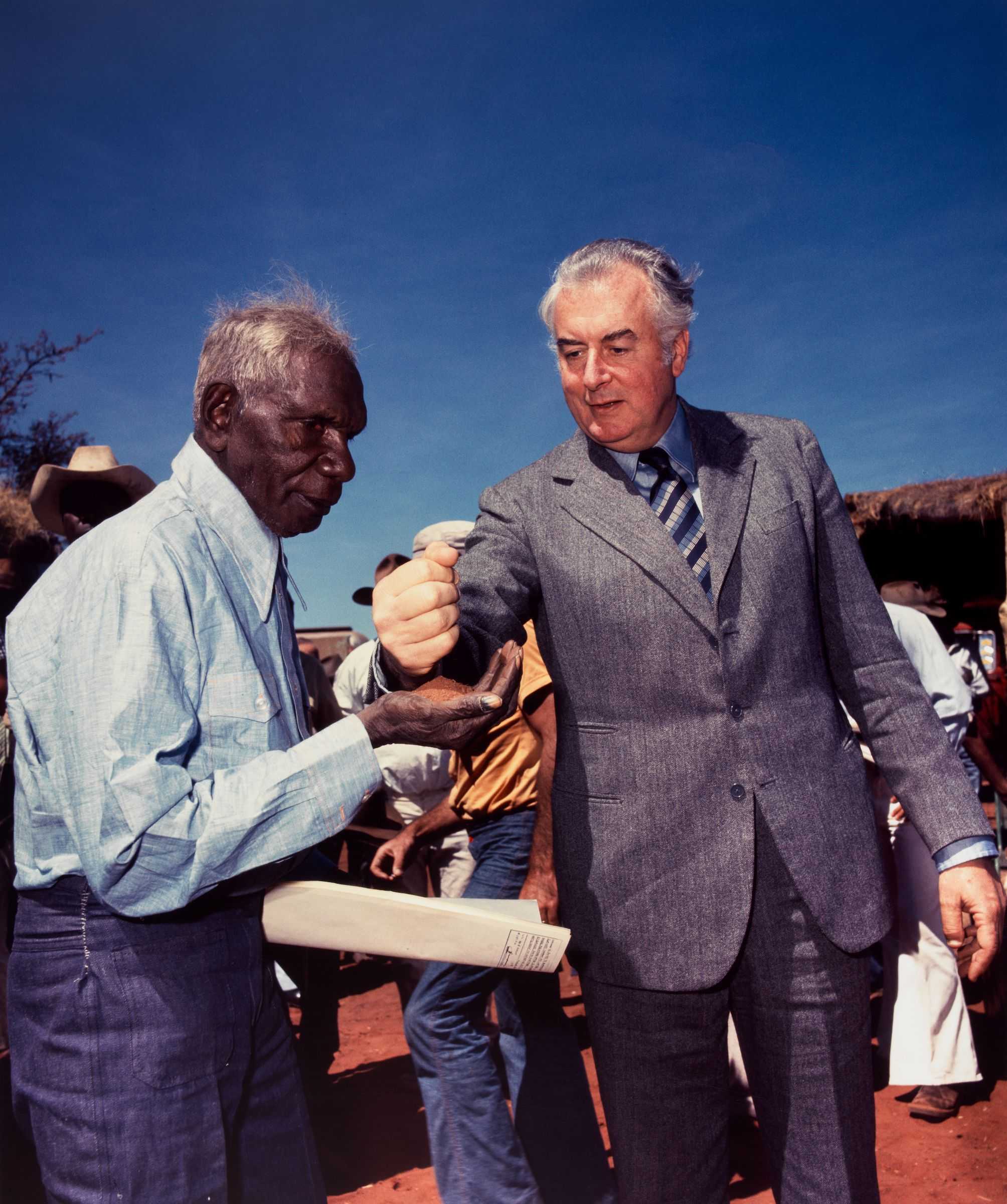
Prime Minister Gough Whitlam pours soil into the hand of traditional landowner Vincent Lingiari, 1975.
Photographer: Mervyn Bishop
© National Indigenous Australians Agency.
Portraying a Biographical Subject’s Multiple Personas
This biography is an unvarnished analysis of Whitlam’s achievements and failures, how he governed, and the dramatic story of his dismissal on Remembrance Day in 1975. Troy Bramston brings the biographer’s instinct for what is new, a compulsion to discover corroborated evidence that genuinely advances understanding of a biographical subject.
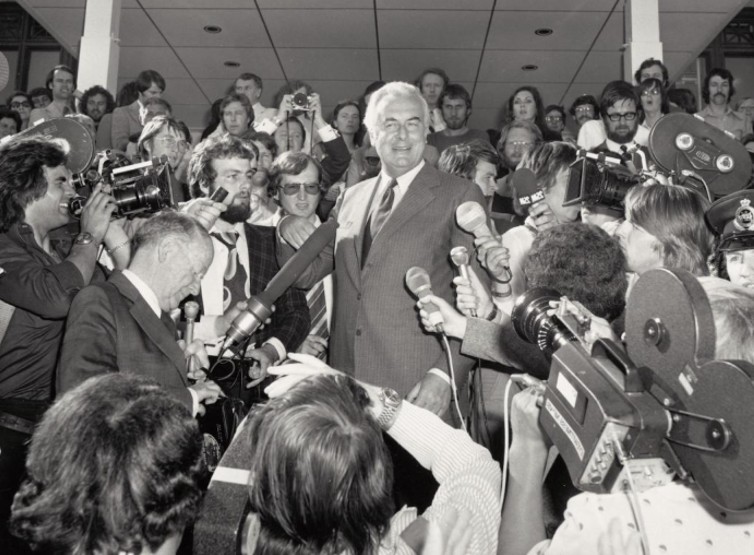
Gough Whitlam speaking on the steps of Parliament House in Canberra on 11 November 1975.
Australian Information Service.
What The Vista of the New ultimately circles is a defining paradox: that Whitlam’s greatest strengths, towering self-belief, singular vision and sheer force of will were also the instruments of his undoing. His school reports noted a difficulty getting along with other people; decades later, that same trait fractured his relationships with cabinet colleagues, blinding him to the warnings mounting around him.
Whitlam’s famous remark to his federal cabinet ministers: ‘This government has one thing going for it and you’re looking at it’, captures a magnificent, catastrophically flawed human being.
Praise for Gough Whitlam: The Vista of the New
‘Quite brilliant,’
PRIME MINISTER ANTHONY ALBANESE.
‘A bunker-buster of a biography, smashing through partisanship and legend in search of truth about our most controversial prime minister,’
LAURIE OAKES, former political journalist and author.
‘A fresh portrait of Whitlam emerges from this work, using previously unseen personal and official archives. Bramston gives a new take on Australia’s most revered and reviled prime minister,’
SARAH FERGUSON, journalist and host, ABC 7.30.
‘Superbly captures the largeness of vision, formidable achievement and the flaws and failures of Whitlam. Affectionate and critical, and on a grand scale worthy of its subject, this is a model biography,’
FRANK BONGIORNO AM, Professor of History at the Australian National University.
‘A nuanced biography that celebrates Whitlam’s personal attributes and policy and legislative achievements without glossing over his shortcomings,’
NICOLE ABADEE, Sydney Morning Herald.
‘Weighty, revealing and eminently readable,’
Canberra Times.
‘This is an outstanding biography of one of Australia’s greatest Prime Ministers,’
ELI BEVERLEY-SCHACK, Sydney Arts Guide.

Photo credit: John Feder.
Troy Bramston is a senior writer with The Australian newspaper, reporting on politics, policy and popular culture. He is an award-winning and best-selling author or editor of 12 books, including Gough Whitlam: The Vista of the New (2025), Bob Hawke: Demons and Destiny (2022), Robert Menzies: The Art of Politics (2019) and Paul Keating: The Big-Picture Leader (2016).
He was co-winner of an Australian Book Industry Award (2016), finalist for the Walkley Book Award (2017), shortlisted for the National Biography Award (2018) and shortlisted for the Australian Political Book of the Year Award (2022). Troy is a member of the Library Council of the State Library of NSW and the National Archives of Australia Advisory Council.