





In this latest episode of Biographers in Conversation, Australian-Palestinian author and educator, Dr Micaela Sahhar, chats with Dr Gabriella Kelly-Davies about her choices while crafting Find Me at the Jaffa Gate: An Encyclopaedia of a Palestinian Family.
‘If we were different people, to write down these words might be to leave them behind us. But words are our artifacts, and I am seeding a trail for the journey, home.’
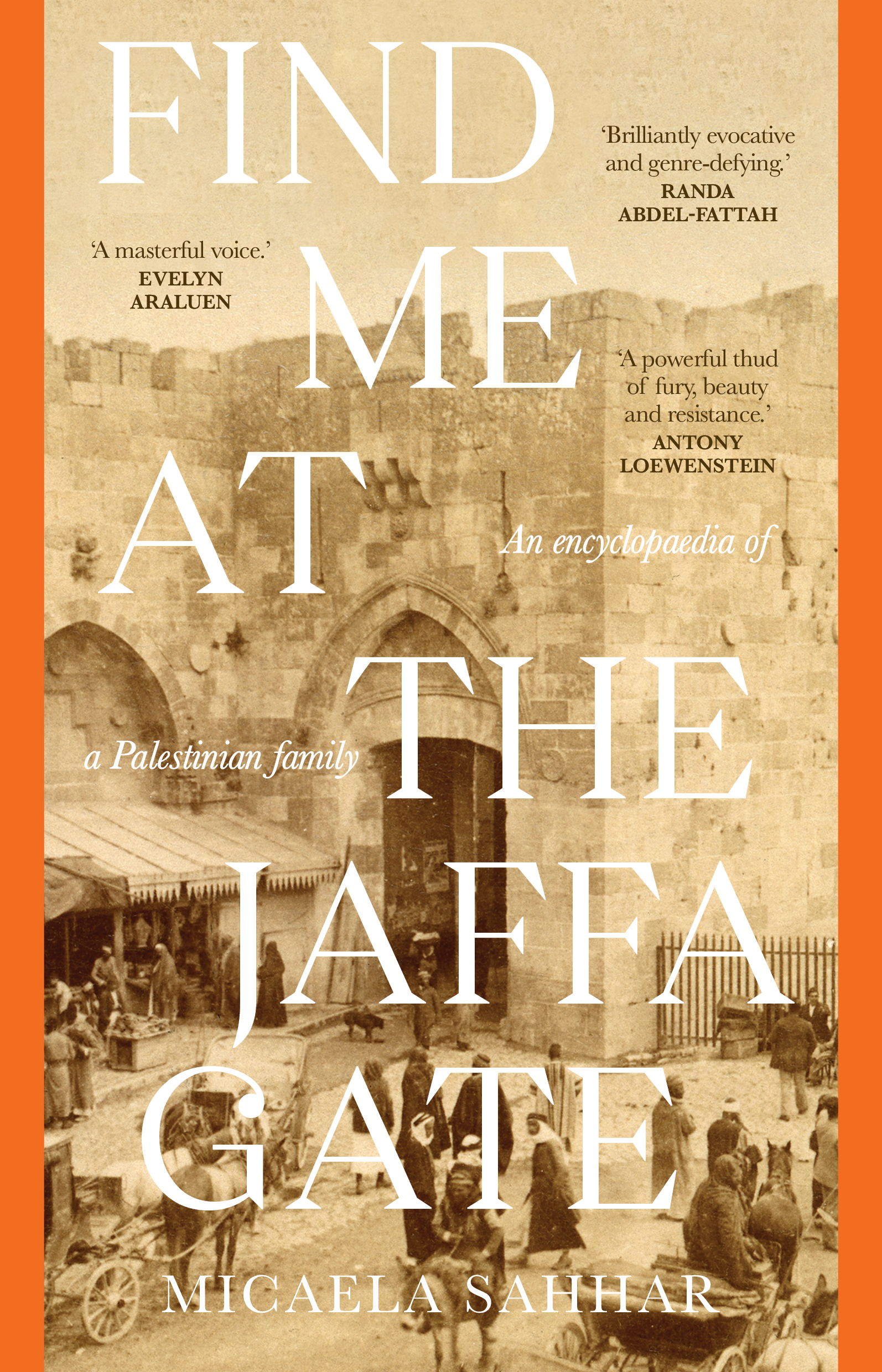
Winner: 2026 Victorian Premier’s Literary Award for Non-Fiction
Winner: 2026 UTS Glenda Adams Award for New Writing, NSW Literary Awards
Shortlisted: Douglas Stewart Prize for Non-Fiction; Multicultural NSW Award
Longlisted: Stella Prize 2026.
Find Me at the Jaffa Gate
Find Me at the Jaffa Gate is a portrait of Palestinian diaspora across four generations of Micaela Sahhar’s family. It pieces together fragments of memory, oral history, archival research and poetic speculation. A kaleidoscopic mosaic, it blends biography, memoir and social and cultural history. Fixing her gaze on moments, places and objects from the streets of Bethlehem to the Palestinian neighbourhoods of the New Jerusalem, Micaela writes about gaps, silences and blank spaces. Nevertheless, she insists on the vibrant reality of chance, fragments and memory to reclaim a place called home.
This story had been percolating in Micaela’s mind for a long time. However, she began drafting the manuscript with a sense of urgency triggered by the death of her grandmother’s last surviving sister, her Great Aunt Najla, in 2019. This loss made her feel the stories of her family risked slipping over the horizon from living memory. What followed was a narrative of extraordinary ambition and tenderness: a 48-entry encyclopaedia spanning four generations of a Palestinian family, from the streets of Jerusalem and Bethlehem to the Palestinian community of Melbourne.
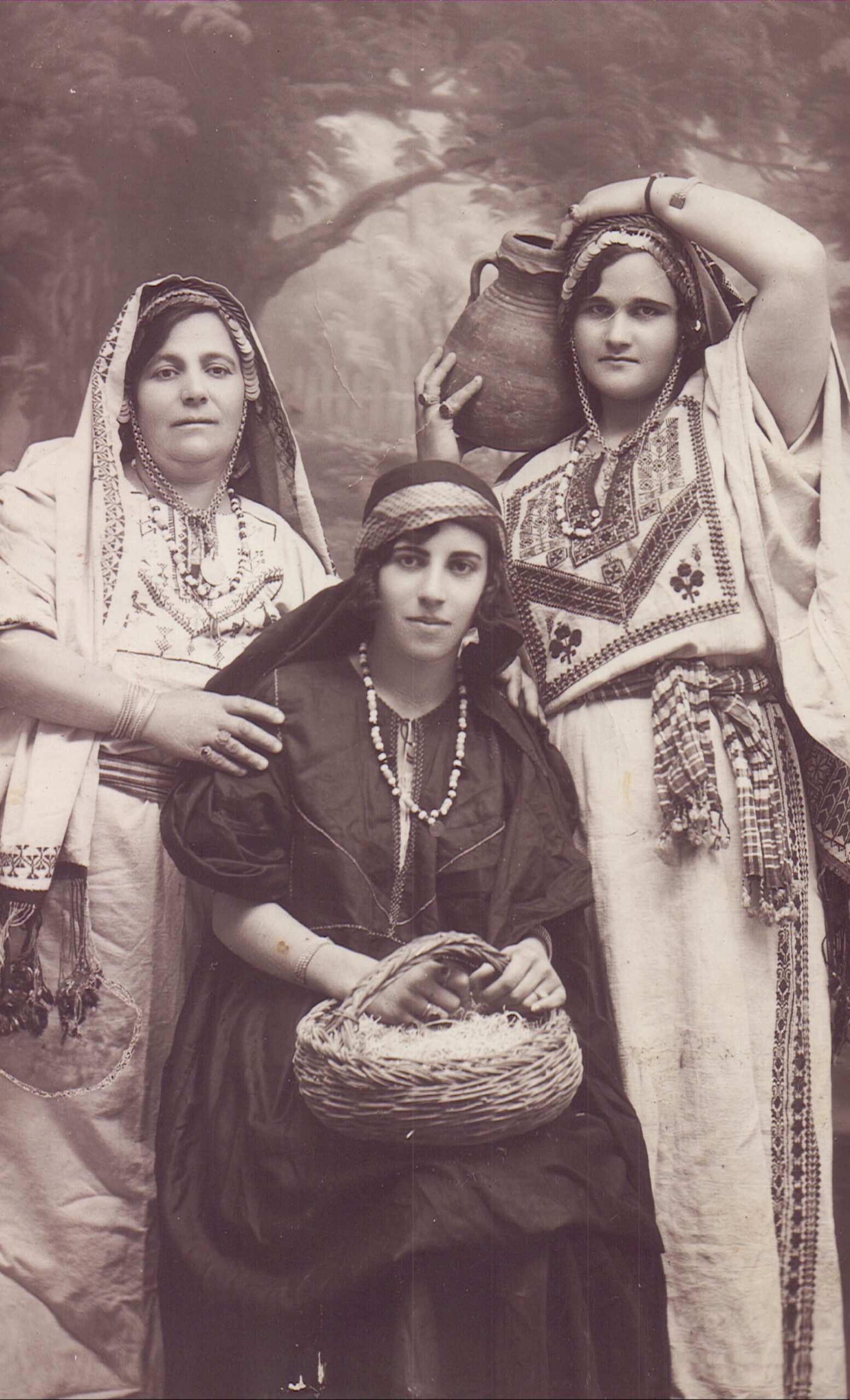
Ajia (Micaela’s great-grandmother), Ellen (Micaela’s grandmother) and Yousra (Ellen’s sister -in-law)
Studio portrait, Jerusalem, c. 1932
Sahhar family collection.
The 48-entry structure emerged from the nature of diaspora itself. ‘Diasporic experiences are, by their nature, fragmented’, Micaela explains. The encyclopaedic form, with its standalone entries that loop across time and geography, became both methodology and metaphor: a way of assembling a collective narrative out of fragments, silences and what dispossession steals that cannot be named.
As he departed Jerusalem in January 1948, compelled by Zionist terrorism to seek medical care in Amman for his wife Ellen, Micaela’s grandfather grabbed his papers in haste. These were a vital source of information, as was a series of oral history tapes his daughter recorded with him. In these tapes, Micaela’s grandfather loops between present and past, between stories and digressions, providing a structural model for the encyclopaedic, non-linear form of Find Me at the Jaffa Gate.
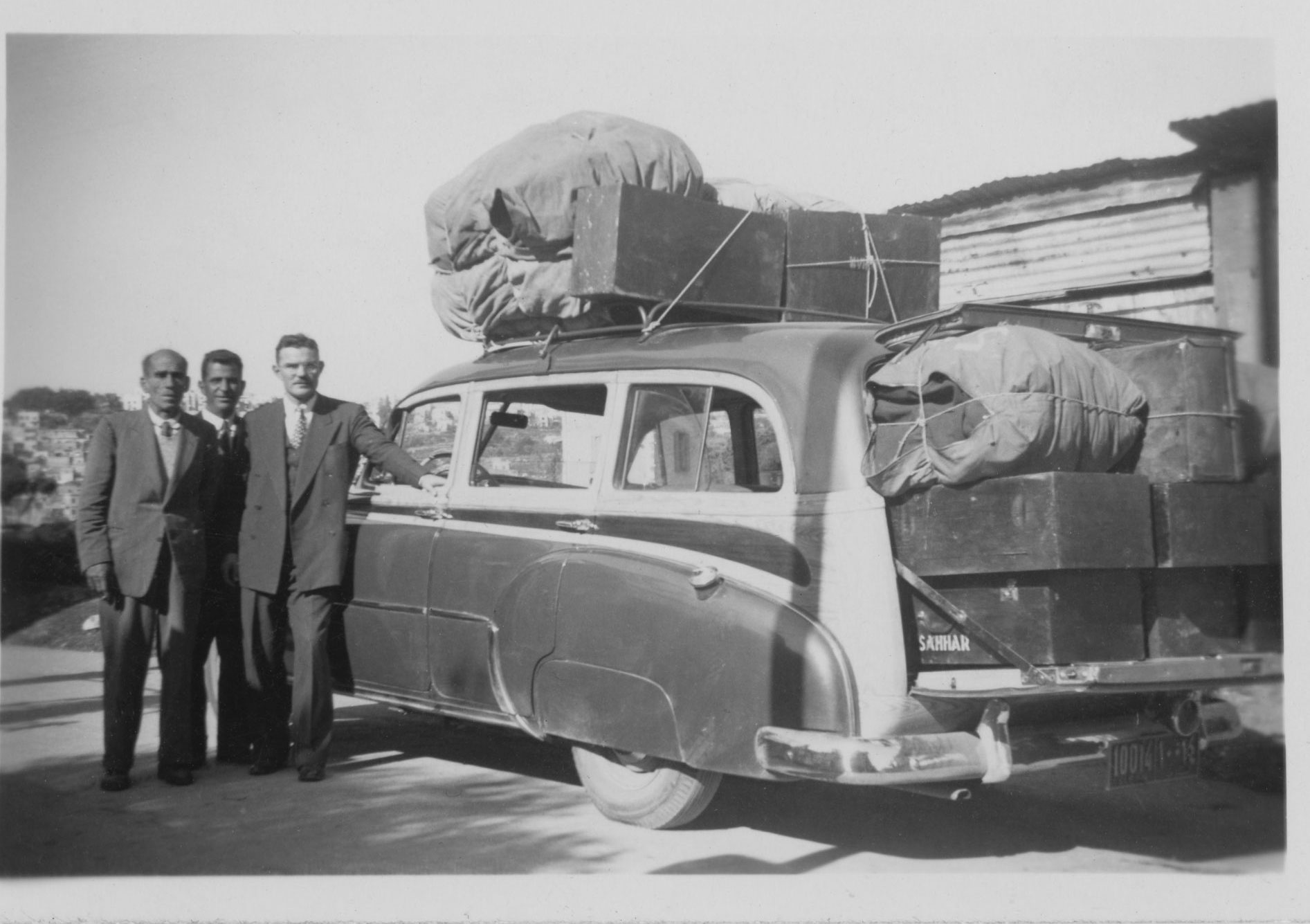
Car laden with the Sahhar family’s cases on the journey to Australia, figures unknown, Beirut, c.1952.
Sahhar family collection
Micaela also depended on photographs of family members that continued to yield secrets years after she first sat with them. A dedication-page photograph of her father as a toddler, standing before his grandfather’s Chevrolet in Amman, revealed two shadows Micaela had never noticed before: her grandparents coaxing her father to stand for the portrait.
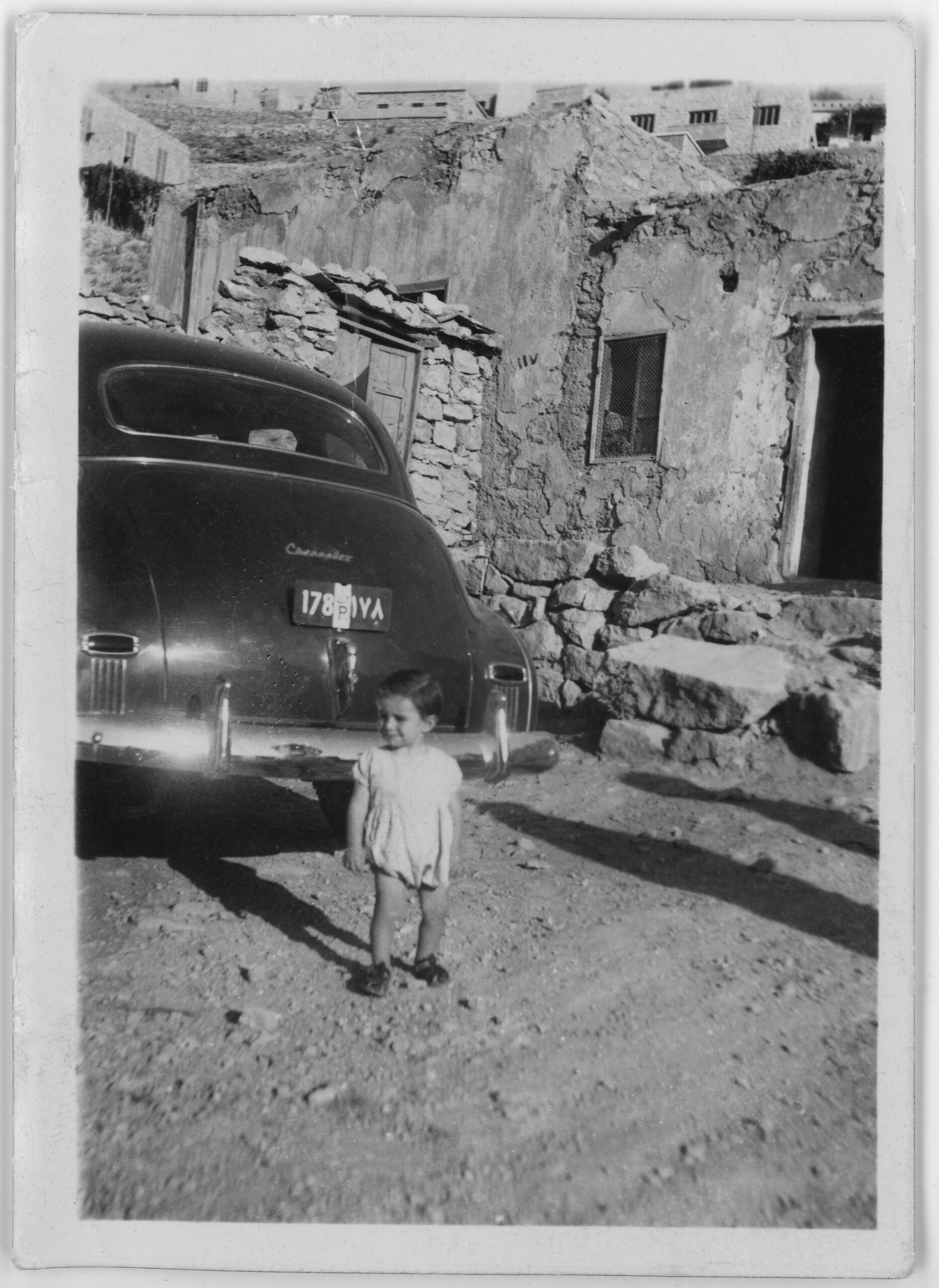
Joey (Micaela’s father) with Pa’s Chevrolet. Amman, c. 1949-1950.
Sahhar family collection.
In 2023, a grant enabled Micaela to visit Jerusalem, where she retraced her family’s footsteps through the Old City. Walking the terrain, its hills, distances and ordinary neighbourhoods brought a present-tense vividness to the story. Micaela learned to read absence as a form of evidence, drawing on object memory, fragments, photographs and ephemeral archives to reconstruct what official records could not.
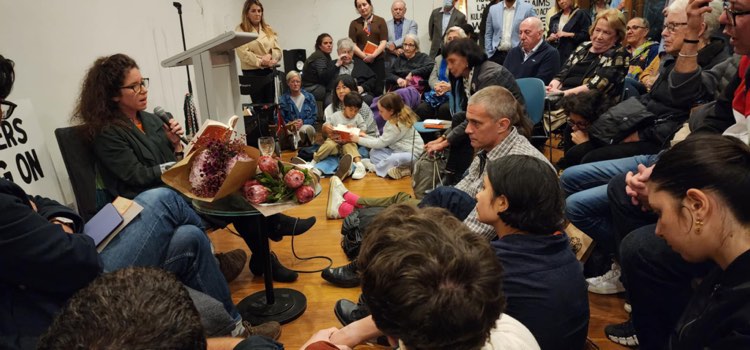
The launch of Find Me at the Jaffa Gate at the Institute of Post Colonial Studies, 14 May 2025.
Late in the drafting process, the story’s title shifted from its working form, An Encyclopaedia of a Palestinian Family, to the more searching, intimate Find Me at the Jaffa Gate. The subtitle, Micaela notes, is the structure; the title is the call.
During Melbourne’s COVID lockdowns, Micaela read the first draft of each entry to her father over the phone. A chapter about the arranged marriage of her father’s parents brought him to tears not because of what Micaela had written, but because of what she had deliberately withheld. ‘A fragmentary structure accommodates what stories are not yours to tell as much as what stories are yours to tell’, she explains.
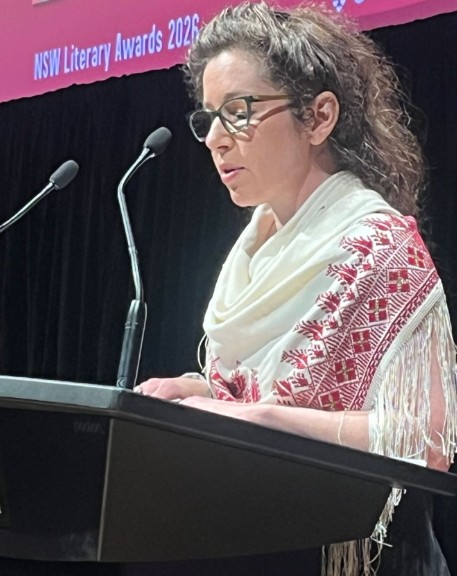
Micaela Sahhar’s acceptance speech at the NSW Literary Awards after receiving the 2026 UTS Glenda Adams Award for New Writing for Find Me at the Jaffa Gate.
The State Library of New South Wales, 18 May 2026.
Find Me at the Jaffa Gate insists that the Palestinian diaspora, as a diaspora, is something worth writing about: complex, fragmented and fully alive.
Praise for Find Me at the Jaffa Gate
‘One knows that Find Me at the Jaffa Gate has been percolating for a long time when they read it. Within 48 short chapters, Micaela Sahhar pieces fragments of memory, speculation, and archival research to tell a story of both the construction of her selfhood and Palestinian family: ‘not a story about wounds but about the preservation of something all its own’. It is a book full of brilliances even as occupation and exile cause history and geography to cut loose and spin around each other and as Sahhar herself asks, ‘What does it mean to be exiled and how do we take our revenge?’ Find Me at the Jaffa Gate is a gift, a remarkable debut memoir that is simultaneously a work of poetry in its lyricism and feeling; humour, anger, warmth, grief and love eddy in a whirlpool to form a work about sumud and survival.’
Victorian Premier’s Literary Award VPLA judges’ report
‘Find Me at the Jaffa Gate: An encyclopaedia of a Palestinian family is a deeply moving, confronting and life-affirming book. Innovative and poetic, it is both a political testimony and a nuanced tribute to a family displaced and torn apart by the Nakba. Micaela Sahhar writes with fierce intelligence and heart, forging a work of complex feeling, memory and exploration, a particularly notable achievement given that this is Sahhar’s first book.’
Douglas Stewart Prize for Non-Fiction Judges’ comments
‘Micaela Sahhar’s debut, Find Me at the Jaffa Gate: An encyclopaedia of a Palestinian family, harnesses evocative storytelling to tell the reader about the Palestinian diaspora in Australia and Sahhar’s memories of her roots and heritage. As much as it is a Palestinian tragedy of colonisation and dispossession, the book is also an affirmation of the spirit that survives and lives on.’
Multicultural NSW Award Judges’ comments
‘Micaela Sahhar’s Find Me at the Jaffa Gate is one of the most inventive, thought-provoking and captivating chronicles of Palestinian diasporic life I’ve had the pleasure of reading. It is a memoir written by a poet, poetry written by a novelist, literature written by an academic – it is all these things at once, insisting with a gentle yet unwavering confidence in the power of its unique, brilliantly evocative and genre-defying voice. Sahhar’s love for her family, homeland, the details and intimacies of everyday life; for language, history, archives, photographs and the treasured ephemera of a life in diaspora, shine through every line. The result is a book in which every word is deliberate, each line commands attention, each chapter is a world within a world.’
Randa Abdel-Fattah, academic and writer, author of 11 Words for Love
‘Micaela Sahhar’s family history has everything that makes any Palestinian family history worth telling and reading about. On the one hand, a rich culture that ranges from distinctive culinary practices to a distinctive sense of humour, and on the other hand, a tragic settler-colonial history of dispossession and oppression leading to a transnational diasporic existence, and that makes for a characteristic sense of space and place. But this is not any book about Palestine. Sahhar is a superior storyteller with a knack for highlighting evocative details. Storytelling, like any craft, embodies in different degrees the labour of the many people who have told stories about one’s subject matter in the past. The more a writer is well-read the more this shows in the historical density and the social complexity of their storytelling. Sahhar’s book is definitely dense and socially complex in this way. This could make for ‘heavy’ reading if it wasn’t for Sahhar’s superior writing skills. Indeed, I would say that more than anything else, this is a book for people who enjoy good writing, regardless of what the story is about. But of course, it matters what this story is about. This is a book about Palestine and Palestinians, and in the way the book is grounded in both the Palestinian tragedy and the Palestinian unlimited capacity to affirm life, the spirit of anti-colonial resistance animates every one of its pages. Sahhar finishes the book saying that like Mahmoud Darwish’s father she hopes that one day she will be able to go to Palestine, to the streets where her family originates from, and shout I am I. And I am here. But in a way, by writing this book, she already does that, if not from Palestine at least from the position she occupies within the transnational space of western colonialism.’
Ghassan Hage, professor of anthropology at the University of Melbourne and author of The Diasporic Condition: Ethnographic Explorations of the Lebanese in the World
‘Find Me at the Jaffa Gate is an aching and tender study of diaspora, grief, memory and history. Sahhar has a masterful voice, playing subtly with tense and form to give agency to a beautifully layered narrative, interwoven with fragments, records and intimate moments of lives permanently changed by Nakba. Find Me at the Jaffa Gate tells an unmissable story of Palestinian survival and resistance across space and time.’
Evelyn Araluen, Bundjalung poet and author of Dropbear
‘Sahhar chronicles the essential truths of Palestine with intricacy and finesse and in doing so, has crafted a mighty text that demands unbroken attention. Find Me at the Jaffa Gate is a book that will be read, re-read, dog-eared, underlined and recited.’
Hasib Hourani, author of Rock Flight
‘Find Me at the Jaffa Gate opens with a recollection of the five-year-old Micaela bobbing off to preparatory school with pigtails, glasses and missing teeth. As she enters the classroom, her sense of self is shattered – in a nation that is home but not home, when a teacher butchers her family name and is visibly appalled when told the name is Palestinian. As the child of diaspora, born on the unceded lands of Australia, Micaela is ever conscious of the tension between being in exile on homelands now occupied; and living, working and writing on the occupied lands of Naarm – in colonial Australia – a site of invasion, and genocide. Find Me at the Jaffa Gate writes of and to dispossession, displacement, trauma, loss, resilience and is testimony to the power of intergenerational story and memory that survives, and lives on so that all those who remain, and their children and children’s children remember. In this polyphonic narrative, we hear many voices – some still living, others passed, now scattered across nations and continents, yet still connected through home – Palestine.’
Jeanine Leane, Wiradjuri writer, critic, poet and author of Gawimarra: Gathering.
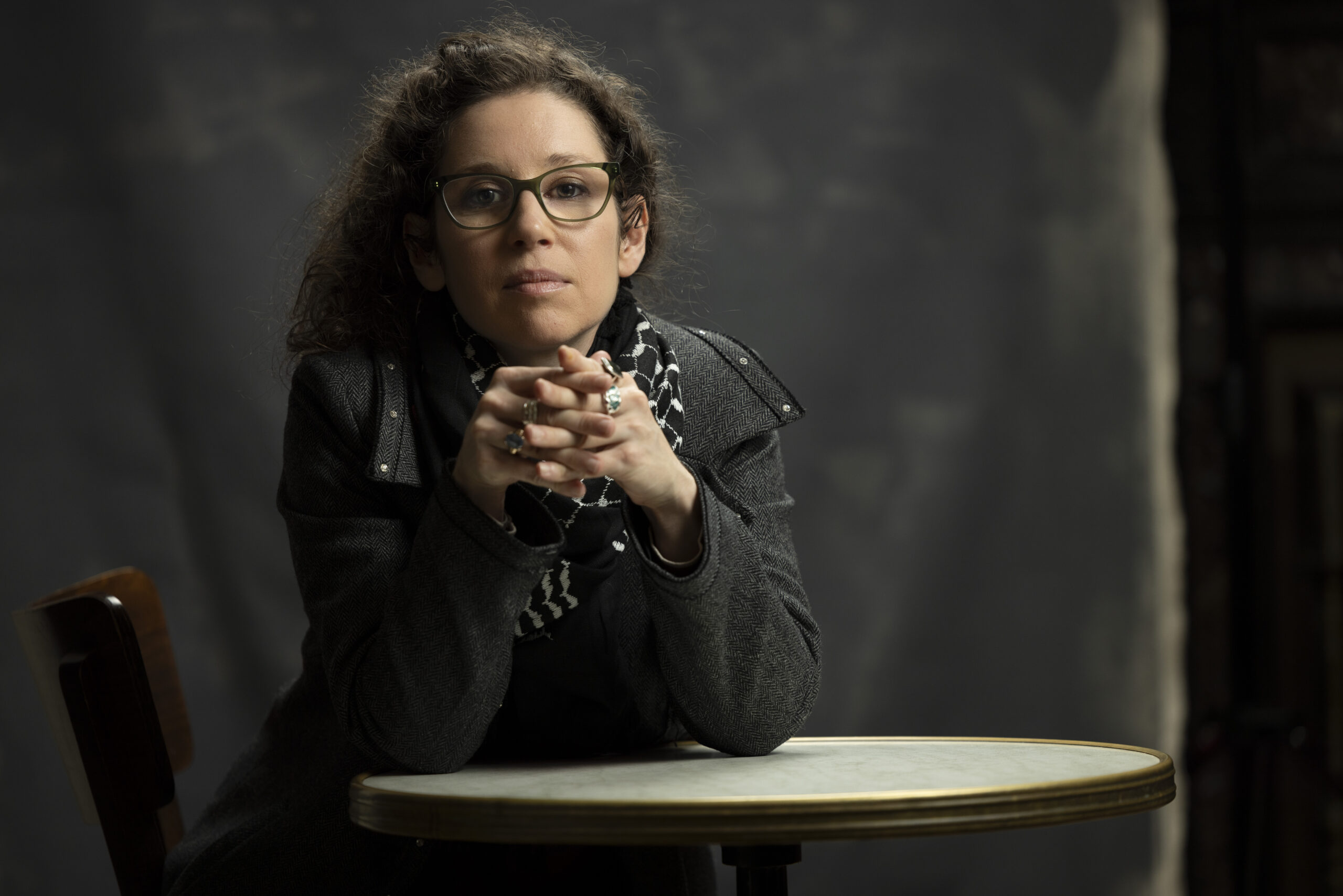
Photo credit: Tim Herbert
Micaela Sahhar is an Australian-Palestinian writer and educator living on unceded Wurundjeri Country. Her essays, poetry and commentary have appeared in Cordite, Meanjin, Overland, Southerly and Sydney Review of Books, among others. Her first book, Find Me at the Jaffa Gate: an encyclopaedia of a Palestinian family (NewSouth) won the 2026 Victorian Premier’s Literary Award for Non-Fiction and the UTS Glenda Adams Award for New Writing at the 2026 NSW Literary Awards; it was shortlisted for two other NSW Literary Awards and was long listed for the 2026 Stella Prize.