





In this episode of Biographers in Conversation Professor Zachary Leader, an eminent biographer and Fellow of the Royal Society of Literature, chats with Dr Gabriella Kelly-Davies about his choices while crafting Ellmann’s Joyce: The Biography of a Masterpiece and Its Maker.
A Times Literary Supplement Best Book of the Year
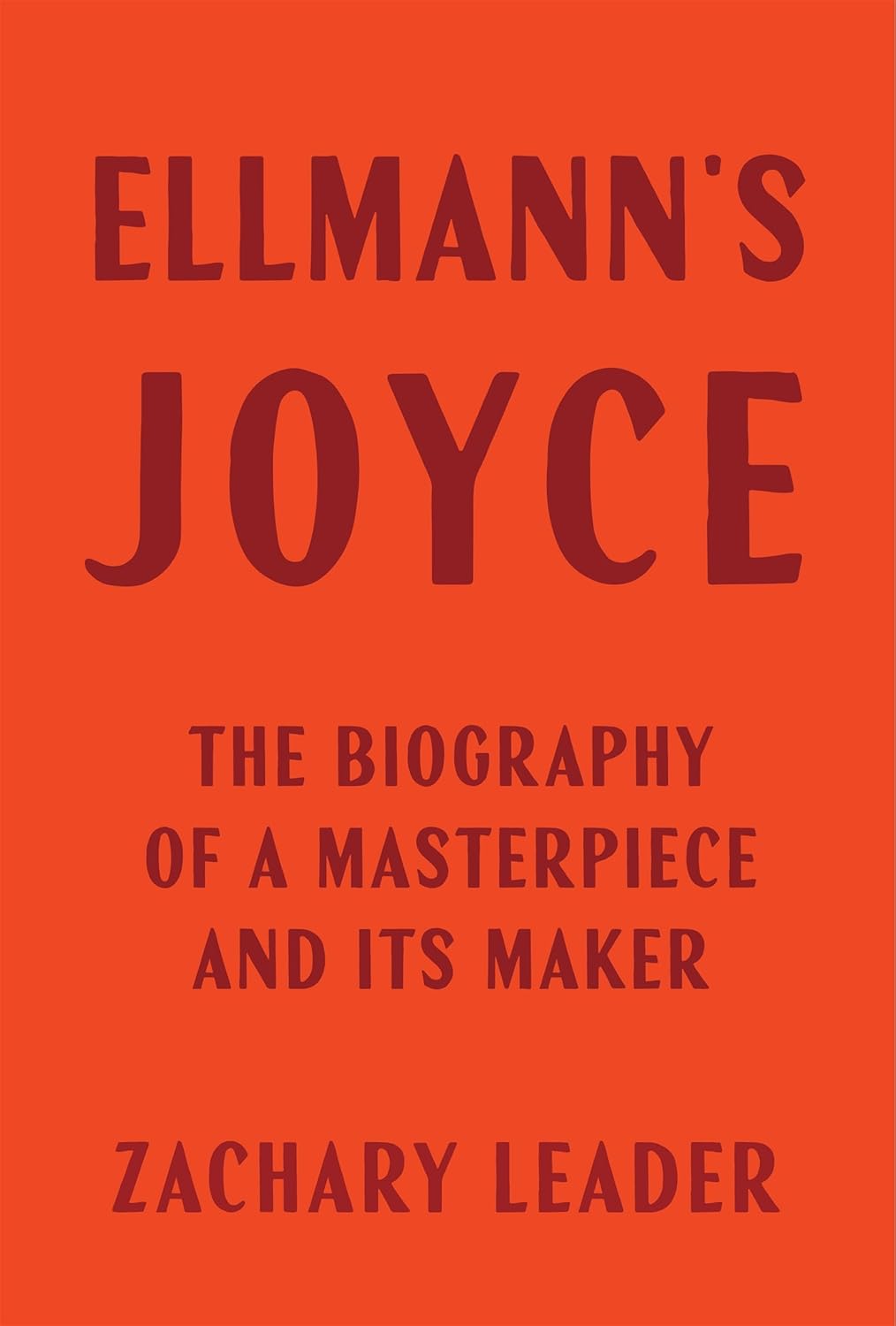
Ellmann’s Joyce
Ellmann’s Joyce: The Biography of a Masterpiece and Its Maker is a rare literary achievement, a biography of a biography. This book examines Richard Ellmann’s legendary James Joyce, widely hailed as the greatest literary biography of the 20th century and winner of the prestigious National Book Award.
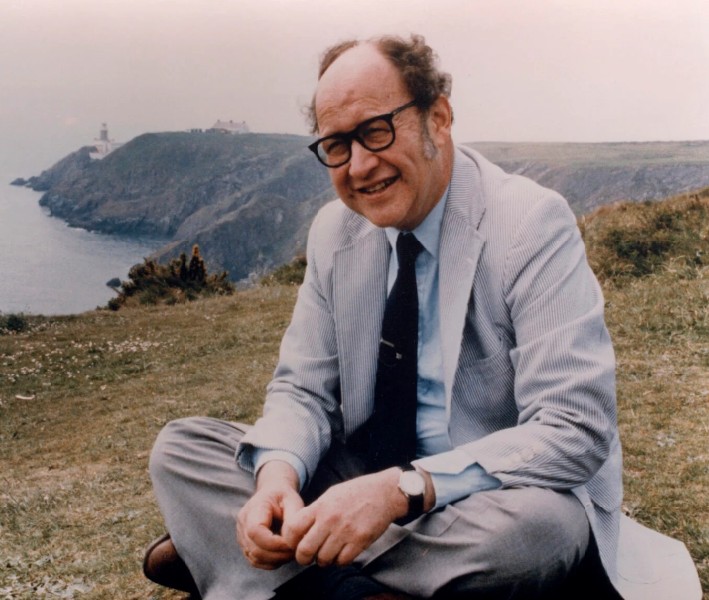
Richard Ellmann, 1970s
Photo credit: Sean O’ Mordha
National Portrait Gallery, London
Leader reveals that the catalyst for crafting Ellmann’s Joyce was a photograph of the 1960 National Book Award winners. Ellmann stood between Robert Lowell (poetry) and Philip Roth (fiction), yet while numerous books had been written about Lowell and Roth, none existed about Ellmann. Leader wondered why a biographer who won equal prize money should be so invisible. The answer, he suspected, had something to do with biography’s status as a lesser genre.
Writing About a Living Subject
Ellmann’s Joyce explores how and why Ellmann chose James Joyce as his biographical subject and how he gained the cooperation of the author’s family and estate. It also examines how he doggedly pursued scattered sources and convinced over 300 people to speak with him about Joyce. In compelling storytelling, Leader reveals how Ellmann placated his publishers when they became impatient with his glacial progress and how he shrewdly thwarted competitors. Fascinatingly, Leader shares Ellmann’s decision-making process about what to include, suppress and emphasise in the narrative and when to speculate beyond verifiable fact.
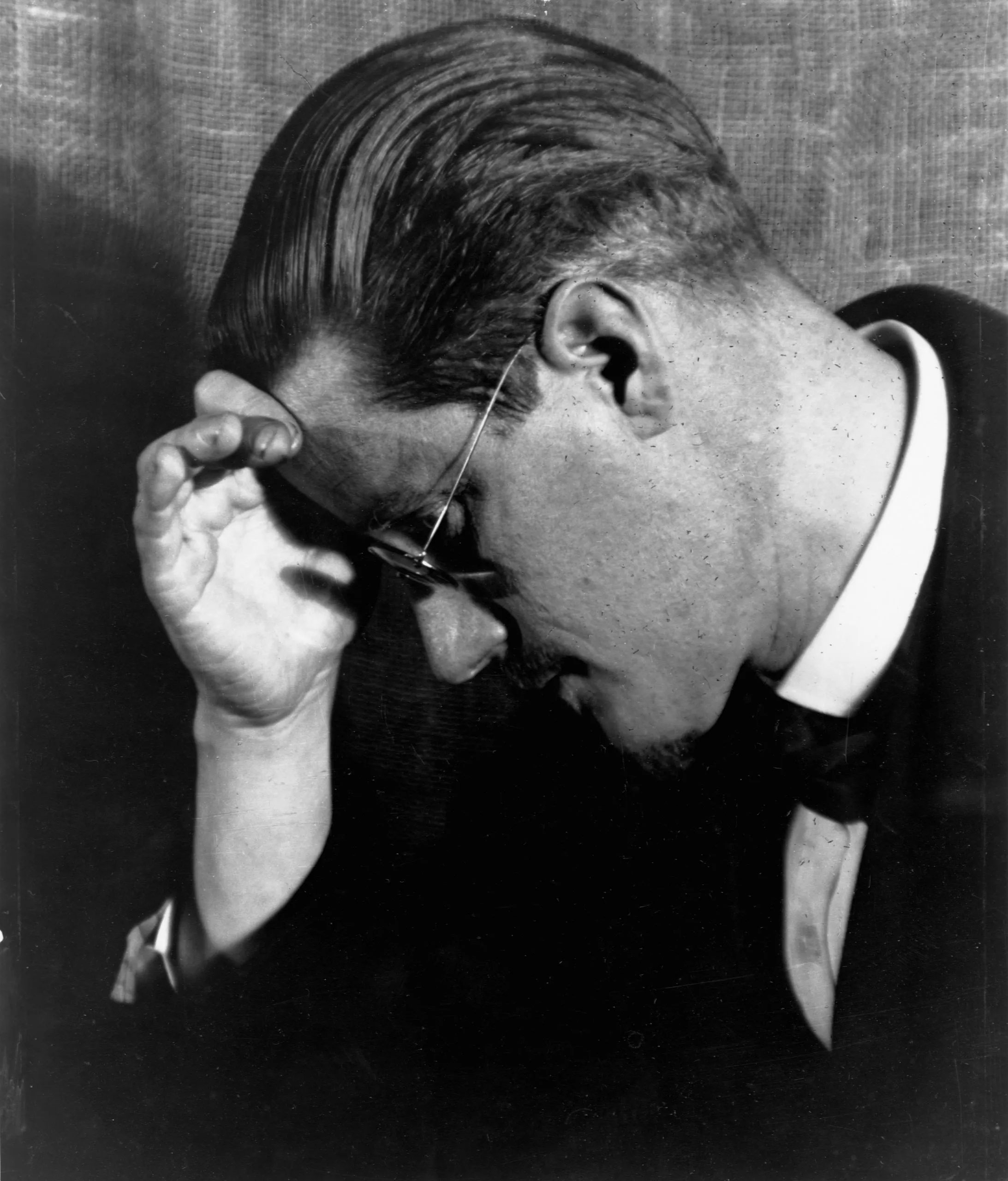
James Joyce
Source: Shutterstock.
Ellmann’s Joyce is structured in two sections. Like a traditional chronological narrative, the first half traces Ellmann’s life from childhood through to his decision in 1952 to write a biography of James Joyce. In the second half, Leader adopts a thematic approach that reads like a masterclass in the craft of biography.
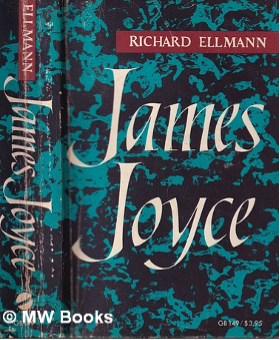
First edition: James Joyce by Richard Ellmann
Zachary Leader believes that a literary biography should show what it was like to meet the author and what it was like to be the author. He also constructs a powerful argument for literary biography to be viewed as art rather than merely scholarship. Ellmann’s Joyce illustrates this belief, reminding us that understanding an artist’s life deepens our appreciation of their creative transformation of experience into art. As Ellmann himself argued: ‘Joyce built his art upon a rock, and the rock was reality.’
Praise for Ellmann’s Joyce
The British critic and scholar Christopher Ricks said of Ellmann’s biography that it ‘engages every aspect of Joyce’s life and interests’, from the amatory to the political to the domestic…Ellmann’s Joyce does the same for its likable subject.
James Campbell, Wall Street Journal
[An] even-handed, well-written and sometimes provocative biography.
Michael Dirda, Washington Post
Leader explores in detail topics involved in the book’s creation—sleuthing methods, rivals, reviewers—as well as its afterlife…Running in the background of this meta-biography is a history of literature as a discipline in America.
Eric Bulson, The Atlantic
An unusual and engaging book, half an account of Ellmann’s life leading up to the Joyce biography, and half a detailed history of the book’s composition and its subsequent place within Joycean scholarship.
Seamus Perry, London Review of Books
I have always been grateful to Ellmann for taking such a democratising approach to this most despotic of authors, just as I am now to Leader for following suit…what Zachary Leader gives us is a richly researched, nuanced portrait of the earlier life and working processes of a writer who not only shone light into one of the great literary minds of the twentieth century, but, in the process, became one in his own right.
Eimear McBride, Times Literary Supplement
Leader’s meta-biographical approach offers a case study, in effect, for the stakes of thinking about biography as an art…Leader has written an engaging and, moreover, fair account of what was probably the most important literary biography of the 20th century.
Michelle Taylor, The Nation
The way in which Ellmann’s remarkable biography came into being is the subject of an unusual and eminently humane new book by Zachary Leader, himself a distinguished practitioner of the erudite yet highly readable doorstopper school of biography that Ellmann pioneered, via his lives of Kingsley Amis and Saul Bellow…[offers] a lucid account of what makes Ellmann such a consummate practitioner of an art of writing that, Leader clearly feels, does not always receive the respect that it deserves.
Joe Moshenska, The Observer
A wise, balanced and utterly compelling biography.
Frances Wilson, The Spectator
[Leader] writes not only with great respect for the labour involved, but with a sense of its understated drama… makes a compelling case for the validity and critical value of the often maligned genre of literary biography.
James Ley, Australian Book Review
The fullest account yet available of the writing of the great James Joyce biography.... more than just a biography. It is an exploration of the making of the very craft it exemplifies, a fascinating study of the creation of two legends: that of the writer with whom Ellmann's work deals and that of the biography itself.
Terence Killeen, Irish Times
Leader is himself a distinguished biographer…[in this book] he offers an extended homage to a master in his field.
Rhodri Lewis, Literary Review
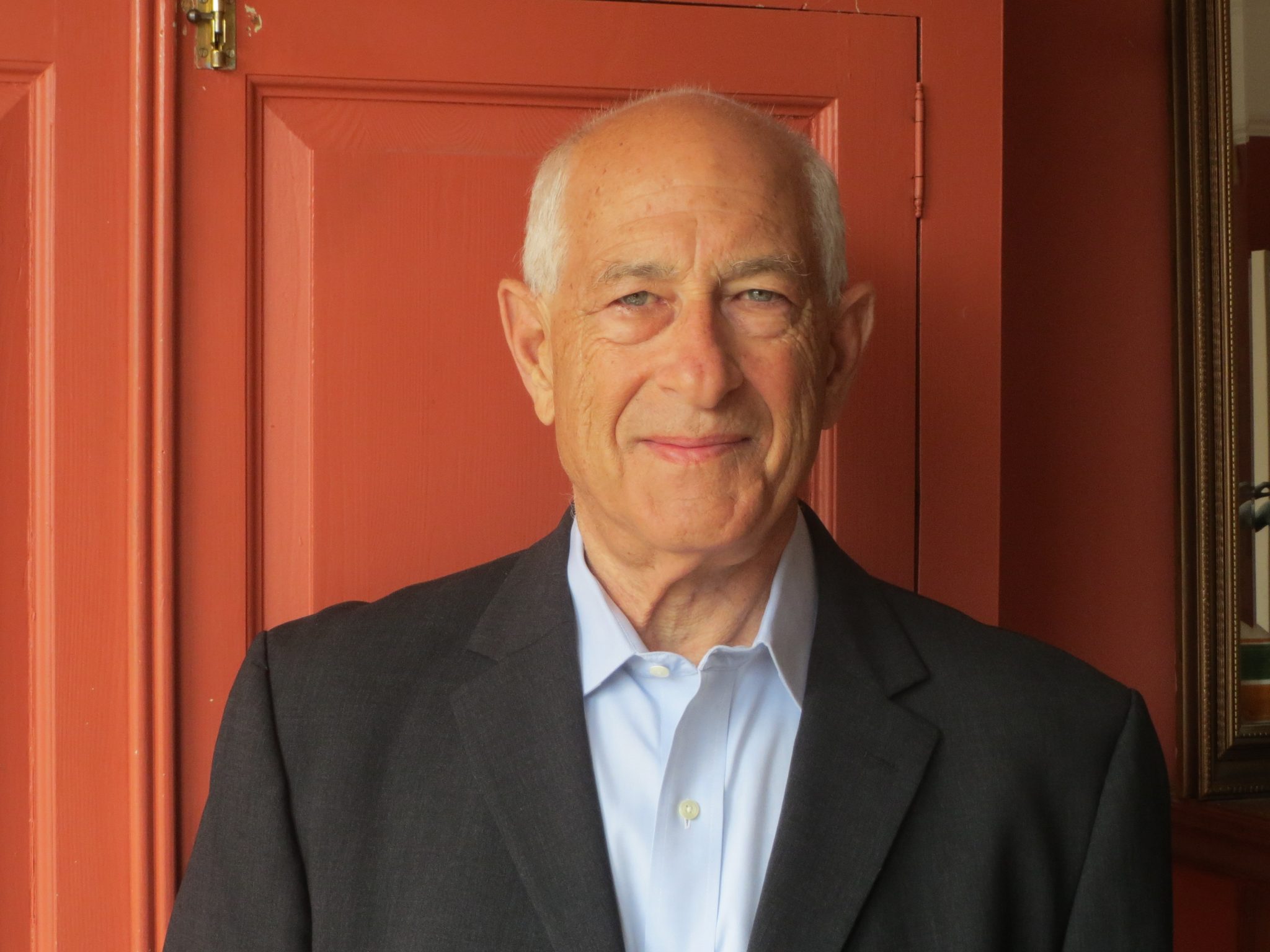
Photo: Alice Leader
ZACHARY LEADER is professor of English literature at the University of Roehampton in London. Although born and raised in the United States, he has lived in Britain for more than forty years and has dual British and American citizenship. In addition to teaching at Roehampton, he has held visiting professorships at Caltech and the University of Chicago. He was educated at Northwestern University; Trinity College, Cambridge; and Harvard University; and is the author of Reading Blake’s Songs, Writer’s Block, Revision and Romantic Authorship, The Life of Kingsley Amis, a finalist for the 2008 Pulitzer Prize in Biography, and The Life of Saul Bellow: To Fame and Fortune 1915–1964. He has edited Romantic Period Writings, 1798–1832: An Anthology (with Ian Haywood); The Letters of Kingsley Amis; On Modern British Fiction; Percy Bysshe Shelley: The Major Works (with Michael O’Neill); The Movement Reconsidered: Essays on Larkin, Amis, Gunn, Davie, and Their Contemporaries; and On Life-Writing. He is a Fellow of the Royal Society of Literature and General Editor of The Oxford History of Life-Writing, a seven-volume series.