





Picture a candlelit chamber in Elizabethan England: a woman bends over a sheet of parchment, quill in hand. Outside, crowds cheer a Shakespeare play at the Globe, but she writes in quiet defiance. It’s a side of the Renaissance literary world we rarely hear about: women putting quill to paper, bold, creative, determined, yet most are invisible and voiceless in the historical record.
Best Books of Year, The New Yorker
The 75 Best Books of 2024, The Boston Globe
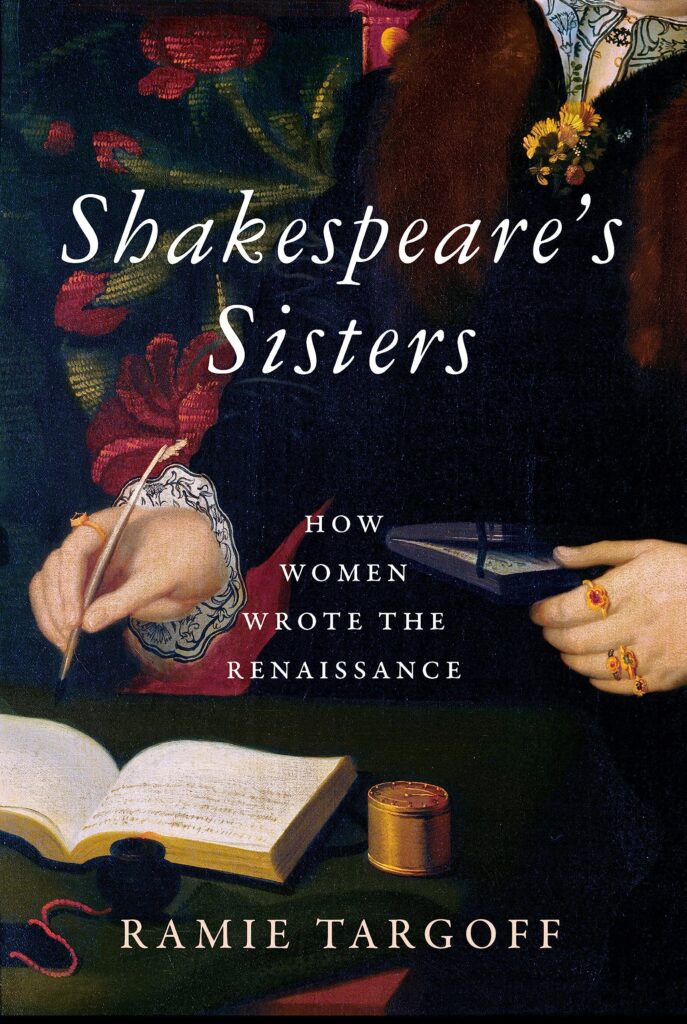
In this episode of Biographers in Conversation, Dr Ramie Targoff, a Renaissance literature scholar, chats with Dr Gabriella Kelly-Davies about her choices while researching and crafting Shakespeare’s Sisters: How Women Wrote the Renaissance. Ramie introduces us to four remarkable women from Shakespeare’s time who refused to be silenced. Together, their stories—spanning poetry, translation, memoir and drama—suggest that Renaissance creativity extended far beyond the male-dominated canon.
Ramie opens Shakespeare’s Sisters by invoking Virginia Woolf’s dark fantasy from A Room of One’s Own, the notion that if Shakespeare had a sister with equal talent, she would have faced insurmountable barriers, likely ending as a witch or a madwoman. Ramie’s project is a provocation to Woolf: yes, these women did exist and they thrived!
Virginia Woolf was Wrong!
Rather than celebrate a single overlooked figure, Ramie profiles four remarkable Renaissance women writers: Mary Sidney Herbert (Countess of Pembroke), Amelia Lanier, Elizabeth Carey and Anne Clifford. Contemporaries of Shakespeare, they were born within a 25 to 30-year span. Each represents a different literary first: In the 17th century, Amelia Lanier was the first woman to ever publish an original book of poetry; Elizabeth Carey the first to write an original tragedy; Mary Sidney the first to translate the Psalms into English verse; and Anne Clifford the finest diarist and memoirist of her age.
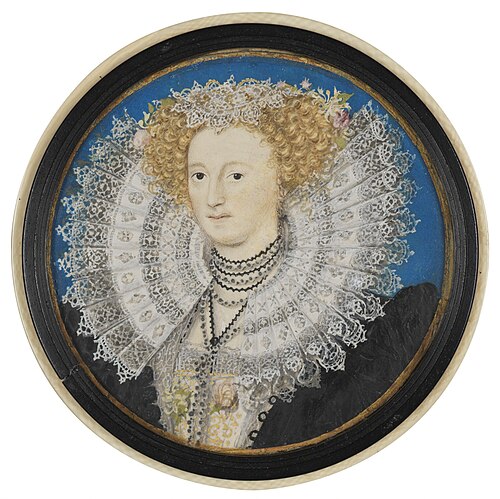
Mary Sidney Herbert, Countess of Pembroke,
Artist: Nicholas Hilliard, (1547–1619), Public domain, via Wikimedia Commons.
Ramie’s research was painstaking detective work. Personal papers proved most revealing: letters, diaries and Anne Clifford’s remarkable memoir written by her daughters. But Ramie went further by retracing her subjects’ footsteps. She visited Ludlow Castle in Wales where Mary Sidney spent her childhood; walked through London streets where Amelia Lanier grew up; and stood in Anne Clifford’s castle bedchambers in the Lake District and Westmoreland. Physical immersion in these spaces enabled her to conjure for readers what lived experience meant, the distances travelled by carriage, the landscape that shaped their imaginations and the daily realities of life in castles and palaces.
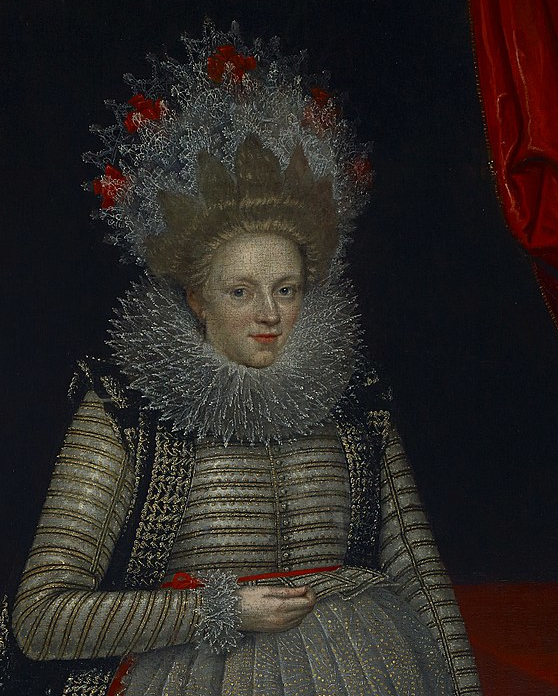
Elizabeth Carey Amherst.
The most extraordinary story involves Amelia Lanier, daughter of an Italian immigrant father and a mother who couldn’t sign her name. In 1611, she published Salve Deus Rex Judaeorum, an 1,800-line poem in ottava rima, a linguistic feat matched only by her spiritual audacity. Ottava rima is an eight-line stanza form of Italian origin written in iambic pentameter. Each stanza combines three alternating rhymes with a closing couplet, giving it a distinctive rhythm of building tension followed by a punchy, often epigrammatic resolution in the final two line. Sustaining this pattern with its couplet resolution across 1,800 lines is a considerable technical achievement because each stanza requires three separate rhyme sounds threaded through six lines before closing with a distinct couplet. This formal mastery underscores why the passage frames her poem as combining linguistic virtuosity with theological boldness: she deployed a prestigious, male-dominated poetic form to assert a woman's authoritative retelling of the Passion.
Amelia Lanier wasn’t just retelling Christ’s passion; she was proposing a distinctly female perspective on Christianity’s central event, predating Milton’s invocation of divine inspiration by six years.
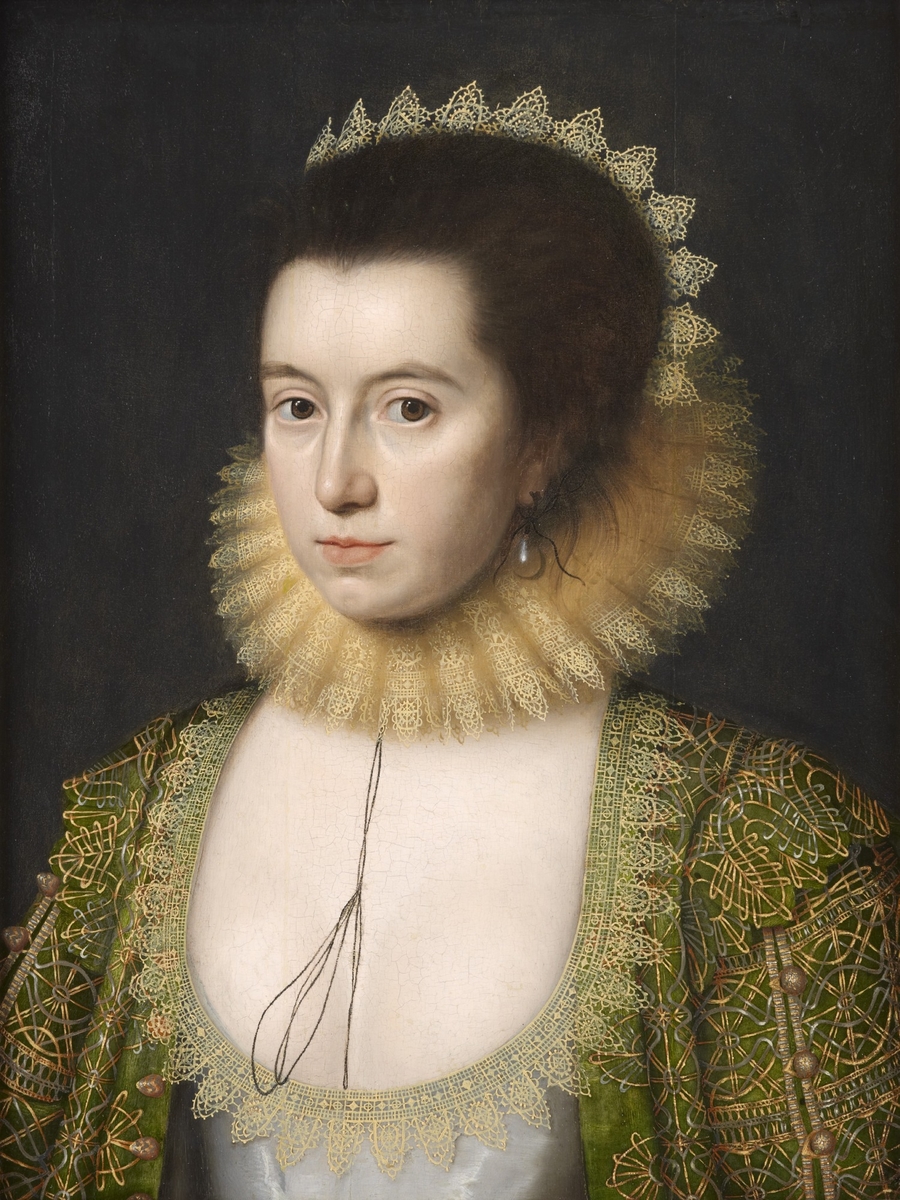
Anne, Countess of Pembroke (1590–1676), Lady Anne Clifford,
Artist: William Larkin,
Public domain, via Wikimedia Commons.
How did Amelia acquire such an education? The paper trail is thin, but a crucial clue survives: a dedication poem in which she credits the Countess of Kent with having brought her up and taught her. An astrologer’s notes confirm this, providing what Ramie refers to as a ‘second corroboration’. This points to Ramie’s methodological honesty
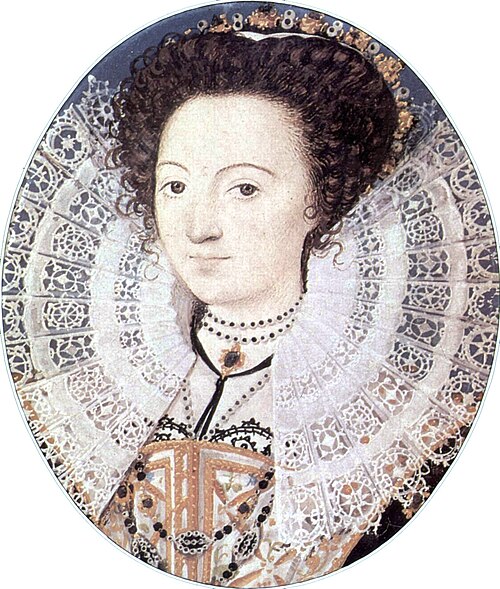
Amelia Lanier
Photo credit: Nicholas Hilliard
Public domain, Wiki Commons.
Where the historical record is silent or opaque, she admits this to readers. She walks them through her speculation, never fabricating, but always explaining her detective work. As she argues, the difference between biography and historical fiction is that she ‘can’t make stuff up’, a commitment that strengthens rather than weakens her narrative.
‘Ramie Targoff restores these women to the starring roles they deserve in this fresh, galivanting and indispensable history of Renaissance England.’
—Heather Clark, author of Red Comet:
The Short Life and Blazing Art of Sylvia Plath
By weaving these four lives together chronologically rather than separately, Ramie achieves something the traditional biographical form could not: the sense of a genuine community. These weren’t isolated geniuses, but interconnected women whose support systems, though constrained by gender, enabled extraordinary achievement.
Virginia Woolf was wrong, not because women didn’t face obstacles, but because she lacked access to the precious evidence these four women left behind. For nearly three centuries, they were invisible. Ramie’s meticulous scholarship and vivid prose finally restore them to view, reminding us that literary history was far richer and more inclusive than we have been taught.
‘Elegantly readable, immaculately researched . . . Lucid and detailed, it’s the best kind of literary-historical writing: a page-turner with no trace of lazy fictionalising. And it tells a story of real importance.’
—The Spectator
Ramie Targoff helps us see the Renaissance in a fresh light, creating a richer understanding of history and offering a much-needed female perspective on literary life in Shakespeare’s day. Her meticulous research and captivating narrative have brought voices once consigned to the footnotes of history into our shared narrative. She shows how essential it is to resurrect women’s voices and give them the stage they deserve alongside their male contemporaries.
Praise for Shakespeare’s Sisters
‘[A] fascinating excavation of four intellectual powerhouse women of the 16th and early 17th centuries . . . Targoff’s intent is to scrape away the layer of literary obscurity from Shakespeare’s sisters and present the pentimento as transcendent survivors. Their work indeed lives on.’
—Tina Brown, New York Times Book Review
‘Most striking in Targoff’s account is the way the women had to accommodate a world of male expectations and bend their way around it in order to make their voices heard…. Shakespeare’s Sisters is a valuable addition to our understanding not only of women’s writing at the turn of the 17th century, but of their lives.’
—Observer
‘Targoff [uncovers] brilliance. . . These little known female voices widen our lens onto a past we thought we knew.’
—Wall Street Journal
‘This is women’s history at its finest.’
—BBC History Magazine Books of the Year
‘Shakespeare’s Sisters deserves mention among these heavy hitters. Group biographies can be as underwhelming as they are popular at the moment, but this one—of four female writers in the Elizabethan age—stands out for the cleverness of the connections it draws between its subjects.’
—Prospect Magazine’s Books of the Year 2024: History
Shakespeare’s Sisters: Watch, Read, Listen
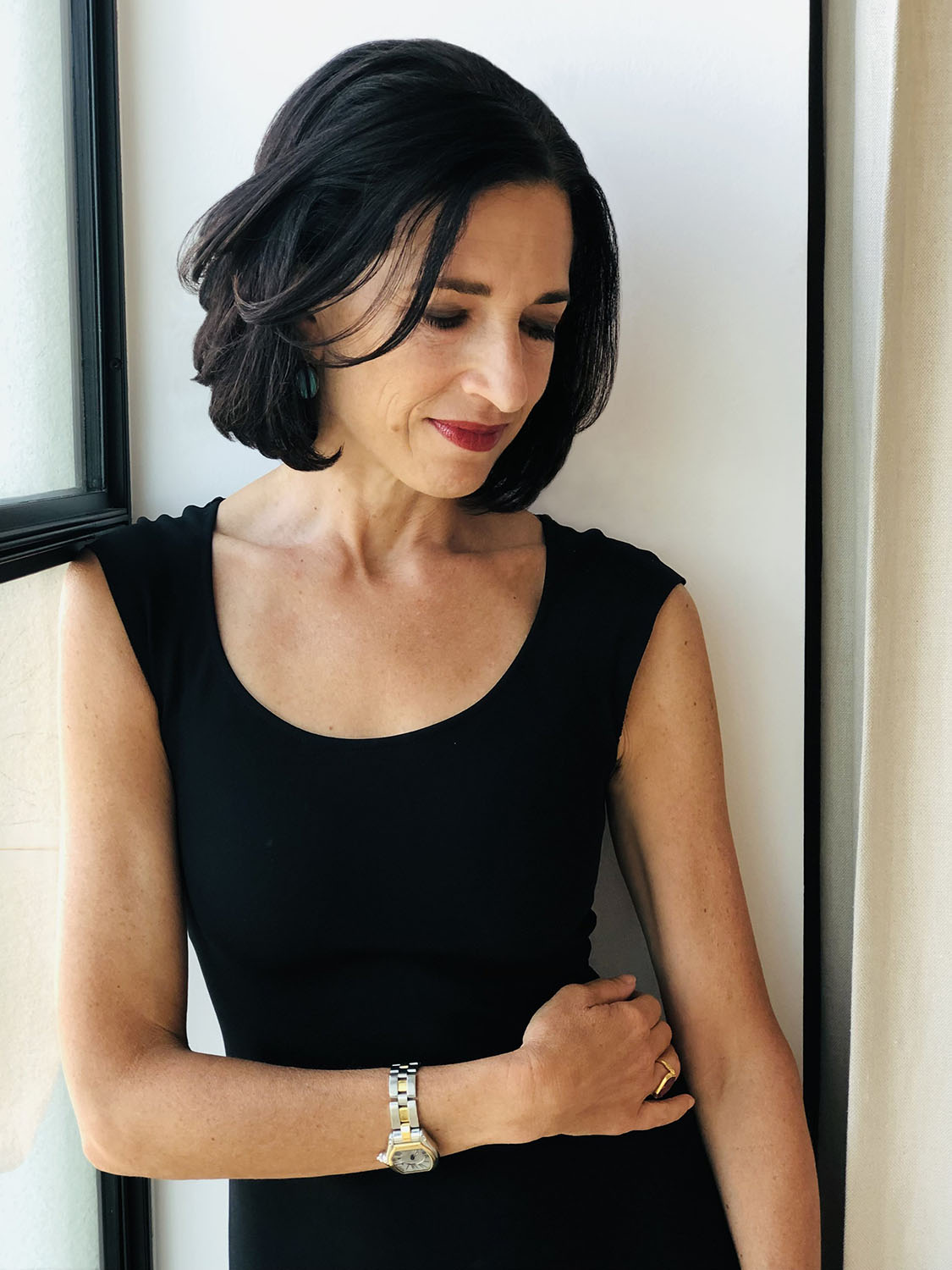
RAMIE TARGOFF is the Jehuda Reinharz Professor of the Humanities and Co-Chair of Italian Studies at Brandeis University. She holds a B.A. from Yale University and Ph.D. from University of California, Berkeley. She is the author of several award-winning books on Renaissance English poetry, as well as a biography and translation of the sixteenth-century Italian poet Vittoria Colonna. She lives with her family in Cambridge, Massachusetts.
To learn more about Ramie Targoff, you’ll find her here.
Episode transcript
Ramie Targoff
I hadn’t read a word. Literally not a word written by a woman in the Renaissance. The title comes from a response to Virginia Woolf’s dark fantasy that Shakespeare couldn’t have had a sister who would succeed as a writer, even if she had the same talent that he did. It turns out she was wrong, that there were quite a number of women who had careers as writers.
Ramie Targoff
Look at these women writers from the period. You said it was impossible. And yet, actually, they were sitting right there in the library.
Gabriella Kelly-Davies
Hello, I’m Gabriella Kelly-Davies. Welcome to season five of Biographies in Conversation. In each episode, biographies chat about the multiplicity of choices they face while crafting life stories. I’d like to acknowledge Australia’s first storytellers, the Gadigal People of the Eora Nation. The Gadigal People are the traditional owners of the land from which I’m coming to you today. You’ll find us wherever you listen to your podcasts and on our website.
Gabriella Kelly-Davies
Biographies in Conversation. Let’s start the show.
Gabriella Kelly-Davies
In this episode of Biographies and Conversation, the Renaissance literature scholar chats with me about Shakespeare’s sisters, how women wrote the Renaissance. Ramesh shares the stories of four remarkable women from Shakespeare’s time who refused to be silence. Ramie, welcome to Biographers in Conversation.
Ramie Targoff
Thank you so much. So nice to be here. Please tell us about Shakespeare’s Sisters.
This book looks at four women writers who had been forgotten for hundreds of years, and in the last 20 or 30 years, we have recovered them from the past.
And the book tries to look at the ways in which women writers forged paths of their own, interacted with both one another and with many of the major male poets and figures of the era, and really just expand our idea of the Renaissance to include the other half of the population whom we’ve heard so little from in the educations that most of us have had.
So the title comes from a response to Virginia Woolf’s dark fantasy that Shakespeare couldn’t have had a sister who would succeed as a writer, even if she had the same talent that he did. And so my title is a kind of provocation and a response to her to say, actually, there were plenty of so-called sisters. There were plenty of women writers in the era.
We just haven’t bothered. Hadn’t bothered, I should say, to insert them in the canon. Yeah. So who could the full moon when you profiled? So going in chronological order in terms of their birth, they were all contemporaries of Shakespeare within a 20 year period. Let’s say the oldest is Shakespeare’s almost exact contemporary. Her name is Mary Sidney. When she got married, her name was Mary Sidney Herbert, Countess of Pembroke.
The second is Amelia Lanier, whose maiden name was Bassani, who came from an Italian father and English mother, and the third is Elizabeth Cary, who was married to someone named Lord Faulkner. The fourth is Anne Clifford who was a great diarist and held multiple titles. Also Countess of Pembroke. Countess of Dorset. Countess of Montgomery. So those are the four women, and they span around 25 to 30 years in terms of their birth.
Gabriella Kelly-Davies
So why did you choose these women?
Ramie Targoff
I’ve been teaching for a long time now, of course, on women’s writing in the Renaissance. And in that course, I would say that includes French and Italian women as well. But of the English women, I would say I had around six candidates for the book, meaning there weren’t 30 or 40 women I could have chosen from Virginia Woolf was right that there was enormous number of women writing during the period, but the four I chose were women who my sort of basic criteria was they had to be living at the same time.
Shakespeare, because I was in this conversation, imaginary conversation with Virginia Woolf, they had to have some kind of public reputation at the time. In other words, they weren’t just locked up in their rooms writing, but they were actually in three out of four cases. They were published authors at the time. In the fourth case, the work was circulating in manuscript but was well known.
And then I wanted to have a range of genres. So Amelia Lanier is the first woman to write a book of original poetry in the 17th century. Elizabeth Carey is the first woman to write an original tragedy in the 17th century. Mary Sidney is the first woman to translate the Book of Psalms into English verse, and Anne Clifford is the best known diarist and memoirist of the 17th century, female diarist and memoirist, but she’s certainly one of the best known diarists in general.
In other words, I didn’t want everyone to be writing sonnets. I wanted to change the to give a sense of the breadth and the diversity of the writing women were doing in the period. So each of these women represents a different kind of writing. So that was the basis for the choice and its extraordinary breadth. So what inspired you to write Shakespeare’s Sisters?
It was really the experience of teaching my students this material when I myself, I have two degrees in English literature, you know, a BA and a PhD. And when I finished both of those degrees in 1996, so almost 30 years ago now, I hadn’t read a word literally, not a word written by a woman in the Renaissance. How do we explain that?
And I was not in some minor educational track. I went to Yale University and University of California at Berkeley. So these are excellent universities. I had the best professors, and yet no one introduced me to a woman writer. So when I started teaching was right around the time that these women started to come back into circulation. And that was thanks to scholars a generation older than me, feminists who were starting to recover, look for and find voices from the past whom we had really forgotten.
And so I started teaching once these women were edited and published and were available, I started teaching them to my students and I found them completely fascinating. This is the fifth book I’ve written on Renaissance literature, and the first three were on male poets, and those were poets who interacted with all of the women in this book. So I wrote a whole book about John Donne.
I’ve written about Shakespeare, written about Milton. All of those famous men knew some of the women in this book interacted with them in different ways. John Donne even wrote a whole poem praising Mary Sidney. But I’d never had a chance to read Mary Sidney myself. So I wrote the book, really, to bring to a larger public the voices of these women who we’ve just failed to recognize, basically.
And I knew from teaching them that they were compelling, that they had interesting and important things to say, and that it was a shame that the only people who knew about them were people taking classes like the one I was teaching, and colleagues of mine were teaching. But if you asked most educated professionals in the Anglo American world, they would never have heard of any of these women.
So I wanted to correct that.
Gabriella Kelly-Davies
It’s so disappointing, isn’t it? The title of your book is evocative and intriguing. Why did you choose it?
Ramie Targoff
Well, as I’ve already briefly referred to, it’s a response to an invocation of and response to Virginia Woolf in her really seminal feminist essay, A Room of One’s Own, whose central argument is that the reason we don’t have so many women in the canon is because women were denied the two things they needed.
That’s a room, a private space to work in and enough money to support themselves to be writers. And Virginia Woolf draws a kind of elaborate fantasy example of what would have happened to Shakespeare’s sister if Shakespeare had had a sister who had the same talent that he had. And she says, you know, her life would have been completely impossible.
There would have been no way for this woman to survive. She would have been treated, she says, as a which she would have been thought to be crazy. She and so on. And she goes on and on in this very dark, dramatic way. And her point is that the culture of Renaissance England would not have tolerated. There wasn’t space.
There wasn’t any way for a woman to forge a literary career. So it turns out she was wrong that there were quite a number of women who had careers as writers, careers who wrote, who published. They weren’t necessarily professional writers in the way we imagined today. But that was it was a very different time. But Virginia Woolf was wrong.
And the reason she was wrong was because these women had been forgotten. By the time Virginia Woolf wrote A Room of One’s Own, these women had been dead for, you know, almost 300 years, 250 to 300 years and had been out of circulation, their writing of and out circulation for just about that long. So Virginia Woolf didn’t have any access to these women?
More or less. There’s one tiny exception to that whom she chooses to ignore. But the title, therefore, is saying to Virginia, well, you know, across the grave, look at these women writers from the period. You said it was impossible. And yet, actually, they were sitting right there in the library. They were in the Bodleian, they were in the British Library, but no one knew to look for them.
And so that’s the origin of the title.
Gabriella
That’s extraordinary, I love it. Why did you choose to write a collective biography rather than writing biographies of the individual authors?
Ramie
When I first imagined writing this book, I thought that I was going to write for back to back sort of mini biographies, you know, that I would feature each of them separately.
But when I got into the second of the four, so actually started to write it that way, I found myself describing the same exact historical events and circumstances that I had already done in the first chapter, the first long biography, and then I had a powerful intuition or a hot moment where I realized, this can’t be four separate biographies, because these women’s lives are intertwined and they’re living in the same world.
And we have a kind of Bloomsbury like story here where just to give you a few quick examples, Amelia Lanier dedicated her book of poems to Mary Sidney, my First Woman, and to Anne Clifford, my last woman, Amelia Lanier, was the tutor to Anne Clifford, and Clifford married Mary Sidney’s son, and so on, and I could keep going.
So the point is, these women, they were all at certain events at court together. They were attending certain masks, certain funerals and so on. And more importantly, they knew about each other’s writing. So this isn’t a story of four isolated women, but there’s a network here. And so I wanted to bring that out, to bring out the sense that there was a small but real community of women who were supporting each other indirectly and sometimes directly, depending on how we’re describing it.
So the way the book is organized moves just chronologically, but we keep changing characters, basically. That’s fascinating, because I was going to ask you whether they knew each other, but you’ve told me, so why is it vital to give these women visibility and restore their voices? Everything about the last decade or two has taught us that we need to hear more from underprivileged, from women, from populations who have been marginalized in different ways, that if we want to understand our own world, we need to understand the past.
And in both cases, we can’t only be listening to white men. There’s nothing wrong with white men. That’s not my point. My point is, why should one group of people from this period be privileged over everyone else? We learn a lot more about the past when we open the doors to everyone, and so it’s absolutely essential to pair Shakespeare and Don and Milton, whom I love and whom I teach with Amelia Lanier and Clifford and Mary Sidney, so that we have a bigger picture.
And if we could hear from the probably 70 to 80% of the population at the time who was illiterate, I wish we could hear from them, too. The more people we hear from, the more we understand the full context in which history unfolded. And I think, as I say, we’ve in different ways in the last decade or so, we’ve really come to a reckoning with that in our own cultures in the US, I’m sure in Australia and Europe, across the world, that we’ve been leaving too many voices out.
So this is the period that I know well. And then other people are doing similar work, recovering voices from all periods and from all cultures. But it gives us such a different perspective when we can hear what the women were thinking. So I think we work with what we what we can. And in the case of Shakespeare’s England, the estimate for women’s literacy in the period is around 10%.
And that might be a little bit lower, because it was often the case that someone could read, but they couldn’t write. And we measure literacy by whether people are able to sign their names, for example, to their wills. So if someone puts an X, which is how Amelia mother, for example, signed her will with an ‘x’. So just think about that for a second, that this woman who wrote an 1800 line poem in very complicated verse form, it’s called Otava Rima.
It’s an Italian verse form. She was writing English. Who knew Latin, and it seems Italian and French. This woman’s mother couldn’t sign her name, just made an act. So that’s already a kind of amazing thing. But in any case, we’re talking about a majority of vast majority of the population wasn’t literate, and so we’re still only looking at the small section of people who managed to write and get their work published.
These are exceptional people. These are not ordinary people. But when we read these exceptional people, we learn a lot about what it was like for women to be alive. All four of my women had very messy and complicated marital situations or lost children and childbirth. They suffered. They went through the things that people go through, and we have records of that, and we don’t have records of that.
When we read the political histories, the military histories, the public histories that have been available. So I think it’s just so important to broaden our sense of what human lives were like. Yeah, I totally agree.
Gabriella
You open Shakespeare’s Sisters with an introduction titled October 1928, Newnham College and Girton College, Cambridge University. Judith Shakespeare, I’d love you to read the first few paragraphs.
Sure, I’d be happy to. In her 1929 feminist manifesto A Room of One’s Own, Virginia Woolf explored the reasons why, over the centuries, women had written so little compared to men a woman must have money and a room of her own, she famously pronounced if she is to write fiction. In lectures originally given in 1928 at Newnham and Girton College, both women’s colleges at Cambridge University, Woolf described her own circumstances she had already written Mrs. Dalloway and To the Lighthouse as a direct result of having inherited 500 pounds a year from an aunt who died after falling off her force in Bombay.
Woolf got the news of her aunt’s gift around the same time that women were given the vote in early 1918. Of the two, the vote and the money, she declared, the money I own seemed infinitely the more important. The most celebrated part of The Room of One’s own isn’t Woolf’s outrage over either women’s erasure from the history books, or the second class treatment they receive in almost all aspects of their lives.
What most readers remember from Woolf’s polemical work is her account of Shakespeare’s imaginary sister Judith. If there had been a Judith Shakespeare endowed with a talent like her brothers, Woolf warned, she would have met with the darkest of fates. Any woman, she exclaimed, born with a great gift in the 16th century, would certainly have gone crazed, shot herself, or ended her days in some lonely cottage outside the village, half which half Wizard feared and mocked up for in spite of her genius due to the Shakespeare quote, would have been so thwarted and hindered by other people, so tortured and pulled asunder by her own contrary instincts that she must have lost her health insanity. Woolf concluded that, quote, whatever she had written would have been twisted and deformed, issuing from a strained and morbid imagination. It’s so powerful.
Gabriella
Why did you start the book with this passage?
Ramie
I wanted to get out, as we’ve been talking about already, the fact that Woolf could not imagine that a woman might have not just survived but lived a, you know, ordinary life with its ups and downs, but been able to survive, even to thrive, if she had any literary talent that when Woolf imagined Shakespeare’s past, she saw an empty canvas for women.
And to get back to one of your early questions, the reason I wrote this book was to fill that canvas with women. In other words, how could Woolf have known? Because these women had been forgotten for hundreds of years. There were no editions of Elizabeth Cary and Mary Sidney and so forth available. So I wanted to bring up what many of us were taught.
Any student who took English literature classes in the last 50 or 80 years probably read at some point a Room of One’s Own. It’s one of the most famous treatises ever written. Certainly, if you studied 20th century literature or you ever took a women’s studies class. This is a very famous text, and it is responsible for how we think about the period.
It’s the only person. It’s the only text, excuse me, that really came at this question and gave us an explanation for it. And there it is, as I’ve just read, how difficult it would have been. And yet she was wrong. And so we have this sort of convincing feminist outrage about the fact that it would have been impossible.
And I’m entirely on her side, except for the fact that she didn’t know about these women. So it’s a kind of paradoxical double erasure, because here we have Virginia Woolf, one of the finest women novelists ever in English language, expressing her outrage over something that turns out not to be true. And so, you know, that’s an interesting situation.
That’s where I wanted to get my hands dirty. Yeah.
Gabriella
It’s fascinating. Women were mostly invisible in the historical record during the Renaissance. Yet your book is painstaking research. Which sources were most revealing?
Ramie
The personal papers of any of the women whom I could get personal papers on. So in three cases, there was personal material available, letters that they wrote themselves, diaries.
In one case, a full memoir was written of Elizabeth Carey by her daughters. So anything that came close to or actually accessed their own voices, in other words, not reading about them, but hearing from them, those were, for me, the richest sources. Did you retrace their footsteps? I did fantastic to the extent that I could. I made a big point of traveling to any of the homes they lived in, any of the places that they lived in.
Mary Sidney spent much of her childhood in Wales and Ludlow Castle. I visited Ludlow Castle. I visited Penshurst, which is her family’s home. I did a massive trip up to Anne Clifford’s vast properties in the north of England and the Lake District area in Westmoreland and Kendal, where her archives are. So I went to I actually slept, supposedly.
I still don’t quite believe it, but I actually slept in Clifford’s bed. Her name was inscribed on the bed in one of her castles in Appleby Castle, which is far up in the north. You know, I went to Elizabeth Kerry’s childhood home in the Cotswolds. I went to the church where she erected a monument to her parents. Amelia home hasn’t been preserved because, as I said, she doesn’t didn’t grow up in one of these castles.
But I walked the streets of London where she grew up. I visited the church where she was baptized, so I really immersed myself as much as I could in their physical location so that I could try to conjure up for my readers what it was like for them, what the environment was like, what the landscape was like, and so on, and what was revealed to you through walking in their footsteps from so many hundreds of years ago?
Gabriella
What insights did you gain?
Ramie
The way I feel about this is until you physically, you know, stand in the courtyard where the person grew up and look around. It’s very hard to describe what the lived experience was, was like for that person, even though obviously things have changed so much. Well, they haven’t changed as much as you would expect in these particular cases because these are in some cases, castles and palaces.
But what I hope I brought to the book was a kind of vividness in my descriptive narration of their lives. If I looked up Skipton Castle, one of and Clifford Castle on Wikipedia, or looked at images. I’m not going to get what I can get if I literally walk through it and look out and see what I can see in different directions and imagine what it would have felt like to arrive there at two in the morning on a carriage and so on.
You know, I mean, you just get a different feeling. And it was especially important, actually for Anne Clifford, because she spent the last couple of decades of her life traveling between. Among her castles, I should say, because there was more than two. She would spend time at Skipton, and then in her diary she would say. And then we packed up and we went to Broome and then we went to she would go from one castle to the other, and she called that riding the boundary.
She would do circles in her own land. And I needed to see even today what distances these were, what it meant to go from one town to the other. Did you have to cross rivers? Did you have to navigate any difficult terrain and so on? I mean, it was really quite revealing to me to think about the fact that she was in constant motion in this pretty vast landscape.
And again, just looking at a map, I wouldn’t have been able to conjure that up. I’m always fascinated by the distances people back in those times, and even back when I look at Bach and all the composers, they travelled all over Europe and even to the UK, and I can’t imagine the distances and the bumping along in the carriages.
And where, where did they stay? Was uncomfortable. Yeah. And where did it go? To the bathroom. And where did they get their food? They always wonder about all of those aspects of their travels. Yeah, that kind of information is very hard to find. But because. And Clifford kept a diary, you know, starting at age 13 until the day before she died at 86, that we’re talking about a very long time, 73 years are covered.
She sometimes describes arriving, for example, at the middle of the night with her mother on a trip they’re making and having to sleep on one occasion in the hallway because all the servants had gone to bed, you know. So, in other words, they were staying with family friends, but they arrived much later than they expected, and so there was no way to even get any provisions and eating, you know, just some bread and, you know, whatever they could.
So we do get a little bit of insight into that. But, you know, women certainly didn’t. Especially upper class women didn’t stay in ins or public houses. That was not to happen. And they certainly didn’t travel unaccompanied. So they would have always had male servants or accompaniment with them.
Gabriella
After the introductory chapter, you describe Queen Elizabeth the first funeral procession in 1603. Then you structured the book in 13 chronological chapters starting in 1561. Each chapter heading bears the name of one of the women. Why did you choose this structure?
I organize the entire book chronologically, so it’s a kind of domino effect. So I just kept moving forward in the timeline and then whoever’s story was next up, I mean, whatever was happening to one of the four women.
Ramie
So in that way, it’s structured a little more like a novel rather than a kind of straightforward biography. So each chapter has a time stamp. So now here we are in Whitehall Palace on this date, and that’s the day that and Clifford is visiting King James to talk about her lawsuit. And I put the name of the central character at the top, just so my reader could kind of keep track, like we’re shifting now to this person as opposed to wherever we left off.
Gabriella
That’s amazing. It must have taken so much work to do that, to braid it all together.
Ramie
It was a lot of fun to write this book. Yeah, I think so. It was a lot of fun to read it, too. Thank you.
Gabriella
In chapter eight, titled February the 2nd, 1609 banqueting House, Whitehall Palace, you featured the publication of Amelia Lana’s book of poetry. I’d love you to read the opening passages.
Amelia’s long central poem, Salve Deus Rex Judaeorum, was entered in the Stationers Company in October 1610, the first official step towards publication, and appeared in print in 1611. Thus, the daughter of an immigrant father and a mother, unable to sign her name, made English history by becoming the first woman in the 17th century to publish a book, Original Poetry of the Latin title, which translates as quote Hail God, King of the Jews.
Amelia explained that quote it was delivered unto me in sleep many years before I had any intent to write in this manner. This suggests she was dreaming in Latin. Another sign of her erudition, published by the same Richard Bunion who had brought out Ben Jonson’s Masque of Queens two years earlier. Amelia’s Salvador’s was a landmark publication not only by virtue of its female author.
It was also arguably England’s first book of feminist poetry written for women and about women. Salvaje Deus had as its central theme a defence of women’s rights. In the same year, The King James Bible first appeared in print, establishing the most influential English translation of scripture ever produced. Amelia dared to tell a different story over the course of 230 rhyming stanzas of eight lines each.
Salvador’s lays out the story of Christ’s Passion from a distinctly female perspective. The formal challenge of writing the poem was itself daunting. It’s no easy feat to compose over 1800 lines of Otava rima, which is iambic pentameter stanzas. But Amelia’s greater audacity was in tackling the subject of Christ’s crucifixion. To justify this, she makes the same claim for divine inspiration that the great Protestant poet John Milton would make 60 or so years later in writing Paradise Lost.
Describing her own quote poor barren brain as quote, far too weak for the task, she asks God to give me power and strength to write. What’s the significance of this chapter in those passages you just read? I think I’m trying to bring out the implausibility or the extraordinary miracle of this woman. Given her background and given how education was so limited in the period rising to this occasion and doing so in such an audacious way.
In other words, she’s not being shy. She’s actually taking on the central event of Christianity and proposing a different way of looking at it and rethinking. In fact, not only that, but also the fall. So we could say the two biggest events in the Judeo-Christian Bible, the fall for the beginning of our human story, the fall from Paradise, and then Christ’s sacrifice, which is the foundation of Christianity.
And she’s rewriting that. And that, to me, is just mind blowing that someone would dare to do that, and someone who had no power whatsoever. What do you think gave her the confidence to do that? And how did she become so educated, given her background? For the confidence, we just have to think this was a very strong woman with an extraordinary sense of purpose.
You know, there’s no explanation in her background. In other words, she didn’t grow up being told the way, you know, let’s say, you know, powerful male aristocrat might have that. You’re a genius and you need to do this. But in terms of the education that that remains somewhat mysterious. And the only clue we have is that at one point she indicates that she was taken into the household of the Countess of Kent.
So from that, we can surmise that when she lost her father. So at that stage she was a very young child. I think she was sick. She might have been seven and living with her mother. Her mother managed to find an opportunity for Amelia to be taken up by a very educated, very wealthy woman who would give her an education, something that Amelia’s mother personally could not.
The only evidence we have for that is her apparently having told her astrologer. So that’s kind of amazing, but this could be invented. Unfortunately, we don’t have a paper trail. On the other hand, she did dedicate a poem to that woman in her book of poetry and Das. And in that poem, she describes this woman the kind of having brought her up and taught her.
So that’s at least a second corroboration. But that’s all we know. So in the book, how did you handle those situations where you were almost speculating that the historical record was a little bit scant?
Gabriella
And so how did you deal with those situations?
Ramie
That’s a really important question, Gabriella. If I were writing historical fiction, which I’m not, I could have just made stuff up. But I was always very clear to my readers that here we are at a moment where we simply don’t really know. It might have been this. And here we have this, you know. So I walked my readers through my own processes as a writer and sort of grappling with all the holes in the historical record. So I never hide the fact that this is speculation, but I also do share what I think might have happened, because I want you, as my reader, to benefit from the research I’ve done and from what I do know.
So I’m very upfront about it, and I do think that is the biggest difference between writing historical fiction and writing a work of nonfiction is that I can’t make stuff up. That’s that would be dishonest. And so I always say, you know, this is one of these moments where, you know, we’re left with questions and how can we understand this?
And to me, the most plausible thing is X, but it’s detective work. It’s putting together clues. And as I say at various points, we often have to read backwards or through traces left by men in these women’s lives as to what happened to them, because we don’t have their original sources. So, for example, what I just mentioned about Amelia Lanier, her astrologer, took notes on their sessions, so we know what he claims she told him.
But would that hold up in a court of law? Probably not. It just shows the importance of explaining, well, the contract with readers, to be honest and to tell the truth and to really explain what we found and then what we’re thinking could have happened, but we’re not sure.
Gabriella
And I think that’s such an important part of biography, to be open with the readers about what we know for certain and what we don’t know.
How did you weave the broader historical, political, and religious context into Shakespeare Sisters? So I tried to include any major events, you know, wars that were going on, deaths, executions. You have lots of beheadings and plots, you know, I mean, all of these dramatic events that were going on, I tried to incorporate them when one of the women in the book had some direct experience of it.
So, for example, during the Armada, when England was fighting with Spain and was very afraid of invasion, Mary Sidney and her family, holed up in one of their country estates, shuttered the doors and so on. So that gave me an excuse, as it were, to tell a little bit of the story of the Armada. But I would not have gone into the history of the Armada if I didn’t have several of my women dealing with it, because Amelia Lanier was also dealing with it indirectly, but had to respond to it.
So whenever I could, I would say tell the history, the broader history of England through the lived experience of one of the women, I included it. But if you know, something important happened, but you know the East India Company Foundation or something, that couldn’t be more important, but it wasn’t directly lived than I didn’t. So I didn’t want the book to be an English history.
I wanted it to really be these women’s lives. And then, of course, their lives were touched by and interacted with many of the major events of the period. And you’ve done that so well. Look, I have so many questions I could ask you, but I know our time is limited.
Gabriella
Ramie, thank you for sharing the stories that these four remarkable Renaissance women with us. Your meticulous research and captivating narrative have brought voices, once consigned to the footnotes of history into our shared narrative. We’ve revisited the theme of literary recovery, seeing how essential it is to rescue women’s voices from obscurity and give them the stage they deserve alongside their male contemporary. So thank you so much. I’ve loved our conversation. Oh. Thank you.
Ramie
Gabriela, it was so nice to talk to you.
Thank you for listening to biographies in conversation. Special thanks to my producer Andy Ma, web manager Dylan Hamilton Foster and Sunny Lovedale for the music. We love you to take a moment to rate the show on the website across social media. Apple, Spotify. Already you find your podcasts. If you enjoyed this conversation, please share it with your family and friends and on social media.
To discover more about my guests and their biographies. Head over to their show pages on biographies. In conversation there, you’ll find all our episodes and ways of getting in touch with us. I’m looking forward to our next conversation about the choices every biographer faces. I hope you are to.
2 Comments
Thank you Ramie (and Gabriella) for sharing the hidden lives of these forgotten (until now) female Renaissance writers. ‘Women in history shouldn’t be a mystery’. I have just ordered the book and can’t wait to read it.
thanks so much Rosemary. I hope you enjoy the book. I loved it
Warmest wishes Gabriella