





In this episode of Biographers in Conversation, Dr Jeffrey Meyers chats with Dr Gabriella Kelly-Davies about his choices while crafting Parallel Lives: From Freud and Mann to Arbus and Plath.
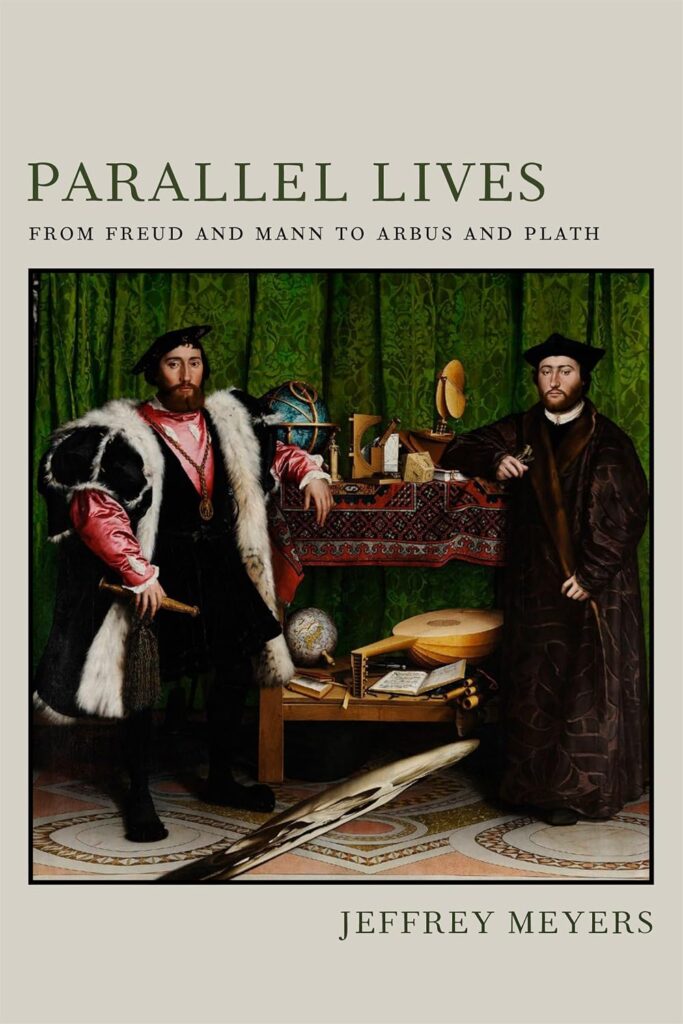
Parallel Lives
Parallel Lives covers the century from the birth of Sigmund Freud in 1856 to the death of Sylvia Plath in 1963. The book includes European, American and Russian authors and artists, film directors and actors, children and soldiers, friends and lovers, rivals and enemies. Drawing on the bifocal principle of dual composition in Plutarch, these brief lives are arranged in pairs to interact with each other and illuminate their subject’s similarities, characters and friendships.
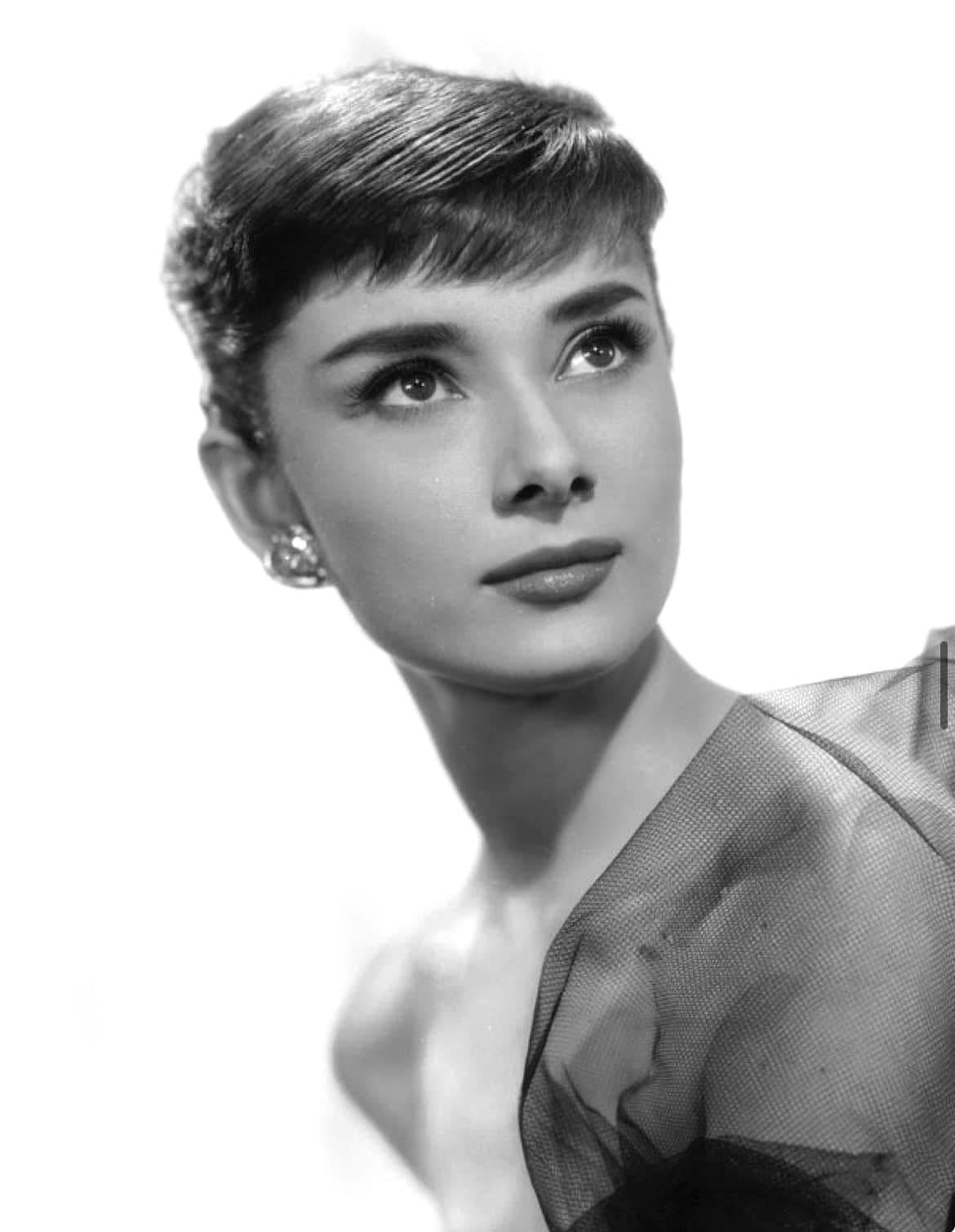
Audrey Hepburn still taken for the film Funny Face (1957),
Paramount Pictures, Public domain, via Wikimedia Commons.
The linked structure of Parallel Lives allows several major figures—Sigmund Freud, Evelyn Waugh, Edmund Wilson, Vladimir Nabokov, Ernest Hemingway and Seamus Heaney—to appear in multiple chapters. The most violent friendship ended when Verlaine shot Rimbaud and went to prison, and Rimbaud crawled back from Africa to die miserably in France. The most brilliant friendship broke up when Wilson attacked Nabokov’s edition of Alexander Pushkin. The most moving connection was Audrey Hepburn’s tender and sympathetic attachment to her soul-sister Anne Frank.
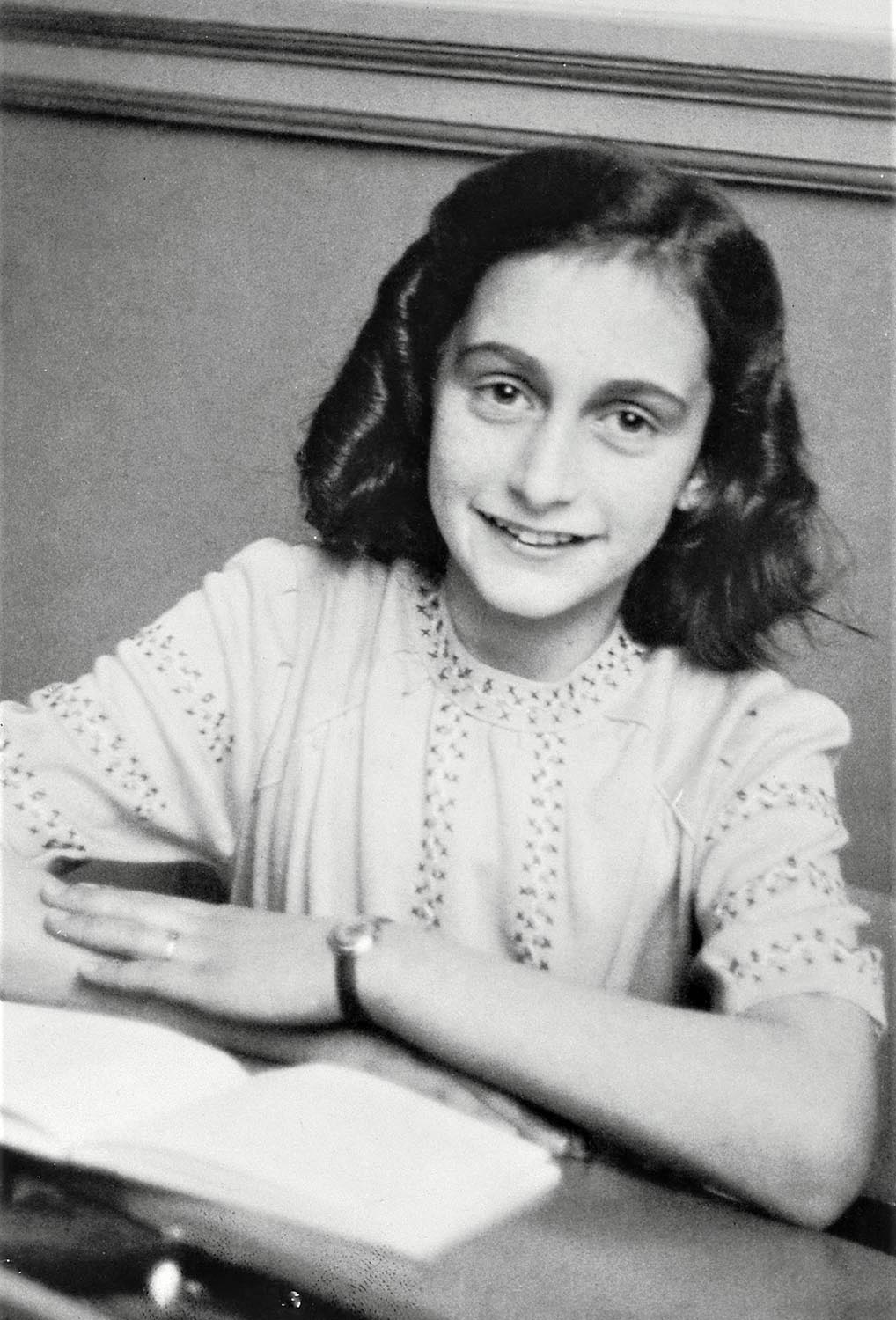
Anne Frank, 1941.
Anonymous author, Public domain, via Wikimedia Commons.
Using mirror images reveals a new way to perceive these illustrious men and women. Each chapter shifts the focus back and forth between two subjects, comparing them, changing perspective and reevaluating similarities and contrasts.
Evocative Storytelling to Capture Reader’s Imagination
With vivid details and dramatic events, Jeffrey Meyers emphasises the backgrounds, intellectual influences and personality traits of the paired subjects. By examining the complex motives for irrational behaviour, ranging from deep affection to intense hostility and warm encouragement to bitter rivalry, Parallel Lives offers insights into the dynamics of complementary characters.
Dual-Biography Method
Jeffrey Meyers was inspired by Plutarch’s dual-biography method, realising that setting two great lives side by side could reveal insights a single life story might miss. Pairing two figures enables him to uncover common threads of creativity, ambition and struggle across different fields. For example, pairing Sigmund Freud with Thomas Mann shows how their ideas and obsessions mirror each other, while another chapter links Audrey Hepburn with Anne Frank as two soul sisters who never met. Meyers deliberately chose each duo for such meaningful parallels.
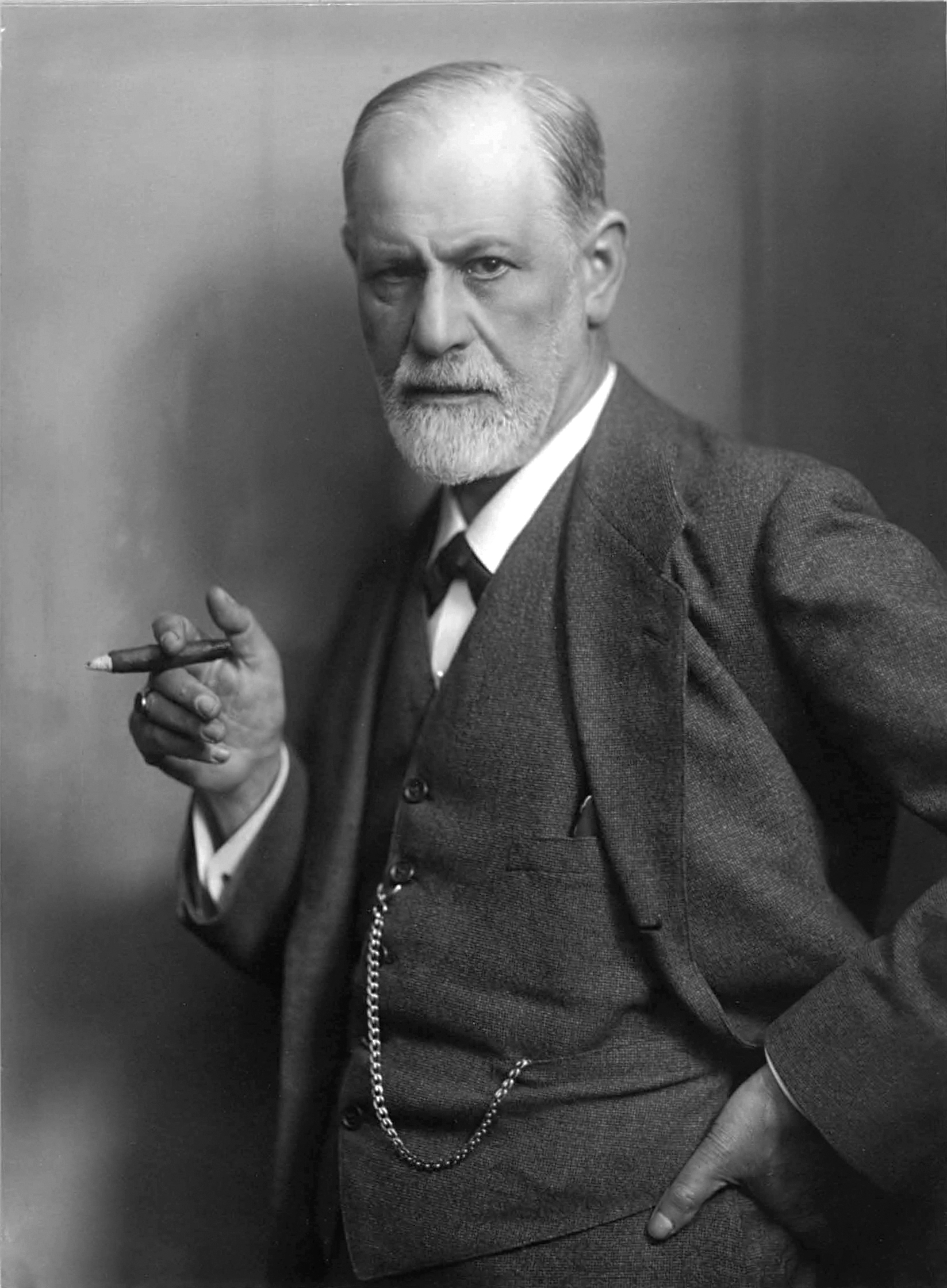
Sigmund Freud, 1920,
Photo credit: Max Halberstadt.
Exhaustive Research
Jeffrey Meyers’s research process was broad and intentional. He draws on a personal library of 20,000 books and knowledge of several languages to immerse himself in each subject’s world. This voracious reading in French, German and Latin enables him to consult sources in their original form. Jeffrey treats biography as an art driven by curiosity, cautioning against simply relating facts without narrative purpose. Instead, he synthesises his research into a story that illuminates his subjects’ lives.
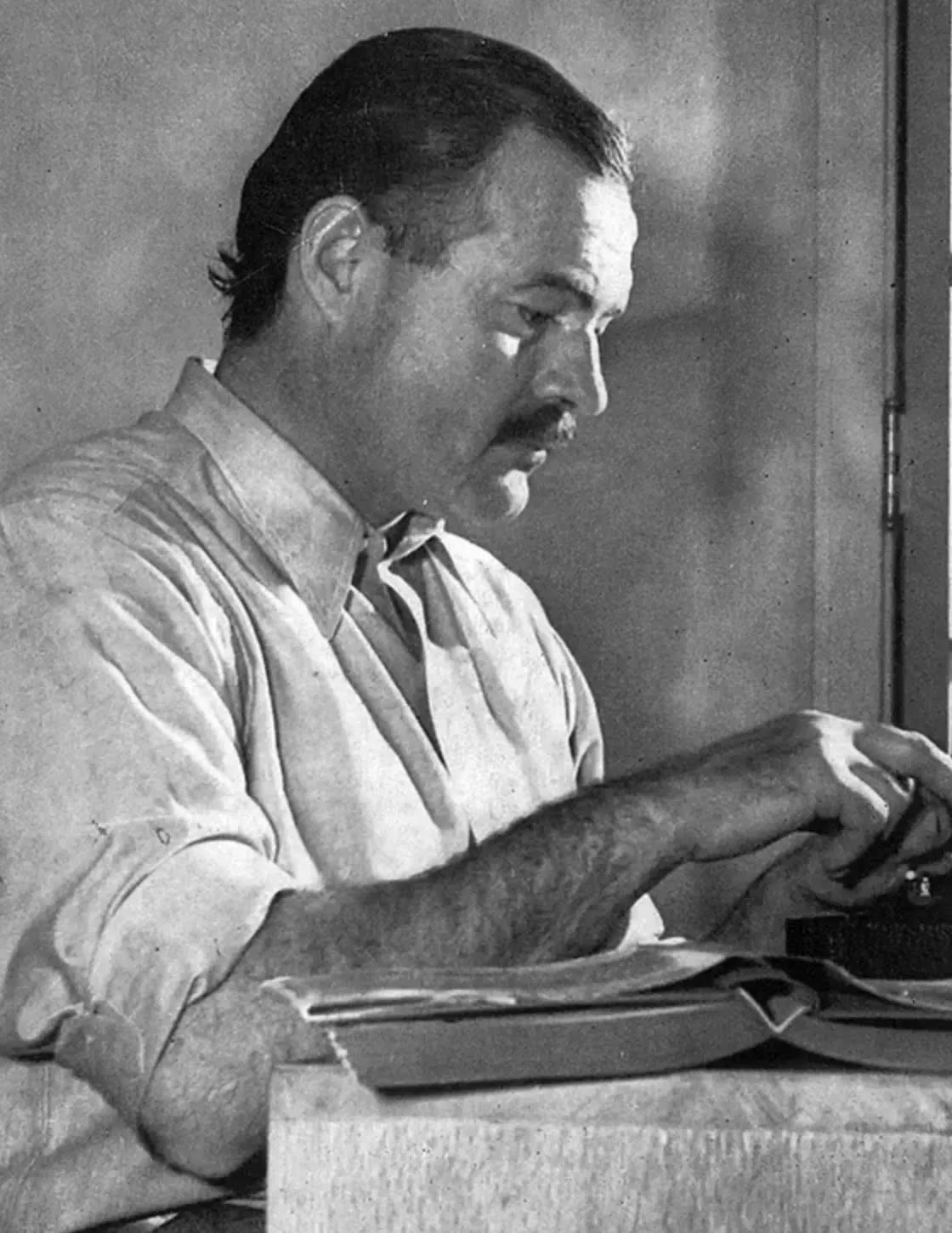
Ernest Hemingway posing for a dust jacket photo by Lloyd Arnold for the first edition of
For Whom the Bell Tolls, at the Sun Valley Lodge, Idaho, late 1939.
Public domain, via Wikimedia Commons.
Weaving Parallel Narratives
Jeffrey structured each chapter to ensure the two lives truly resonate with each other. Dual narratives are interweaved, creating a dynamic interconnection through the entire book. He aligns each pair’s timeline and themes to highlight parallels and contrasts. If the two people interacted in real life, those encounters are included; if not, their experiences are juxtaposed to spark a virtual dialogue. Even stark differences become illuminating, adding a sense of drama while revealing each figure more deeply through contrast.
The Role of a Biographer: Tell A Good Story
Symbolism in the Cover Art
Jeffrey’s biographical vision extends to the book’s cover, which is Hans Holbein’s ‘The Ambassadors’. A double portrait, it visually embodies parallel lives. The painting depicts two men side by side amid an array of scholarly objects, symbolising rich intellectual lives in tandem. Notably, a hidden skull in the foreground becomes visible only from a certain angle. By choosing this artwork, Meyers invites readers to shift perspective, much as his book invites us to view two lives in parallel.
Praise for Parallel Lives
One of our greatest living biographers.
Paul Theroux, author of The Mosquito Coast
The range of Meyers’s interests and his authoritative command of his subjects is impressive. This is an astute book, expansive and incisive at the same time.
The New York Sun
An ambitious work covering the contemporary lives of influential women and men from various nationalities, backgrounds and careers between 1856 and 1963. This work’s signal strength is in revealing the concurrent and often divergent directions of history, art, literature, politics and ambitions during these years.
CHOICE
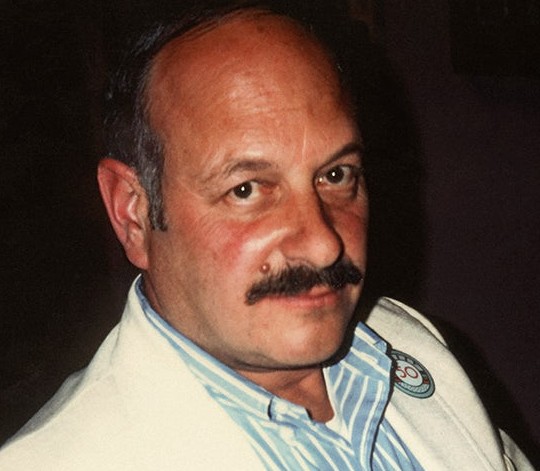
Photo Credit: Valerie Meyers
Jeffrey Meyers, one of 12 Americans in the Royal Society of Literature, is the author of fifty-six books on biography, art, film and literary criticism. His work has been translated into 14 languages and published on six continents. He has received a grant from the Guggenheim Foundation and an Award in Literature from the American Academy of Arts and Letters honouring exceptional achievement. In 2012, he gave the Seymour Lecture in Biography at the National Libraries of Australia.
Episode transcript
Jeffrey Meyers: You have to be careful not to wander off the subject. You have to keep a clear focus. You have to think, ‘I’m writing a narrative, I’m telling a story, I want to interest my readers.’ It’s not just what I’m interested in, it’s not just what I found: ‘Wow, this is so interesting, I found a letter from his great-grandfather.’ Well, nobody gives a damn, really. What you have to do is not what’s interesting to you only, but what’s interesting to you as you can make it interesting to your readers. I think that’s a really crucial thing in biography. There are too many biographies that are just blasting away with all this stuff that isn’t very interesting.
Gabriella Kelly-Davies: Welcome to Season 5 of Biographers in Conversation. In each episode, biographers chat about the multiplicity of choices they face while crafting life stories. I’d like to acknowledge Australia’s first storytellers, the Gadigal people of the Eora Nation. The Gadigal people are the traditional owners of the land from which I’m coming to you today. You’ll find us wherever you listen to your podcasts, and on our website, biographersinconversation.com. Let’s start the show.
Biographies usually focus on one life at a time, but what happens when you set two great lives side by side? In this episode, esteemed biographer and literary, art and film critic Jeffrey Meyers responds to this question in our conversation about parallel lives, from Freud and Mann to Arbus and Plath. Inspired by the ancient writer Plutarch’s dual-biography method, Parallel Lives takes an innovative approach to biography, pairing famous figures in unexpected ways. What makes these pairings so intriguing is how they uncover common threads of creativity, ambition and struggle across vastly different fields.
Gabriella Kelly-Davies: Jeffrey, welcome to Biographers in Conversation.
Jeffrey Meyers: Hello.
Gabriella Kelly-Davies: When I first read Parallel Lives, it intrigued me and still does. Please tell us about it.
Jeffrey Meyers: I liked Plutarch, as many great writers have liked him. And I just remembered this morning that my third book, published in 1977, was called Married to Genius. It included nine chapters about married couples in the modern age: Hemingway and Fitzgerald, Lawrence and Joyce, Shaw and others. So I suppose that was in the back of my mind all this time; it was a youthful way to approach it.
I liked Plutarch. I felt his approach would be illuminating, as I noticed intriguing connections between many of the authors I’d written about. I’d written about them separately, but as I did, I found they also connected to all kinds of other people. So it was really a combination of admiring Plutarch and seeing a way I could use his method.
Why were these people put in parallel? Most of them knew each other, but some didn’t. In the case of Audrey Hepburn and Anne Frank, they never met. But that chapter is, in some ways, the most moving chapter in the book. Audrey Hepburn felt a tremendous connection to Anne Frank. Most people don’t know that Audrey Hepburn was Dutch and grew up in Holland during the war. They think of her as this beautiful, talented Hollywood star who led a glittering life, was wealthy and famous, and known for her good deeds. But she suffered terribly in childhood; it was really rough living in Nazi-occupied Holland.
This is what I mean by a serendipitous connection. I’m reading about Anne Frank, and I say, well, Audrey Hepburn was there too, at the same time. I didn’t even know it, even though I’d read several books on the subject. Then I found a book on Audrey Hepburn. There are plenty of books on her as an actress, but I wasn’t interested in that. I was interested only in the fact that they wanted Audrey Hepburn to play Anne Frank in the film, and she couldn’t face it. It was too traumatic. There was also a fear of cashing in on Anne Frank, although really, they’d have been cashing in on Audrey Hepburn.
They were both born in 1929, and both living in Holland during the war. Audrey Hepburn said at one point, ‘If I had been Jewish, I would have been on those trains with Anne Frank, sent to Westerbork and then on to Auschwitz and Belsen. It was just because I was born a Christian rather than a Jew. I had a hard time of it I was hungry; I was poor.’ Even though her mother was an aristocrat, which didn’t save her from the Nazis. So the identification was enormously powerful.
She later met Otto Frank, Anne’s father, the only member of the family who survived. He interviewed Audrey, and she was tremendously impressed. Everybody is impressed by Otto Frank. He’s noble, generous, kind, intelligent, helpful, devoted. You could compare him to an Old Testament prophet. You can’t read Anne Frank without being deeply moved. I think she was a remarkably talented writer for a teenage girl, and there’s something in both her and Audrey Hepburn that you’re drawn to just by looking at them, without even knowing their stories.
Anne wanted to be a film star, too. She wanted to be a great writer and a film star, and she cut out all these photos from movie magazines and put them on the wall of her little room, so it was the first thing she saw when she woke up. There was this glamour amid the tragedy. I think that’s one of the best elements of the chapter.
Gabriella Kelly-Davies: How did you choose the biographical subjects you included in Parallel Lives?
Jeffrey Meyers: I first chose several of my favourite authors, whose work I knew well. I knew them well singly, and now I was looking at them doubly, so to speak. I wrote books on Thomas Mann, on T.E. Lawrence, on Malraux, Wyndham Lewis, Edmund Wilson, Fitzgerald, Nabokov, Hemingway, Seamus Heaney, Robert Lowell. I’ve written books, or at least a lot of articles, about them. Having known their lives, I knew that in the course of those lives they connected with other people connections it wasn’t possible to explore fully in a single-subject biography, because you want to keep the focus on your subject and keep the narrative moving without digressing too much.
Sometimes there are people so interesting they deserve a book of their own, and in a way, I’m finishing a story I didn’t have room for the first time, because it would have been too distracting. You have to be careful not to wander off the subject you have to keep a clear focus. You have to think, ‘I’m writing a narrative, I’m telling a story, I want to interest my readers.’ It’s not just what’s interesting to you, it’s what you can make interesting to your readers. That’s a crucial thing in biography too many biographies just blast away with facts that aren’t very interesting. It’s fine to find the facts, even the ones you don’t use, because they illuminate the story you’re telling.
I already knew all these people well, so what interested me was: what’s an interesting connection between Mann and Freud? They knew each other, but they were both terribly formal Mann especially, being North German, more formal than the Austrian Jewish Freud. In their letters, they’d praise each other and say how great the other was, but you can also find little digs ‘doesn’t Mann go on a bit too much,’ ‘isn’t Freud a bit pedantic.’ It’s funny, because when you’re with a friend, and you don’t want to lose the friendship, you’re not going to be too critical. One way to lose a friend is to write a negative review; you’re never forgiven for that.
I’d dealt with the Wilson–Nabokov friendship pretty thoroughly in an earlier book. I think I had a whole chapter but there was still more to say, because it’s heartbreaking. These two men were both extraordinary: Edmund Wilson and Vladimir Nabokov, one in a hundred million, absolute geniuses, and tremendous friends. Wilson gave Nabokov enormous help when he arrived in America and knew nobody — though Nabokov’s English was already superb, since he’d known it since childhood. Wilson knew Russian too, but the way I ‘know’ French or German, not with real mastery. So it was hubris for him to challenge Nabokov on Russian, when Nabokov wasn’t just a native speaker but one of the great masters of Russian prose in the twentieth century. It’s a bit like getting into the ring with Mike Tyson for a couple of rounds. It ruined the friendship, and that was a real loss, because they could get things from each other, they couldn’t get from anyone else they were simply that brilliant.
Gabriella Kelly-Davies: Did you consider some pairings and then leave them out, and if so, why?
Jeffrey Meyers: I probably did. I just felt these were the most meaningful parallels I knew, and if I thought of anything else, it wasn’t quite as strong. I wanted to write a twenty-page chapter without filling it with hot air, so I felt anything weaker would dilute the book. I didn’t leave out anything great, and I didn’t put in anything weak I think I found the right balance of what belongs in the book.
Gabriella Kelly-Davies: I believe you did. I found a really good balance. They’re stories. Talking about one person alone isn’t as rich as talking about that person in relation to a wife, a child, a friend, a lover.
Jeffrey Meyers: So I think, whatever virtues the book has, they’re good stories. I think it’s a good read.
Gabriella Kelly-Davies: It is a good read. I loved it. You open Parallel Lives with a brief preface introducing your approach to crafting the book. I’d love you to read it.
Jeffrey Meyers: Okay, here it is:
‘The sharp intelligence and original method of Plutarch’s Parallel Lives, written in Greek in the second century AD, have been admired by major authors from the Renaissance to the modern era. Montaigne wrote of his Parallels, ‘which are the most admirable part of his work, and in which, in my opinion, he took particular satisfaction. The fidelity and sincerity of his judgments equal their depth and weight.’’
A great quote from a great writer.
‘Rousseau’s biographers note that Plutarch’s Lives served to fire both his enthusiasm as a boy for the republics of the ancient world, and his pride in being Genevan — that is, from Switzerland. Rousseau’s love for ‘my master and my comforter,’ Plutarch,