





The novelist Muriel Spark spent her life ensuring no-one could pin her down. She was, by her own admission and others’, a genius, survivor, bad mother, fickle friend, recluse and an arch-manipulator. In this episode of Biographers in Conversation, the literary scholar Dr James Bailey chats with Dr Gabriella Kelly-Davies about his choices while crafting Like a Cat Loves a Bird: The Nine Lives of Muriel Spark.
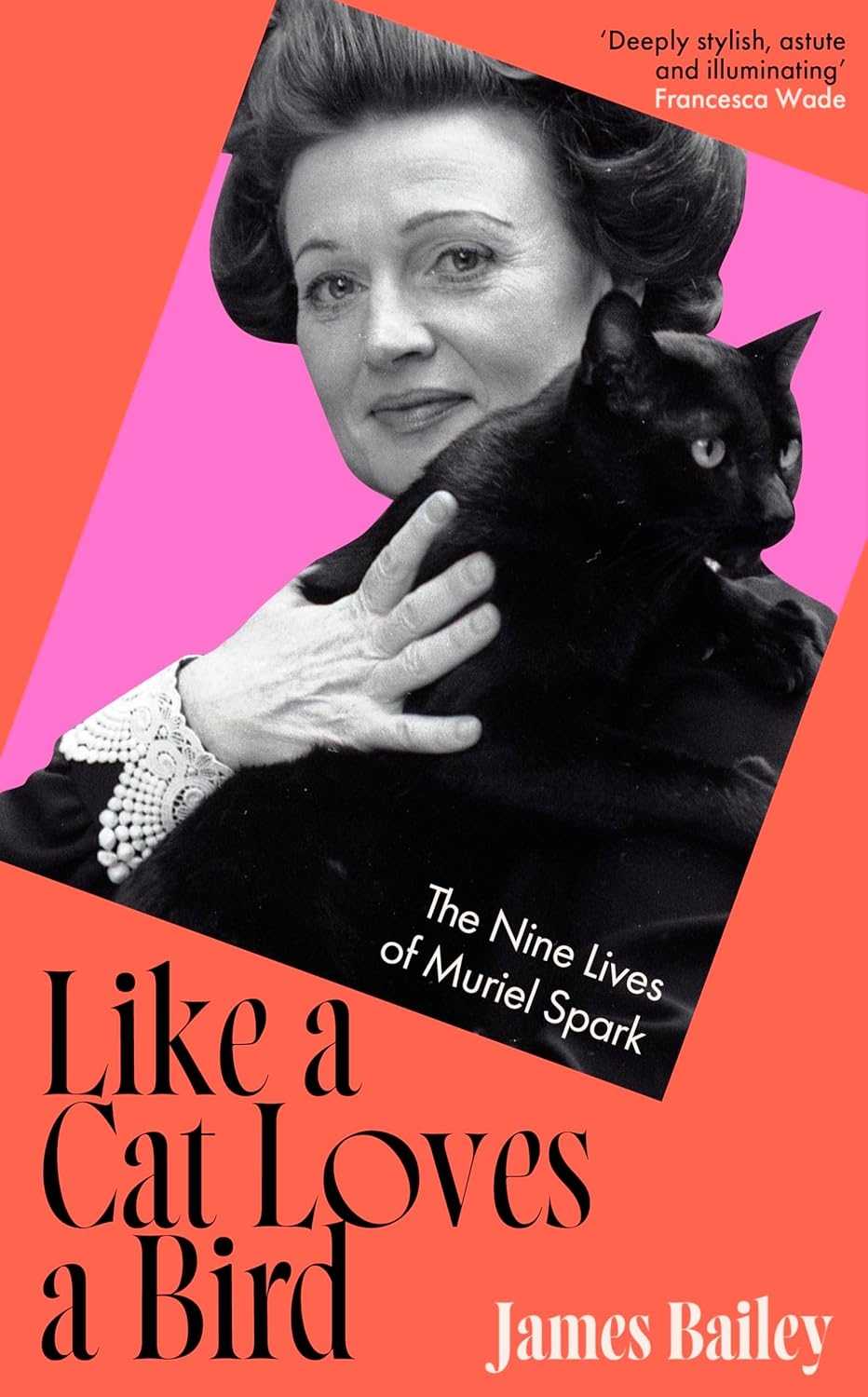
Like a Cat Loves a Bird
Muriel Spark spent a lifetime slipping free of other people’s definitions. Novelist, poet, Catholic convert, celebrity, recluse, mother, friend and formidable self-inventor, she was never likely to sit obediently for a biographer. In Like a Cat Loves a Bird, James Bailey embraces Spark’s elusiveness rather than trying to resolve it.
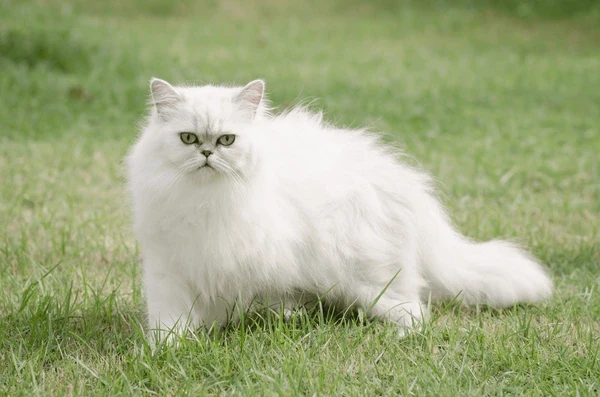
Muriel Spark’s Persian cat Bluebell is her best-known feline friend.
The opening scene is in the artist Sandy Moffat’s studio. He is valiantly trying to paint Spark’s portrait. However, she keeps changing the colour of her hair and its style. She also arrives in vastly different outfits for every sitting, a mischievously apt warning to anyone hoping to capture her likeness. Was Spark merely restless, or quietly delighted to outmanoeuvre her portraitist? James leaves this question hanging.
Spider was Muriel Spark’s black cat.
During our conversation, James reveals why he chose a mosaic of nine partial portraits rather than a cohesive linear narrative. He also discloses why he preserves Spark’s contradictions and asks open-ended questions instead of pretending to solve her.
Walking alongside Muriel Spark’s Evasiveness and Contradictions
James’s many years of archival research and doctoral studies gave him the freedom to write with imaginative verve while keeping every reconstructed scene anchored in corroborated evidence. Hairdressers’ receipts, cocktail orders, hotel menus, contaminated pens, green gowns and cats sitting approvingly on manuscripts are far from trivial biographical details. In Spark’s world, the apparently trivial often opens a secret door between the life and the fiction.
In Like a Cat Loves a Bird, James interweaves literary criticism with Spark’s human story, enabling Spark’s novels and experiences to illuminate one another rather than occupying separate rooms. He follows her from Edinburgh classrooms and London bedsits to glamorous Rome, New York and Tuscany, alert to the way she continually revised her fiction and public image.
Enjoying Sparkian Wit and Superstition
James adopts a witty, nimble style capable of accommodating the darkness, eccentricity and comedy of Spark’s life. The result is a biography that refuses to claim the final word. Instead, it lets Spark remain gloriously plural: sharp-clawed, funny, troubling and uncatchable. Just when certainty seems within reach, the cat slips away, and, naturally, has the last laugh. A neat ending, except Spark never cared for endings. This is why Like a Cat Loves a Bird ends not with Spark’s death but with her imaginative return as a meddling authorial ghost.
Praise for Like a Cat Loves a Bird
‘First-class . . . a witty, stylish read.’
The Sunday Times.
‘Vital, fun and immediate . . . full of engaging and astute literary analysis of Spark’s work as well as scintillating, vivid biography.’
FRANCESCA REECE, Glass Houses.
‘Utterly charming. A book as elegant, sharp-witted and mischievous as its subject.’
CLARE POLLARD, Delphi.
Like a Cat Loves a Bird Reviews
https://openlettersreview.com/posts/like-a-cat-loves-a-bird-by-james-bailey
https://nsfordwriter.com/like-a-cat-loves-a-bird-james-bailey/
https://booktrib.com/2026/08/31/like-a-cat-loves-a-bird-the-nine-lives-of-muriel-spark-james-bailey/
Media Coverage and Feature Articles: Like a Cat Loves a Bird
‘The Driver’s Seat Might Just Be Muriel Spark’s Best’ Novel.’
https://www.thetimes.com/culture/books/article/drivers-seat-muriel-spark-review-ghxdszplt
‘Where to start with Muriel Spark.’
https://www.theguardian.com/books/2026/apr/09/where-to-start-with-muriel-spark
‘Why Muriel Spark Never Remarried.’
https://lithub.com/an-intellectual-monster-why-muriel-spark-never-married/
‘The extreme sacrifices Muriel Spark made for writing.’
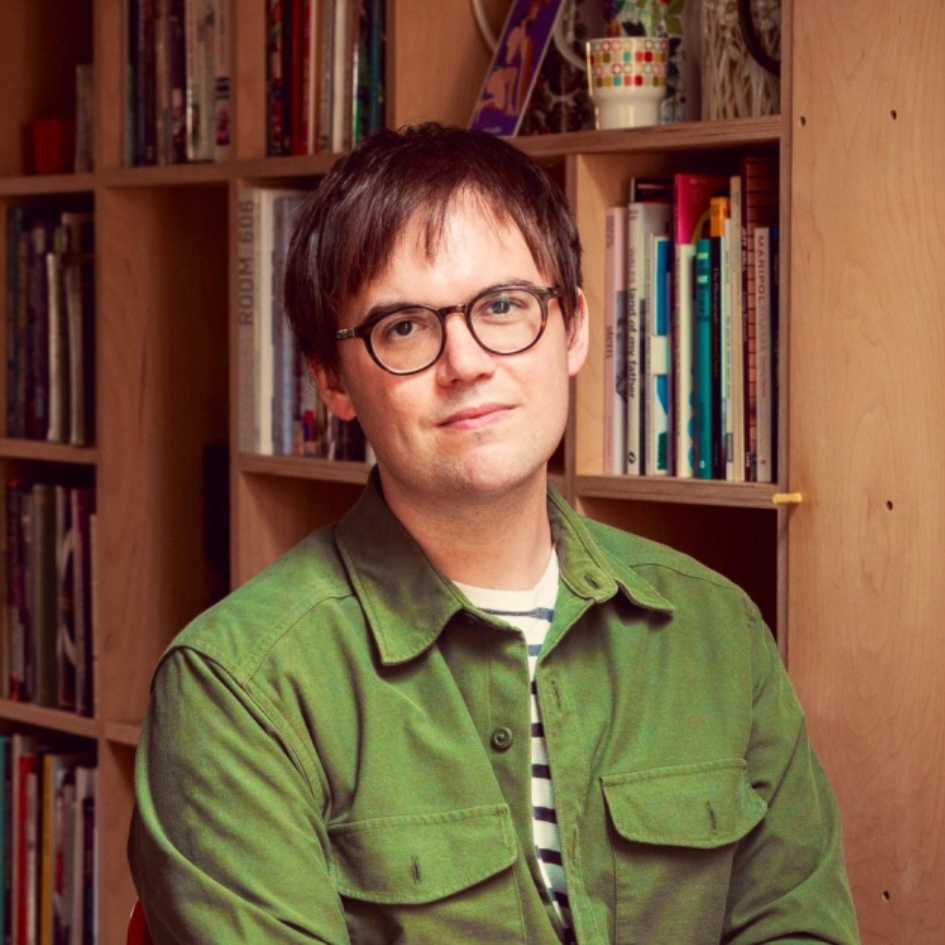
James Bailey is a writer and researcher from Manchester. He is a Doctor of Literature, and the author of Muriel Spark’s Early Fiction (2021) and the co-editor of British Women Short Story Writers (2015). His day job involves working to support the development of other writers, as well as publishers, bookshops and literature festivals.
Episode transcript
Opening Extract
James Bailey
A lot of biographies in general, but certainly ones of Spark, try to uncover a central truth. They try to pin down who was the real Spark. And actually, that wasn't one of my interests. I wanted to live with the uncertainty of Spark, the elusiveness. The moment that I accepted that that was what I was going to do, the moment this book opened up to me in ways that it hadn't before, and actually was when I started to find... great enjoyment in this project it took that pressure off to kind of nail down this person how can you do that when the spark is so full of contradictions and so much mystery in her life so what i do instead i just kind of walk alongside her i walk alongside this life with all of its contradictions all of its blind spots And so just having something that was slippery, that felt shape-shifting in a way that was appropriate to Spark herself, who was always a great shape-shifter and a slippery character, it felt like the best way to approach this.
Intro
Gabriella Kelly-Davies
Hello, I'm Gabriella Kelly-Davies. Welcome to Season 5 of Biographers in Conversation. In each episode, biographers chat about the multiplicity of choices they face while crafting life stories. I'd like to acknowledge Australia's first storytellers, the Gadigal people of the Eora Nation. The Gadigal people are the traditional owners of the land from which I'm coming to you today. You'll find us wherever you listen to your podcasts and on our website, biographersinconversation.com. Let's start the show. The novelist Muriel Spark spent her life ensuring no one could pin her down. She was, by her own admission and others, a genius, survivor, bad mother, fickle friend, recluse, and an arch manipulator. In this episode of Biographers in Conversation, the literary scholar James Bailey chats with me about his choices while crafting, Like a Cat Loves a Bird: The Nine Lives of Muriel Spark. In this biography, James embraces Spark's elusiveness rather than trying to resolve it. He also crafted a mosaic of nine partial portraits rather than a chronological or cohesive narrative. Vitally, James narrates this story as nimbly and wittily as Muriel Spark does in her novels.
Gabriella Kelly-Davies
James, welcome to Biographers in Conversation.
James Bailey
Thank you for having me.
Who Was Muriel Spark?
Gabriella Kelly-Davies
Please tell us about Muriel Spark.
James Bailey
Wow. What a big question with which to open the conversation. Muriel Spark was a lot of things. And of course, she's best known as a novelist. She published 22 novels over the course of her life. She got started, I suppose, relatively late as a novelist. She was 39 when her first novel, The Comforters, was published. And from that point on, she worked prolifically and published at quite an alarming rate, really incredibly impressive. But prior to that, she was writing short stories. She was writing poetry. She wrote plays as well. She wrote essays and literary criticism. So she was doing all kinds of things. Her work is incredibly surprising. You never know what you're going to get next with one of her novels. She will switch from a crime caper to a dark psychological portrait to a social satire to comedy slapstick. Sometimes all within the same book. And as surprising as her work was, it was matched by the surprising nature of her life. Her life was shapeshifting as much as her fiction was. She would often relocate to different parts of the world, different social sets. She changed her own public image. She even had a novel called The Public Image. She was fascinated with the ways in which we can shapeshift as people and present different sides of ourselves to the world. So when you ask me that question, it's almost like, well, who was this person? And I suppose that's something that the book tries to celebrate this kind of elusive mercurial quality.
Why James Chose “Like a Cat Loves a Bird”
Gabriella Kelly-Davies
The title is so clever. Why did you choose it?
James Bailey
Well, yes, the title, Like a Cat Loves a Bird: The Nine Lives of Muriel Spark. The Like a Cat Loves a Bird element. So Spark has a vein of cruelty running through her fiction. terrible things happen to lots of her characters, then there's often a dispassionate kind of matter-of-fact treatment of death and betrayal and jealousy and all the rest. And an interviewer once said to Spark, you know, you must hate your characters, mustn't you? And Spark said, no, I love my characters. I love them just like a cat loves a bird. Meaning, in other words, she liked to toy with her characters. She liked to give them an illusion of freedom before she surprised them with a terrible jolt. And that really kind of seemed to sum up something kind of central, something critical about Spark. This way that she approaches not only fiction, But the way she lived her life, you know, the world was her bird, if you like, and she was this cat kind of stalking or slinking her way through the world. And, you know, I often felt like as a biographer that I was kind of being toyed with a bit by Spark, almost from beyond the grave. She kind of, you know, just as you think you've caught her, she gets away or she lays traps and all the rest. So it really kind of summed up. that aspect of her. And then, of course, as you find out in the book, cats are a real through line in Spark's life. She got on much better with cats than she did people. And you really kind of work out why as you read this book. So the cat image motif worked really well, it felt like.
Gabriella Kelly-Davies
It does. It's fantastic. And because she just loved cats. Cats were a through line. Wherever she lived in the world, a cat would crop up or several cats. But in Tuscany, there were lots of stray cats. And I think she really came into her own as the ultimate cat lover. Cat mother. Yes. Didn't she have lots and lots and lots of cats roaming around in her house?
James Bailey
Some were her own, but she didn't like the idea of thinking of a cat as a pet. She thought of her dogs as pets, but she felt that cats were kind of unownable and they belonged to no one. And I think she really identified with that. She would say things like, you know, when a cat is always on the hunt for something, a life less ordinary, something less boring. And actually, you can really apply that to Spark's own life. Whenever things got drab or whenever she was faced with creative stagnancy, she would get up and leave, just like a cat, kind of aloof, wandering off. felt like the ultimate kind of resting place for Spark in a lot of ways because it was where she lived with all these stray cats and of course her companion Penelope but what a fitting end to a life that was so defined in many ways by this kind of feline aloof nature.
What Truths Was James Trying to Uncover?
Gabriella Kelly-Davies
What truths about Muriel Spark were you trying to uncover?
James Bailey
That's an interesting question. I think a lot of biographies in general, but certainly ones of Spark, try to uncover a central truth. They try to pin down who was the real Spark. And actually, that wasn't one of my interests. I wanted to live with the uncertainty of Spark, the elusiveness. The moment that I accepted that that was what I was going to do, the moment this book opened up to me in ways that it hadn't before, and actually was when I started to find... great enjoyment in this project it took that pressure off to kind of nail down this person how can you do that when the spark is so full of contradictions and so much mystery in her life so what i do instead i just kind of walk alongside her i walk alongside this life with all of its contradictions all of its blind spots and that allowed me as well to kind of have this dialogue throughout the book with spark's own work so it wasn't just kind of looking at this person's life it was looking at the ways in which her works inform the life and the life informs the work that slippery interplay that liminal realm between life and fiction as well sometimes you'll see characters wander into spark's life in this book and you'll see spark wander into her novel And so just having something that was slippery, that felt shape-shifting in a way that was appropriate to Spark herself, who was always a great shape-shifter and a slippery character, it felt like the best way to approach this.
A Portrait That Refused to Settle
Gabriella Kelly-Davies
So many biographers do try to reconcile and resolve mysteries and contradictions. But I really appreciated the way that you presented them to the reader. And it's up to readers to make their own decisions about her. The Scottish National Portrait Gallery commissioned the artist Sandy Moffat to paint Spark's portrait. You opened Like a Cat Loves a Bird with a scene in Moffat's studio. I'd love you to read some passages from that opening.
James Bailey
Sure. So, yes, I do begin with Spark sitting for her portrait and I describe that scene of her sitting there. And shortly after that, I talk about Moffat's attempts to capture Spark on the canvas. So I will... I will just begin with him with his sketch pad as he's trying to make a few quick sketches. Okay. In his studio, Moffat takes a sketch pad and begins to draw the curls of Spark's hair. He has amassed a heap of similar sketches of eyes, noses, lips and cheekbones since embarking on the portrait. Capturing the likeness of his subject has entailed a painstaking process of trial and error. As a sitter, Spark isn't exactly helping matters. Whenever she arrives to meet him, Moffat notices that her appearance has undergone a change of some kind, which offsets his existing composition. At a recent sitting, she turned up wearing a red fur jacket, her makeup bold and heavy. On another occasion, she arrived fresh from the salon, sporting a hairstyle different to the one half-painted on the canvas. Morning shades into afternoon as Moffat returns to his easel and tries once again to get his bearings. When the finished portrait is unveiled, it receives only faint praise from Spark, who sounds more startled than pleased. Sandy Moffat's painting is a striking picture, but bears no likeness to myself, she will later remark. Nobody recognises me. She has a point. On the canvas, Spark's red hair has become blonde with blue roots. Her expression is puzzling, too. Charitably, you could say she looks mildly miffed, as though she's just discovered that the price of notebooks from her beloved Edinburgh bookseller, James Thin, has risen once more. Less charitably, you could note her resemblance to a peroxide-barneted Margaret Thatcher. Spark's essence, her very sparkiness, is somehow missing. It isn't me at all, she complains of the portrait. The author of my books is just not there. I find myself sympathising with Moffat. It is very difficult, it turns out, to keep Spark squarely in your sights. She has a certain knack for slipping out of view.
Gabriella Kelly-Davies
I love that. It's so Sparkian.
James Bailey
Thank you. I had great fun writing that and then beginning the book that way.
Gabriella Kelly-Davies
This scene perfectly captures Muriel Spark's shape-shifting tendencies. To what extent was this your reason for choosing it as the entry point?
James Bailey
It felt like the perfect way to begin. It tells you two things at once. First, it shows you what Spark was like, sitting there deliberately changing her image while her image was being captured. Was she doing that because she was naturally a restless, shape-shifting character? Perhaps. Was she trying to unsettle the person tasked with capturing her? I think that is possible. She complained about the portrait, but was she secretly satisfied in some way that she had managed to evade being captured completely on the canvas? I think that is a possibility. Second, it tells you what lies in wait for anyone foolish enough to try to capture Spark, tell her story or depict her in any way: she makes life difficult for that person. That is because she is this shape-shifting character who changes before our eyes. I really identified with Moffat. My intention was not to criticise him in any way. It was to say, I really feel the pain here. I feel the difficulty of what it is like to be before this person and try to depict her.
How James Researched Muriel’s Life
Gabriella Kelly-Davies
How long did it take you to work on this book?
James Bailey
Well, it's an interesting question. This book was preceded by a PhD thesis on Spark, which entailed many years spent in the archives, going through the letters, the manuscripts, the receipts, pretty much everything. The research folders, the bus tickets, yes. The meals, the cocktails, the hairdressers, hairdressers' receipts. And that allowed me, I mean, that was a very different project. It was an academic project and it was quite a bit drier, as you can imagine, these kind of scholarly. insight into spark's work but that provided me with a with a wonderful foundation so when a previous book came out which i wrote called muriel spark's early fiction which looked at the first 20 years of her novel writing career and it had an emphasis on the kind of narrative techniques and it was very literary critical and, as I said, quite dry in some ways. I had this wonderful foundation and I had all these stories that couldn't make it into that book because they weren't appropriate. You know, I had all the stories about the ways that Spark was writing these novels, the things that were going on in the background. We've mentioned the cats. And so when that book came out, I realised there was another book waiting to be written. So this book was written in a fairly short amount of time. It was about a year of solid writing and then a very intense period of editing. But there was a backdrop to all of it, which was all of that research, which had all been done. And I knew exactly what book I wanted to write. So it was a year, but it was also a bit of a lifetime in another sense.
Gabriella Kelly-Davies
Would you have preferred this book to be your PhD thesis?
James Bailey
Oh, of course, but it wouldn't have been appropriate for a PhD thesis. And I'm glad I did that because it meant that whenever I was kind of entertaining flights of fancy in this book or some of the more eccentric aspects, I knew that there was always an underpinning. I knew that I knew my stuff and that I could always go back to. I had all the facts there, but it meant that I could then go off on a tangent, knowing that I could always come back to the kind of solid foundation. And I think you can't take that kind of slightly more fanciful, eccentric approach unless you have that underpinning. So I'm glad I had both of those things.
Gabriella Kelly-Davies
What was your research question when you embarked on the larger project for your PhD? And was your research question for this book the same?
James Bailey
So the PhD research question was looking at how Spark really manages to trip us up as readers, all the ways in which she subverts her expectations. And that often had its roots in the narrative techniques. And I would look at some of the... the thinking behind that, whether it was the influence of the French anti-novelists or whether it was the influence of film or experimental literature. And so it looked at the archives and how Spark was really refining some of these techniques. So it was really interesting on a kind of line level. I think there's such mystery around how Spark writes these books. So to be able to go into the archives and look at the manuscripts and the notebooks and how she was through trial and error. creating the Sparkiand style that many of us know and love. really the research question. It was kind of how this was coming into play. Now for this new book, there wasn't a central research question. As I said, I wanted to live with the mystery of Spark and kind of walk alongside her and look at how her life evolved and how the books evolved. But as I said, having that underpinning, knowing how the work evolved really allowed me to take that step into Spark's life, if you like.
Gabriella Kelly-Davies
And it gives you authority and authenticity knowing that you have that incredibly solid academic background.
James Bailey
Yes, it was good to know. I mean, even just a physical heap of paper in the room as I was writing of all my scans and photocopies for notes from the archive just meant that I always had that thing to look back to whenever the work felt like it was spinning off. In different tangents, I could always go back and look at Spark's written words and all that research that I'd done.
Open-ended Questions and Elusiveness
Gabriella Kelly-Davies
I appreciated the way you asked open-ended questions throughout the biography. What was their purpose?
James Bailey
Well, I think there are always open-ended questions to Spark. There are things we simply cannot know. I mean, one of the questions I would love to ask Spark if she were here now was whether she was satisfied with the work she created. And that's just one example, because one of the things that crops up quite a bit in her interviews and in the archives, which might surprise people when you think of Spark as this kind of real cool customer. was how often she would put her work down. She would often dismiss some of her early work as that of a minor novelist and elsewhere as the work of an attic writer, an attic novelist, because she was writing often under very precarious circumstances while living in bedsits and writing what she could with the time allotted to her. And there was a period in her life when she wanted to write her great big novel, which became the novel The Mandelbaum Gate, which was a novel that she wasn't satisfied with when it was published. So there were so many questions with Spark. Was she satisfied with her work? How did she write the novels? What voice was she obeying when she wrote these novels? Was she satisfied with the way she'd spent her life? She'd devoted her life to her work and a note of regret creeps in in some of her final interviews around that. So there are always these questions. And as a biographer, I cannot decisively answer them, but I'm asking them myself. And I mentioned earlier this kind of interplay between the life and the work. And sometimes you'll read a novel like The Public Image, for example, where the protagonist ends up leaving. the world of her own work behind to go away anonymously with her newborn son. And you read that and you think, well, you know, I know that Spark didn't choose that life. She chose to prioritise her work. What was she playing out there in that novel? What kind of ideas was she entertaining and did they have a personal resonance for her? And that's just one of many open -ended questions that crops up through the book. And I don't think it's a failure of any kind to ask open-ended questions and leave them unresolved. I think it's important that whenever we look at a life or whenever we read a novel, that we keep those questions afloat and we continue to entertain them, even when we can't definitively solve them.
Gabriella Kelly-Davies
You've really answered this question. But I'm wondering if there's more that you would like to say. So how did you embrace rather than resolve Spark's elusiveness?
James Bailey
I suppose the approach I took was that sometimes to try and resolve Spark is to minimise her. And Spark spent her life having to confront attempts of those around her, whether it was profilers in interviews, whether it was literary critics, whether it was former friends. of reducing her in various ways. She was often described as a Catholic comic novelist. Well, in some ways she was. She converted to Catholicism. Some of her novels were comic in style, but that certainly wasn't the case for all of the novels, and I think there's a lot more to spark than her Catholicism. That's just one example. So I never wanted to kind of say, this is Spark, you know, this is all she is. We've cracked the code, if you like. I always wanted to keep things open. I also think, you know, it's interesting, so many of Spark's protagonists, I'm thinking, for example, of Lisa in The Driver's Seat. She spends the entire novel eluding those who try to pin her down. She even... She adopts different personas. She speaks in different voices. I think there's a little bit of a comparison there to be made with Spark. She spent her life shapeshifting, adopting different guises, sometimes performatively, other times in an organic sense, you know, living in a different part of the world, attempting to write different books and succeeding in writing those different books. And so it made no sense to me. to do anything other than embrace spark's elusiveness because she was elusive to the end and i think you can learn a lot about someone by embracing that it doesn't mean that you're you're mystified to the end it just means that you're holding different truths at once if you like you have a you have a number of different stories in this book rather than a singular portrait and actually to go back to that portrait analogy from the beginning of the book i suppose what i've presented is a kind of a shattered portrait or a kaleidoscope really of different images of spark rather than anything that that attempts to be unified on the canvas because what you find as we found when when spark's portrait artist attempted to capture her is that we're left with something that doesn't quite match the subject.
Matching Spark’s Spiky Wit
Gabriella Kelly-Davies
Your writing style in Like a Cat Loves a Bird matches, sparks, spiky wit. Why did you choose this approach?
James Bailey
Well, first of all, it's very kind of you to say so, because that certainly isn't my description of the work. I'm very flattered that you think it matches spark in any, to any degree. I'm not sure I'm capable of that, but I suppose it's who I am as a person. And who I am as a person is the kind of person who gravitates towards a writer like Spark. I think she attracts those kinds of readers who have that affinity or appreciation for wit. And yes, so I think it comes out naturally. And I suppose when I write about Spark, that comes even more to the fore because I just so appreciate her wit and her wisdom and how those two things go together. But also we have to say, you know, although Spark is a writer, of course, to be taken very seriously, so many aspects of her life are just really funny and really silly. And this book certainly has an eye for that. You know, I'm on the alert for those moments in Spark's life, which are just very funny. So, you know, the idea of her eccentricities, for example, you know, the fact that coming back to her with the cats, you know. Her superstitions around the cats, she would write with a cat on her desk because she felt that it aided her concentration. I don't know if you've ever tried to write with a cat on your desk, it does not aid my concentration. She also had superstitions that if a cat sat on one of her manuscripts, that was a good day's work. which I just find incredibly funny. So when you're reading Spark and you're admiring a particular passage, you have to know therefore that at some point a cat was sitting on the page of that. And also, you know, if anyone touched her famous writer's pens in her special case, she would throw them out of the window because they'd been contaminated by someone else's touch. So when I'm writing this book, you know, I have to... those moments because there's also a lot of seriousness in this book and there's a lot of darkness but when i see these moments i have to celebrate them and so you do get hopefully moments of wit and pleasure which i think are befitting the subject really it sparks life was eccentric it was wild and it was often very funny And there are lots of funny stories in the book. Actually, I should just tell one more quick one. When she arrived in Rome and her own public image became grander, and more glamorous than it was before. She would wear green gowns when she was hosting parties. And the reason for this was that it matched the colour of the creme de menthe that she was serving to guests. And you just think, how can I not find fun in this? Imagine being po-faced writing this book when you have these facts at your disposal.
Gabriella Kelly-Davies: Well, I was just thinking, what happens in the archive when you stumble upon all these really funny anecdotes?
James Bailey: Oh, there's so much wonderful stuff in the archive. And as a letter writer as well, I mean, some of the stories Spark tells. I mean, there's a chapter at the end of this book where I look briefly at the correspondence between Spark and Doris Lessing. And there's a story that really made me laugh, which was that they're talking about the ways they're often misrepresented in the media. And Spark has this story about she was being filmed in her apartment and she was being asked about her beliefs around censorship and her beliefs around the censorship of pornography. And she's kind of saying, well, you know, I don't agree with censorship. And she's sitting in her room and she's talking about pornography and she has all the collected works of Cardinal Newman in the background. And when the interview is aired on television, the spines of those Cardinal Newman books are blurred. So it looks, Spark is writing in this letter to Lessing, that she not only endorses pornography, but she has a vast collection in her office. And so you just find these stories and you think there is so much to enjoy about the way Spark lived her life and her eye for those details as well. I mean, she would have recorded a moment like that and she would have to write about that to someone because it... And that could have cropped up in one of Spark's novels. You can so imagine that befalling one of her characters. So, you know, so much to record and find space for in the book.
Gabriella Kelly-Davies
How did you stay quiet in the archive? Because you're meant to be very scholarly and quiet, but I'd been laughing the whole time.
James Bailey
Oh, there was a lot to laugh about, yes. No, you're right. And I often was, and I was often kind of just making quick notes. I have to put that in there. I have to put that in the book, yes. Absolutely.
Reconstructing Scenes Without Fiction
Gabriella Kelly-Davies
How did you prevent the story veering into fiction when you imaginatively reconstructed the scenes?
James Bailey
That's a good question. Well, I think going back to the idea of having this great foundation from all that work in the archives meant that I'd recorded so much information. So when I recreate a scene from Spark's life, as I do throughout this book, it's always based on facts. So I'll give you an example. In the 60s, Spark relocated to New York. And she lived in a very fancy serviced apartment, which was a far cry from the pokey bedsits that had defined her time in London when she was not anywhere near as successful. And there's a moment in the book where I describe walking across the lobby of this complex and getting into the elevator and then walking into one of these fancy apartments. And it is described very imaginatively. But every detail from the colour of the marble in the lobby, to what the elevator looked like, to what Spark's apartment looked like, to the way that Spark had chosen to decorate the apartment, which was quite outlandish, to what was being wheeled up on the silver tray from room service, was all gathered from the archives, from interviews, from profiles, from Spark's letters and from Spark's essays. And it's all worn very lightly. So as you're reading this, it might read a bit like a novel. It might read like something you can hopefully get lost in, which was always my intention. But then at the back of the book, you see the notes and there's a hefty number of notes just for those couple of paragraphs. And it's all built from facts. It's all built from things that I've found and recorded and put together to create these scenes. And that was really my approach. I didn't want this to be the kind of book where you're constantly going down to the footnotes. I wanted you to read it and become immersed in it and become lost in it. But then, you know, should you wish to, you go back and you see where all of these details are gathered from. And so that was how I did it, really. It's all true, but I do allow these imaginative sequences to play out with an underpinning of fact.
Managing the Research
Gabriella Kelly-Davies
How did you manage all of that information? What systems did you use to keep track of it all so that you had it at your fingertips at the right moment in the story?
James Bailey
Oh, I'd love to be able to answer this by saying that I had an incredible filing system, rather like how Spark would approach the writing of her novels, which is always incredibly organised. I didn't. I have to say, I mean, and I think it's really important to talk about how books are written, because often we don't have the luxury of this being our sole focus. I wrote this around a full-time day job, and I would often kind of attack the work in a way. It's interesting. I would kind of say, okay, this weekend we are in New York. We are writing about New York and I would lay out my notes for New York, you know, so the details of that apartment, the details of the New Yorker office, the novel that Spark wrote, which is informed by her time in New York, The The Hothouse by the East River. And I would lay these sources out, you know, physically lay them on the table and I would scan them. I would make quite impressionistic notes. I would think to myself, okay, what would it be like to walk across the lobby of that apartment? And I would go from there. And that meant that I kind of took the fear out of it by saying, you will cover all of these themes. I would concentrate on a single moment. What would it be like to walk across this lobby? And I went from there. And I describe walking across with all those notes that I've described. I know that she used to look at her apartment at the East River. And of course, that's what her character Elsa does in the The Hothouse by the East River. So from there, I would make a leap to the fiction. So I was quite instinctive is what I'm trying to say. I would just allow myself to go with what seemed to be working. And of course, you edit like a maniac afterwards. But I would really just allow myself to go on this journey with Spark. And that's how I did it. And sometimes it worked and it makes it into the book and sometimes it doesn't. And there's a lot that didn't make it into this book, believe me, a lot of experiments that didn't make it into the book. But that was how I did it. I often worked in concentrated bursts because that was the time available to me. And I just had faith, really, that it would cohere. And fortunately, often it did. There's also a quote from Spark, which I love, which I wrote down and pinned to my monitor of my computer. She said, I am paralyzed as a writer unless I write according to the queer dictatorial sense that I have. And I love that. And I'm not saying for a second that I wrote like Spark and I tapped into her genius because of course I didn't and I couldn't. But surrendering to this idea that there is this queer dictatorial voice that you just have to obey and see where it takes you was kind of the thing that gave me the courage to write this. to write this book. And that's what I obeyed, really.
Balancing the Life and the Work
Gabriella Kelly-Davies
How did you balance literary criticism of Spark's novels with her human story?
James Bailey
Yes, well, that was a priority for me because the books and the life dovetail beautifully when you look at Spark. So, for example, her school days in Edinburgh, she meets a teacher, Miss Christina Kay, who has... enormous influence on her and actually is the germ really if you like for the character of spark's most famous character of all miss jean brodie so when i'm talking about spark's school days i'm of course weaving in The Prime of Miss Jean Brodie and so the two things cannot be kept separate i have to allow them to flow together and that was a real challenge and it's quite a hard thing to describe how i did it but i would look for points of connection So, for example, Miss Kay would take Spark to the opera, to the ballet, to give her this cultural enrichment, just like Jean Brodie did to some of her. special Brodie set, you know, the members of this elite set within the classroom. And so I would find ways of looking at points of comparison and weaving those things through. What I didn't want is for you to read a chapter on Spark's life and then a chapter of literary criticism. I wanted the two things to sit side by side. Another example of that is Spark's Rome Years, which was by far my favourite chapter to write. And in Rome, Spark writes her novels, The Public Image. and The Driver's Seat which are completely informed by Rome, by the rise of the paparazzi, by sensationalist media and by Spark's ever more glamorous public image and the two things feed into one another, the life and the art. So I couldn't approach it any other way but it is a challenge to keep the two things spinning, the two plates spinning. Hopefully I've accomplished it but it was by far the biggest challenge of the book.
Gabriella Kelly-Davies
When you were in the archive, did you take notes or did you just scan everything and take it all home and print it out?
James Bailey
It was a mix. I didn't have time and my fingers probably would have given up on me if I tried to take notes of everything. I often scanned things and took them home to really pour over later, especially when it came to the manuscripts of Spark's novels, which is a really interesting aspect of Spark. You know, you read a Spark novel and you read the manuscript and there's often... difference it's fascinating it's also it gives you goosebumps it's often like she was channeling these books from some other source and they were just arriving onto the manuscript really eerie and amazing but what what allowed her to do that was that she would create these vast bundles of notes for every every novel and it would it would include things like things you would never even get on the printed page you know what do they have for breakfast what's their worst habit are they a messy eater? And so I would scan all of that and take that home and really pour over that and see how she built up characters like Jean Brodie, for example. Fascinating how she did it. And she would say, you know, once I'm ready to pounce, I pounce. That was how she wrote a novel. Again, back to the cat imagery. So I would often scan a lot of those sources. But there were other times where I would be writing things down, especially with the letters. I would be writing down really interesting turns of phrases, or I would look at the receipts. For example, I've mentioned Rome a few times, her elaborate spending, and actually, was that fluff? Is that irrelevant to the novels? Well, actually, it's not, because... habits, for example, when she came to write The Driver's Seat, which is a novel set around in and around a lot of shops, actually had a huge impact on the novel we got. So in the strangest places, you'll find the seeds of ideas that are actually pivotal to some of her fictions. So to answer your question, it was a mixture of both. I would always have an eye out for a turn of phrase or an interesting detail, which actually you see have a big impact on the fiction.
Did Spark Outmanoeuvre Her Biographer?
Gabriella Kelly-Davies
To what extent do you believe you got to the truth of Spark? Or did she outmanoeuvre you?
James Bailey
Oh, what a question. Well, I think there is a truth that she was elusive to the end. I think it's a truth that she was many different things to many different people and to herself. So I think capturing that in the book, that unresolvedness, is in its own way a kind of truth. And I think in many ways it would be dishonest to present a book saying, this is Spark, we've cracked the code, we've solved the puzzle. So I think there is a truth to that. But I also think that Spark to the end is elusive. And I've mentioned that character of Lisa in The Driver's Seat slipping out of view. And, you know, Spark did that as well. Penelope Jardine, Spark's companion for the last 40 years of her life, really. said that there are things about spark that she didn't understand there are times when spark eluded her she said there were times that we're having a conversation and spark's eyes would kind of glaze over because she was somewhere else and where she was was this internal place where she was writing the next novel and if penelope is saying that then you know what chance do i have or any biographer of getting to the essence of that person But at the same time, I think I did capture something of the essence because that shape-shifting mercurial quality, that ability to slip out of view is hopefully something I capture. So it's a strange thing, really. It's a yes and no.
Portraying Spark’s Death
Gabriella Kelly-Davies
Spark believed death wasn't an end point. So how did you portray her death?
James Bailey
Yes, well, that's really interesting. I mean... Even in Spark's kind of late 30s, early 40s, she was thinking incredibly seriously about death. She has a novel called Memento Mori, which is a novel where a group of elderly characters receive phone calls from death. itself reminding them to remember that they must die at some point and to be prepared for that and to live with an ever-present knowledge of death and actually death is everywhere in sparks fiction she will often interrupt a narrative just a few pages in by telling you how people will die it was never it was never far from her mind And that topsy-turvy approach to death, getting death in there at the beginning, was important to capture in this book. It would be so banal to end this book by saying, and she died, because Spark didn't live her life that way. And Spark believed there was life after death. There were ghosts throughout Spark's book. She believed in ghosts. so the idea of death the end would would be such an insult to spark so of course she does physically die and we we do have that somewhere towards the end of the book but i couldn't allow it to end at that point and that's why we have this epilogue called The Revenant which is about spark's return from death one of the final if not the final things she published was a poem called author's ghosts which is about that sensation which we've all had where we read a book we reread a book and we go It wasn't like that last time I read the book. I'm sure it didn't turn out that way. And Spark is actually imagining in this poem the author's ghost returning to the shelves to meddle with their published works, to add in little sections, little details that keep us living readers tripped up. And so I wanted to honour that in the book. So we really look at Spark as the ghost meddling with us from beyond the grave. And the other thing I wanted to say there is that... books were not just relevant to the times they were written. They're relevant now and new meanings emerge all the time. It's almost like she's still adding little bits to those books that speak to the moment we're in. So for one example of that, The Public Image, which is all about presenting a public image to the world and fashioning that and the art of self -fashioning. She wrote that about the world of celebrity and film stars. But how relevant is that to our current reality of social media and the fact that everyone now can sell fashion and present a version of themselves online? Of course, Spark didn't know about that world, but so much of that novel is relevant. And you can see this across Spark's work. There is so much about fake news. It's endless. It's fascinating. So the idea of Spark as this ghost writer... still telling us truths about the world we live in, was something that I wanted to end the book with far more than just saying she died at the end.
A Sparkian Ending
Gabriella Kelly-Davies
Yes. You closed Like a Cat Loves a Bird with a very Sparkian ending. I'd love you to read the closing passages.
James Bailey
Sure. yes this relates to the idea of of the author's ghost and this idea of spark meddling with her work and this kind of idea of a of a narrative afterlife which she is enjoying somewhere in some realm so as spark was putting the finishing touches to her final novel The Finishing School she was also writing a poem entitled author's ghosts In it, she imagines authors as spectral scribes who return each night to haunt the pages of the books they once wrote. These ghost writers, announces the poem's speaker, make final, semi-final touches to their old works. The speaker's confidence is rattled, however, when the poem reaches its conclusion, or rather the place where its conclusion should be. Something's missing, they remark, caught off guard on the poem's penultimate line. I could have sworn. How fitting to leave us with an ending that has been spirited away by some meddlesome typing ghost. Endings, Spark announces as a parting gift, are never fixed or conclusive. A closed book can spring back open. I imagine Spark joining the ranks of those authors' ghosts. I picture her returning night after night to shake her old books down from the shelf. She locates pages and paragraphs that speak anew to the present moment, be it the prevalence of fabricated news or social media as the site of our self-fashioning and nudges us to take notice. I think I have opened doors and windows in the mind, she said in 2004, when asked to sum up her principal achievement as a writer. Those doors and windows remain open. A cold wind rushes through, sharpening our wits. And there is something else. There is always another something else with Spark. The finishing school, it turns out, wasn't quite the end of Spark's writing life. It may have been her final published novel, but she had already written five pages of a new one in the months before her death. Its title is Destiny, and it will remain unfinished.
Gabriella Kelly-Davies
That's just the perfect ending, and we've already talked about why you chose this ending, but do you want to add any more to your description or your reason for ending the book this way?
James Bailey
Well, I suppose it's in keeping with the approach of the rest of the book, which is this idea of keeping Spark open to interpretation, never reducing her with any one type of reading or a type of classification. She wrote many different types of books. She wasn't just a comic novelist. She lived many different lives. She was so many different things. She was a Catholic convert with Jewish origins, with a Presbyterian schooling. You know, there are so many aspects to Spark. The idea of reducing her was really something I wanted to resist. This idea of allowing her to be this free-floating spirit that comes back to deliver different kinds of truths was a really appealing idea to me. And I wanted to keep Spark open as well as the subject. I want there to be many more books about Spark. I don't like the idea of anything being the final word. I think Spark would have hated even the idea of a final word. So I want the conversation to be open and continuing and that she continues to haunt us, really, continues to trouble us, to continue to startle us and sharpen our wits. So that was my sounding off, really.
Why James Chose a Mosaic Structure
Gabriella Kelly-Davies
I'm sure she didn't want you writing her biography, although she left such massive archives and annotated archives that she probably was hoping that someone or many people would write her biography. What advice would you offer to other biographers who are thinking of employing a mosaic-like structure rather than a unified story?
James Bailey
Well, I would encourage everyone to really interrogate that idea of a unified story to begin with. I mean, is there ever a unified story? We're all complicated people. And I've often said while I've been doing the rounds promoting this book that if everyone in the room at these events had access to the archive or archives, there are several. and sat down and used the resources available to write a book, we would all end up with very different books. And even those biographers who were setting out to write a quote-unquote unified story would have things with blind spots, with areas that they can't quite account for, areas that they want to go into much more depth than the person sitting next to them. So I think things are always partial and fragmented. And so what I did with this mosaic-like structure... was just I gave myself that freedom to say, well, you know, here we are going into this part of her life which is around celebrity and a public persona and this bit of her life is around her on the attack because the media is attacking her and this part is her creating fake news during the Second World War. It just allowed me to kind of go into much more and explore her contradictions. in ways that didn't kind of leave me feeling tortured because I was also trying to hold or kind of adhere to a different kind of truth. So I would encourage anyone to explore experimental ways of telling stories and ways that feel appropriate to the subject matter. That's the other thing. It's what's appropriate to the subject. Spark was a shapeshifter, so why would I want to present one particular shape? It wouldn't make sense.
The Role of a Literary Biographer
Gabriella Kelly-Davies
Just in closing, what do you believe is the role of a literary biographer?
James Bailey
Well, I suppose to honour both the life and the work, to look for points of connection. You know, I don't really subscribe to the death of the author, not always, certainly not where Spark was concerned. I think the life does inform the work, but I also think the work informs the life. And for someone like Spark, she had a... fantastic thing she said in a letter to a friend she said that she saw herself as a radio receiver going through the world picking up messages and those messages end up in the book so she was living a writer's life she was going through the world attuned to certain things that she could use for her fiction and so the work and the life speak to one another with spark and i think the role of a literary biographer is to be really attuned to that It's not just about reading the novels very closely. As I mentioned, it's even looking at the hairdresser's receipts. It's looking at what was on the menu in the hotel room service because these things do end up in the novels. So I think it's being alert to everything and also to the highbrow and the lowbrow. I think that's really important where Spark is concerned. So much gets missed with Spark because it's deemed as silly. And actually one of the things I've hoped to do in this book is that even in the seemingly trivial, there are profound truths. So going right back to the beginning of this conversation, we were talking about the cats, and that might seem like something kind of cute and a bit of a silly add-on, and actually it's really not. Spark identified so much with that feline sensibility, the idea of leaving situations when they got dull, of this kind of aloof approach to life, of being a kind of sensitive figure. She believed her cats, when they're sitting on a desk, could see things. that no one else could see. And actually, if you think of the role of the writer, you are also sitting at a desk staring out into the nothing and pulling something from that onto the page. So even when we're talking about the seemingly trivial, everyday, banal occurrences, they have relevance. And I think the role of a literary biographer is to be on the alert to profound truths wherever they can be found.
In Closing …
Gabriella Kelly-Davies
James, thank you for chatting with us about Like a Cat Loves a Bird. Our conversation illuminates a tension between unifying a life story and the intellectual honesty required to admit when a subject simply won't cohere. You also refuse to flatten Spark's contradictions by trying to reconcile them. This mirrors the deeper challenge every biographer faces. deciding how much of our subject's elusiveness to preserve. Your book suggests that sometimes the most faithful portrait is one that admits defeat before certainty, letting the cat remain appropriately uncatchable. So thank you.
James Bailey
Thank you so much for inviting me on.
Gabriella Kelly-Davies
Thank you for listening to Biographers in Conversation. Special thanks to my producer, Andy Marr. web manager Dylan Hamilton-Foster, and Sonny Narderdale for the music. We'd love you to take a moment to rate the show on the website, across social media, Apple, Spotify, or wherever you find your podcasts. If you enjoyed this conversation, please share it with your family and friends and on social media. To discover more about my guests and their biographies, head over to their show pages on biographersinconversation.com. There you'll find all our episodes and ways of getting in touch with us. I'm looking forward to our next conversation about the choices every biographer faces. I hope you are too.