





In this episode of Biographers in Conversation, the cultural historian and author Anna Thomasson chats with Dr Gabriella Kelly-Davies about her choices while crafting A Vast Horizon: Artists and Lovers, Freedom and War.
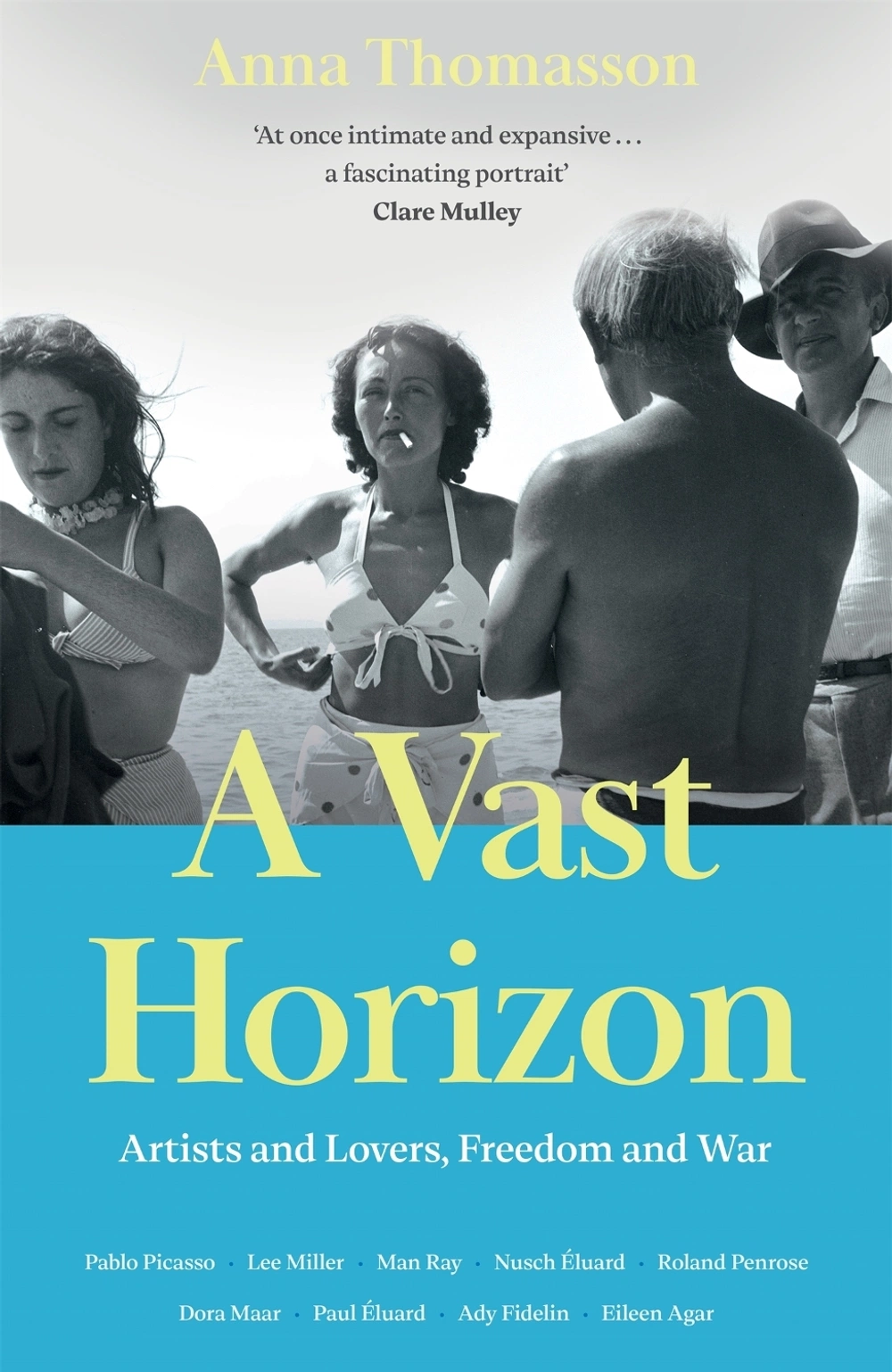
Longlisted for the American Library in Paris book award 2026
A Vast Horizon
A group biography, A Vast Horizon centres on a circle of nine Surrealist artists, who gathered at the Hôtel Vaste Horizon on the Côte d’Azur in the summer of 1937. Lee Miller, Pablo Picasso, Man Ray, Eileen Agar, Adrienne Ady Fidelin, Paul Éluard, Nusch Éluard, Dora Maar and Roland Penrose spent an apparently carefree summer swimming, sunbathing, making art and exchanging ideas. Two years later, war scattered them.
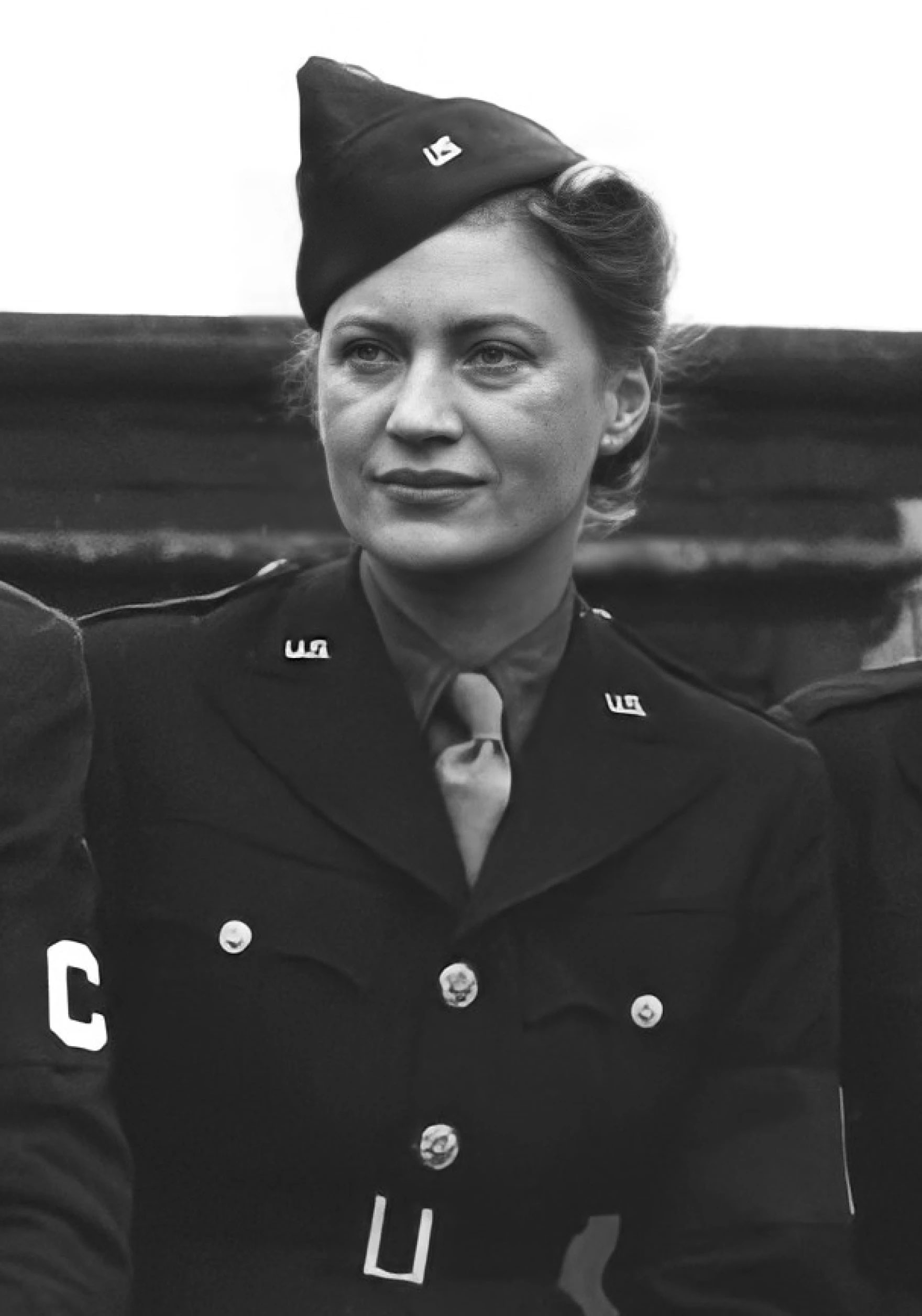
Female war correspondent Lee Miller who covered the U.S. Army in the European Theatre during World War II,
(U.S. Army Center of Military History), Creative Commons.
In A Vast Horizon, Anna Thomasson follows the artists’ intersecting paths through the Second World War and into postwar Paris, asking how creativity, intimacy and the pursuit of freedom survived fascism, displacement and violence. Rather than a conventional linear narrative, Anna crafts a collage from photographs, letters, diaries, poems and artworks. Vivid descriptions of the Surrealists’ photographs and paintings alternate with mini biographies of the artists who created and appear in them.
Portrait of Dora Maar 1937
Artist: Pablo Picasso
Shutterstock.
During our conversation, Anna reflects on how she honoured silence and allowed the artists to retain opacity rather than inventing certainty where none exists.
Relishing Silences in the Historical Record …They're the story itself
She also explores the biographer’s presence on the page, asking: ‘Can an author acknowledge a personal response without dominating the narrative? Can conflicting testimonies coexist? And can biography approach truth while remaining open to other interpretations?’
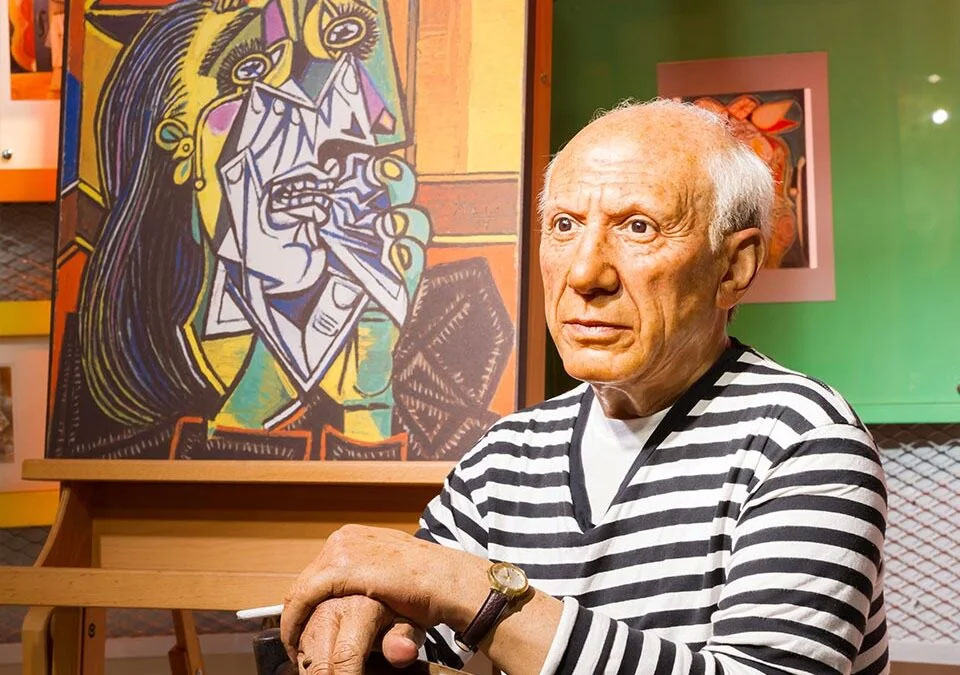
Wax figure of Pablo Picasso from Madame Tussauds in Bangkok, Thailand.
A Vast Horizon prompts larger questions about biography itself. For example: How can a biographer hold nine lives together without flattening their differences? What can photographs disclose and what do they conceal? How should a writer treat archives full of silence, contradiction and deliberate self-mythologising? And when does speculation illuminate a hidden life? Or can it become an act of appropriation?
Praise for A Vast Horizon
‘History in which deep ocean currents flow through individual lives . . . a compelling read.’
Michael Bird, author of This Is Tomorrow: Twentieth-century Britain and its Artists
‘At once intimate and expansive, A Vast Horizon layers real upon surreal to
build a fascinating portrait of art, war and life.’
Clare Mulley, author of Women’s Prize shortlisted Agent Zo
‘Beginning with a single, tantalising photograph, Anna Thomasson weaves a fascinating story around nine figures in the Surrealist movement. Beautifully told . . . wonderfully interesting and hugely informative.’
David Boyd Haycock, author of Brilliant Destiny: The Age of Augustus John
‘An enviable lightness of touch . . . This chapter in the history of human and artistic relations has never been better recounted.’
Andrew Lambirth, co-author of A Look at My Life
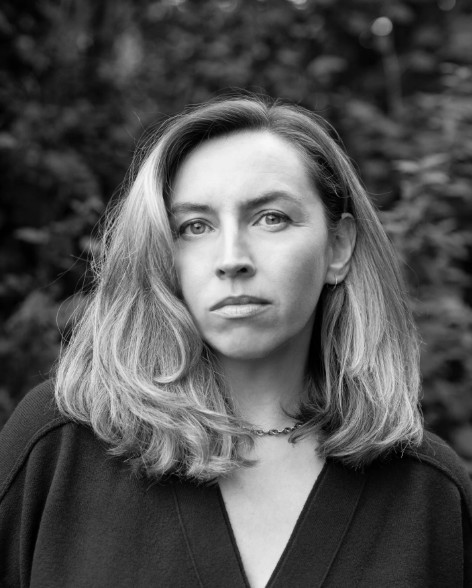
Anna Thomasson studied for an MPhil in Biography at the University of Buckingham and her thesis was shortlisted for the Daily Mail Biographers’ Club Prize. She is the author of the highly acclaimed A Curious Friendship. A Vast Horizon is her second book.
Episode transcript
Opening extract
Gabriella Kelly-Davies
How did you respond to silences in the historical record?
Anna Thomasson
I relish the silences in the record because I think they’re the story itself. I think they speak. Rather than trying to iron them out or make sense of them, fill in the gaps or speculate, I acknowledge those silences. I didn’t want to speculate in those silent moments.
So they’re there: silences, contradictions. I wanted all of that to be part of the narrative—to show the working rather than iron it all out and make it into a seamless narrative.
Introduction
Gabriella Kelly-Davies
Hello, I’m Gabriella Kelly-Davies. Welcome to Season 5 of Biographers in Conversation. In each episode, biographers chat about the multiplicity of choices they face while crafting life stories.
I’d like to acknowledge Australia’s first storytellers, the Gadigal people of the Eora Nation. The Gadigal people are the traditional owners of the land from which I’m coming to you today. You’ll find us wherever you listen to your podcasts and on our website, biographersinconversation.com. Let’s start the show.
In this episode of Biographers in Conversation, Anna Thomasson chats with me about her choices while crafting A Vast Horizon: Artists and Lovers, Freedom and War. This biography centres on a circle of nine figures associated with surrealism, including Picasso, Dora Maar and Lee Miller, who gathered at the Hôtel Vaste Horizon on the French Riviera in 1937. The story traces them from that carefree summer through the Second World War to Paris in 1947.
Rather than a conventional linear narrative, Anna crafts a collage from letters, diary entries and photographic and artistic fragments, exploring friendship, creativity, love and desire.
Gabriella Kelly-Davies
Anna, welcome to Biographers in Conversation.
Anna Thomasson
Thank you for having me.
A Vast Horizon
Gabriella Kelly-Davies
Please tell us about A Vast Horizon.
Anna Thomasson
A Vast Horizon is about freedom. It’s about men and women and their bodies. It’s about creativity and community, about what it means to live in art.
The story begins in 1937 in the south of France, where a group of friends and lovers are spending the last weeks of the summer together at a small hotel in the hills above Cannes. I’ll list them for you: Lee Miller, Pablo Picasso, Man Ray, Eileen Agar, Adrienne Fidelin, who was known as Ady, Paul Éluard, his wife Nusch, Dora Maar and Roland Penrose.
They’re artists, painters, surrealists, models. There’s a poet, a collector and a dancer. They swim and sunbathe. They paint and photograph each other. They eat meals around a table on the vine-shaded terrace of the hotel. They swap partners as easily as they exchange ideas.
Man Ray described them during this time as a happy family. But all is not as peaceful as it seems, and the rising tide of fascism will engulf the world in war only two years later.
The book follows their individual and intertwined stories and their quests for freedom in their lives and their art, from those weeks of creativity, sex and sunshine in the south of France through the Second World War and beyond. I wanted to discover what they did in those dark times, the choices they made and how they continued to try to find their freedom. In war, acts of creativity become powerful weapons, and art and literature become more important than ever.
Gabriella Kelly-Davies
What inspired you to craft this book? A group biography of nine people is a challenging project.
Anna Thomasson
My previous book was officially about two people, but it grew to acknowledge the circle they were in, their social lives and their interconnected lives. I’m always fascinated by this interconnectedness—that they’re not in isolated bubbles.
I’ve always been fascinated but intimidated by surrealism. I think this was a way to make sense, for me, of the impulse to surrealism, its power and its impact. It was a human way in.
I like to jostle different lives, different stories together and see what happens.
Gabriella Kelly-Davies
The chemistry between all the different subjects.
Anna Thomasson
Absolutely. Yes.
Choosing the central figures
Gabriella Kelly-Davies
Why did you choose that group of nine? Were they the only ones there?
Anna Thomasson
It was literally dictated by the cast list of that summer holiday. There’d been a previous holiday in 1936 with a different group. Also, in 1937, before they were in the south of France, they were all in Cornwall, and there was a different group, a different cast list.
It was particularly this time in the south of France that I wanted to focus on, and that absolutely dictated who was there. I didn’t include absolutely everyone. Eileen Agar’s partner, Joseph Bard, was also one of the group, so there were actually ten. But he interested me less. He’s there, in the background, but that was one of my decisions: to cut him out of the main narrative of the story.
Then I wanted to set these lives against each other and see where it took me, really.
A title about freedom
Gabriella Kelly-Davies
I’m curious about the title, A Vast Horizon. Why did you choose it?
Anna Thomasson
That was twofold, really. It’s literally where they stayed in Mougins in the south of France. There was a hotel called the Hôtel-Restaurant Vaste Horizon, if you’ll excuse my French.
I thought this title was irresistible as a symbol of what the book’s really about: seeking freedom, and the horizon being something promising but ultimately and tragically unattainable. It’s the possibility, the openness of it, but also the tragedy of it.
Obviously, that was the locus of the first part of the story. It was what brought all these subjects together in the first place. I had to fight for the title, I have to say.
Gabriella Kelly-Davies
What did the publisher want?
Anna Thomasson
They wanted something to do with picnics, I think. They wanted to focus on the picnic photograph. But I fought for this. It made so much sense to me. I won, which is great.
Gabriella Kelly-Davies
It’s an extraordinary moment in time because the war is just around the corner. Once the war started, that stopped so much of what they did.
Anna Thomasson
Yes. I think a lot about borders, limitations, restrictions, racism and all these things that were suddenly coming into play. There was this utopian promise of what the surrealists were trying to do, this openness. The cast list is a very mixed list, so there was this idea of openness against external pressure.
Auden writes about being hounded by external events. I think there’s that constant clamouring in the background: the sound of what’s happening, the Spanish Civil War and the rise of fascism. It’s all there. Yet there’s this moment of freedom and creativity, this little bubble. I loved that contrast. I thought it was fascinating.
The people behind surrealism
Gabriella Kelly-Davies
Yes, I did too. What truth were you driven to uncover?
Anna Thomasson
As I said before, I’ve always been drawn to surrealism but intimidated by it, and I never really understood it. I wanted to make sense of it for myself, and I wanted to make sense of the people behind it who were creating it but also living it—truly living it.
I wanted to make sense of those people for myself. That was the truth: to see their impulses and try to make sense of them as real people, not as myths, as mythologised characters. That was ultimately what drove me. And to make sense of surrealism for myself as well, to see how they believed it would function with purpose.
Gabriella Kelly-Davies
Something I was curious about was whether the background of war and rising fascism might have made them even more carefree—blocking out everything around them and saying, ‘Let’s just celebrate the moment because it’s not going to last.’
Anna Thomasson
I think so too. I think that’s exactly what it is. I describe it as lotus-eating. They were retreating from it, but it was also a kind of counter. The gesture of that summer and that freedom, the openness and the way they were living, was, to me, in direct opposition to this idea of control, borders, oppression and fear. I see it as a very powerful gesture.
The photograph that opens the story
Gabriella Kelly-Davies
You open the story with an evocative prologue that describes a photo Lee Miller took of the artists enjoying the picnic you mentioned. I’d love you to read a few passages from it.
Anna Thomasson
Right.
A photograph is inherently, seductively unknowable. It obscures as much as it reveals. Our instinct is to pick apart the moment, to impose a narrative. And although we can look and invent and think we know what’s happening, it will never entirely yield its secrets. I’ve always been fascinated by this photograph, its sensuality, its enigmatic sophistication. It’s as if we’ve stumbled upon a moment of intimacy in a sunbathed and seemingly carefree world.
Surely this is a spontaneous moment of desire and happiness, of men and women enjoying each other. This group, so at ease and unguarded, seems to invite us to stay and watch, to witness the spectacle. The atmosphere is charged, erotic, playful, an Arcadian idyll.
But it’s also a complicated image. There’s a jarring asymmetry to half-naked women sitting amongst fully clothed men. Are they making themselves objects of desire, offering themselves up for the delectation of the men? Or is this brazen breast-baring a daring act of rebellion that goes far beyond the immediate company? It could be both. And then it could be neither, merely an expression of complete ease and freedom.
Two years after this photograph was taken, the world would be at war and the lives of these friends thrown asunder. There lies its narrative: not in the minutiae of its gestures, but in what it represents, in the world beyond its frame. Set against the turmoil of 1937, the ephemeral moment captured in this photograph becomes an act of defiance, a riposte. It’s an image radiating with a shared joy and fierce hope, its subjects vibrantly alive.
There’s warmth and light and shade, food, friendship and the promise of conversation. It seems to spring from a world where pleasures supersede ordinary bourgeois cares, a world that’s devoid of responsibility and childless, where communality is all.
In an age of urgency and action, of political extremes, of nationalism and borders, of brutal racism, a time when contemporary art was dismissed as degenerate and decadent and women were to be tethered to their children and their hearths, here an international group of artists, amongst them a black woman, a Jewish man, a Quaker, women baring their breasts, sit around enjoying their right to do nothing. They’re crossing borders. They’re libertines par excellence. Perhaps as an homage to Manet’s Le Déjeuner sur l’herbe, so shockingly ambiguous and provocative in its day, they’re making art of their lives.
However fleeting the moment, time is suspended in a photograph. They’re always young and happy and the sun will always be shining. It celebrates, elevates and memorialises the moment. And yet it’s an image that feels perpetually modern and defiantly immortal.
Gabriella Kelly-Davies
Thank you. Why did you choose this entry point into the story?
Anna Thomasson
Because it was my entry point to the story, to my fascination with surrealism. I’m very drawn to photographs of people in history. More than the art of these artists, I think it was the photographs of them, the photographs they took, that really fascinated me: the people behind the myth. This was the pivotal piece of work.
I saw a Lee Miller exhibition when I was a teenager, and it really struck me. I was fascinated by her work. This one was just so glamorous, exotic, alien and intriguing. It captures a moment so beautifully, as I tried to write there. It’s always stayed with me.
I very much wanted this book to be my response to the work, to the artists, the lives—my making sense of them. It made sense that this would be, as it had been for me, the start of the story.
The biographer within the narrative
Gabriella Kelly-Davies
The autobiographical impulse was very strong, as it is with so many biographers.
Anna Thomasson
It was. I didn’t want to impose myself. Authors are always there, very front and centre in the narrative, whether they want to be or not. But I wanted to allow myself a little more.
When I wrote my first book, it had been my thesis. I was being very dutiful. I wanted to keep myself out of it as much as possible and tell the story. But this time I wanted to allow myself more freedom, which seems appropriate for the story as well: to play with the narrative, to bring myself in. This was an act of liberation for me too.
Photographs, letters and intimate evidence
Gabriella Kelly-Davies
During your research, you studied hundreds of photographs, letters and diary entries. Which sources were most revealing?
Anna Thomasson
I can’t say there was one specific source. As I said, it’s always photographs for me. They fascinate me. I love the photographs I would consider art photographs, taken consciously, but it’s the social photographs that intrigue me the most: the moments that capture a time, and the group photographs.
There were photographers amongst them, and the artists who weren’t predominantly photographers often took photographs too. There was an abundance, an embarrassment of riches, so I could pore over all these photographs. There are certain days, particularly during the Mougins trip, when you can almost piece together a narrative just from the images.
I was also intrigued by the idea that they were recording everything, and that this elevated even these spontaneous moments into a kind of performance and a kind of art. It was this idea of their lives and their art all being one, and it being constant. To me, they were the most revealing.
The artworks, the paintings, the poems are also like little wormholes into the lives. To focus on those, regardless of the official, conventional narrative of their lives, cuts beyond that carapace, if you know what I mean.
There were so many lovely things. I adored the letters. There were some that were incredibly intimate and moving, sad—the letters between Man Ray and Ady Fidelin once they had parted, or separated, during the war. The toing and froing, and actually handling the letters, is also exquisite.
Being in the archives is my favourite part of the entire experience: that immediacy and intimacy. With my first book, when I was writing about Rex Whistler and Edith Olivier, I worked on Edith’s diaries. I was there for weeks and went through all these years. She wrote a daily diary, and that was extraordinary: following the quality of her handwriting, the different inks she wrote with or the pen, and how her writing disintegrated as she got older, how it became less coherent.
Rex Whistler’s family gave me boxes of things to work through. Edith Olivier had ephemera: napkins, party invitations and stuff. I love all that, the archaeology of it. That’s the intimacy. But I didn’t really have that as much with this story. I purposely chose to step back a little bit. I did work with letters. I wanted to focus on the letters, the texts and the photographs.
Working in the archives
Gabriella Kelly-Davies
When you were in the archives, did you take photos or scan everything and then come home and analyse it? Or did you take notes in the archive? How did you work?
Anna Thomasson
I did a bit of both. It depended how tired I was. I don’t think there’s anything that compares to that immediacy. I don’t know how you feel about it, but if you go away and take photographs, there’s a barrier, a coldness. Whereas if you’re working in the archive and responding to the things there and then, I think that’s the most powerful, impactful experience.
But it depends how much you’ve got to wade through. It’s boxes and boxes. You’ve just got to do it.
Gabriella Kelly-Davies
How many boxes of archives do you think you studied?
Anna Thomasson
Oh God, I have no idea. Hundreds. A lot of the time I was staring at archives on my computer—the Lee Miller archive, for example. A lot of the photographs are online, or I was poring over books. But when you’re actually handling an original print, it makes it real.
Organising the research
Gabriella Kelly-Davies
How did you organise all the material so that you could write the narrative?
Anna Thomasson
I don’t know. I feel very messy all the time, but my computer is a model of tidiness. I have to categorise everything and subcategorise it. Everything’s very, very organised, and then it gives you the freedom to make sense of it.
It’s not a particularly fantastic working model. It always feels a bit chaotic, but I keep making folders on my computer.
Gabriella Kelly-Davies
Do you remember where you’ve stored things?
Anna Thomasson
Lots of labels. No, no. Sometimes I have a list, a kind of inventory. Towards the end of writing the book, I’d find a folder of things I hadn’t discovered and then completely disrupt what I was doing.
That’s in the nature of it anyway, isn’t it? It’s always in progress. It’s never finished.
Gabriella Kelly-Davies
It’s an organic process.
Anna Thomasson
It is. You muddle along and do the best you can.
From research to writing
Gabriella Kelly-Davies
When in the research process did you start writing?
Anna Thomasson
About some things, very early on. I thought about the picnic photo from the beginning. I responded to that and had started writing about it, so that was pretty early on. Then I stopped for a long time.
The research is the most wonderful bit because there’s no pressure and everything’s open and unending, although I did choose to set limitations this time, as opposed to my previous experience. I’m a mother with two little children. When I wrote my first book, I was solo and it was my entire life. The limitations I had to set were necessary for my sanity, but also for the reality of my life.
Then I set it aside for quite a long time, as I was explaining to you before we started recording, and came back to it. My writing process was actually quite short and intense, but I really enjoyed it. Necessarily, because I had to try to get it finished for myself, I was working on adrenaline. I think I’ve always responded best to that, and it was very focusing for me to have to do it.
It was exciting. I think I write best when I’m under pressure.
Gabriella Kelly-Davies
Yes, I think most people do.
Anna Thomasson
Yes.
Gabriella Kelly-Davies
You write more succinctly.
Anna Thomasson
Yes.
Silences in the historical record
Gabriella Kelly-Davies
How did you respond to silences in the historical record?
Anna Thomasson
I relish the silences in the record because I think they’re the story itself. I think they speak. Rather than trying to iron them out or make sense of them, fill in the gaps or speculate, I acknowledge those silences.
For example, one of my characters, Ady Fidelin, was a black woman from Guadeloupe. For a long time, she’d been cut out of history. She was Man Ray’s partner and was reduced to an image. She was a face that people recognised, but nobody really knew about her. There’s now a lot of research being done about her, and she’s rightly regaining her place in history and art history.
I found out what I could about her, but I very much wanted to acknowledge that she had been taken out of history and reduced to a face and a body. I came across Édouard Glissant and his theory about opacity and the right to opacity: that trying to invent someone’s narrative, or impose a narrative, is another form of colonial oppression.
I thought this was really appropriate for Ady, not least because they’re both from the Caribbean, but also because those silences spoke. I tried to honour those. I didn’t want to speculate about what she was doing or how she was living in those silent moments.
So they’re there: silences, contradictions. I wanted all of that to be part of the narrative—to show the working rather than iron it all out and make it into a seamless narrative.
Contradictions and authorial authority
Gabriella Kelly-Davies
Yes, something I’m curious about is how you responded to conflicting evidence and sources.
Anna Thomasson
Again, I relish that. I like showing all the knots and bumps. I believe the biographer’s role is not to play God, to impose a dominant authorial voice. I like to tell the story as I find it and acknowledge those silences, those contradictions.
Quite a lot of the time, you can sense my opinion about things, but I don’t want to impose my opinion on the reader. I want it to be present as another opinion, but also to show the story as I find it. Those contradictions are there for a reason, because biography is made up of all these different sources and perspectives. I think that’s the beauty of it, so I want to uphold that and show it.
Crafting a collage
Gabriella Kelly-Davies
How did you craft the narrative from hundreds of photos and artworks and the nine artists’ stories?
Anna Thomasson
With my previous book, as I said, I was very dutiful. It’s not a cradle-to-grave biography by any means, but I wanted to follow the chronology of their lives, and I do so in great detail. With this one, I wanted to make it feel organic, provisional.
There are so many great books about these individuals. There are tomes on Man Ray, Picasso, Lee Miller—comprehensive biographies. But I wanted the narrative to follow my experience of researching the book: the idea of dipping into archives and looking at different biographies and autobiographies, how people write about their own lives and present them.
I wanted these wormholes into different moments in the story. I wanted it to feel fresh and peppy, organic and provisional, because with biography there’s always something new. With work about surrealism, there’s always something new, some new perspectives. I wanted it to feel like it was just part of that continuum. I didn’t want it to feel definitive.
That was very freeing for me because I wanted it to be a personal response to this work. It allowed me to make the choices I wanted and take control of the narrative.
Gabriella Kelly-Davies
And it worked. It worked beautifully.
Anna Thomasson
Thank you.
Freedom and its limits
Gabriella Kelly-Davies
How did you balance the intoxicating freedom and creativity of your subjects against the racism and sexism of some group members?
Anna Thomasson
That links back to the title: this idea of unattainable freedom, the horizon and everything being relative. That’s the story. That’s the tragedy: people were striving in their own ways to try to find freedom, to make freedom, but then life was always imposing, along with the limitations of society and relationships.
That’s all got to be there. There’s the utopian dream and then there’s the reality, and the two jostle together. That’s the grit in the oyster, as it were. I like the idea of them striving and sometimes—quite often—failing.
Perhaps Picasso was the only one who really managed to achieve the freedom he sought, but it was at great cost to everyone around him. He bulldozed his way through life. For the most part, there were constant impositions on the women and their relationships, the men. The war, of course, snowballed into something enormous and took over their lives.
Weaving nine intersecting lives
Gabriella Kelly-Davies
Group biography demands narrative momentum across many characters. How did you keep the reader oriented across nine intersecting lives?
Anna Thomasson
I wanted to oscillate between them. I really like the idea of juxtaposing these different trajectories. They’ve come together in this very intimate moment, and then they all go off in their own separate ways. I wanted to run those narratives alongside each other.
Because I was dipping in and out of their lives, I wanted to keep quite a peppy pace so that we didn’t get bogged down with anyone, and so that we could compare and contrast what someone was doing, for example, in the Second World War. Some people lunged into it and some wanted to retreat from it. I was fascinated by that contrast: how people responded to the challenges and the reality of the war.
I wanted to keep the energy. There are quite short chapters, and then the descriptions of the artworks, letters and things. It was quite intimate, dipping in but also coming out quite quickly, and then on to the next.
Gabriella Kelly-Davies
How did you keep track of everybody? Did you have a timeline?
Anna Thomasson
Yes, I did. I tried to do that. I always start doing things like that, and then I just keep it in my head, really. I probably had lists and dates, and it all just comes together. I don’t know.
Gabriella Kelly-Davies
It’s fascinating chatting with different biographers because some are really disciplined and have a phenomenal timeline of every character in the book. They can see the intersections between the different characters and know exactly: at two o’clock on Saturday, 23 November, these people were together. But others are much more the organic variety.
Anna Thomasson
I’d like to be the former, but I’m definitely the latter. As I say, I always start off with lots of very important-looking documents that I think are going to be terribly helpful. Then they get set aside when I get into the thick of it.
I think you just carry it. Because I was writing it quite intensively as well, I was carrying a lot of it in my head. There were moments when it was obvious that someone was doing one thing and someone else was doing something very, very different. They needed to jostle next to each other because there was such a fascinating contrast.
Or when people met, or there was a letter where they connected, there were obvious points that needed to go together, obvious moments.
Gabriella Kelly-Davies
It just shows the value of very deep research, doesn’t it? You get it in your head and your subconscious is processing it all the time.
Anna Thomasson
Yes, you’re entirely immersed in it. It’s exhausting and [unclear], but also very, very exciting.
Gabriella Kelly-Davies
It is.
Autobiography and self-mythology
Gabriella Kelly-Davies
With so many strong personalities and self-mythologisers in the group, how did you balance your authorial voice with their strong autobiographical voices?
Anna Thomasson
I’m interested in autobiography. I think it’s fascinating because it shows a lot, but it also unconsciously reveals all those silences and omissions, and the way things are edited.
Man Ray is a perfect example. He was always self-mythologising and working on the public perception of himself. He wrote his autobiography, and the way he writes is very pugnacious and defensive. Underneath, there’s so much vulnerability that’s just bursting from the pages. I think that’s really fascinating.
I like to work with an autobiography and acknowledge its voice. But they’re also incredibly useful because the authors do inevitably have first-hand experience of their lives. I like to acknowledge the working process of the autobiography: to show what they talk about and what they omit.
Because I’m writing a lot about their work, their photographs and their letters, you’ve got other evidence, other information. It’s all there together, and then you have a mosaic of a life. You’re never going to have a definitive, perfect reconstruction of a life. But there are the elements, the little windows into them.
Gabriella Kelly-Davies
Each biographer constructs a different portrait of a life, depending on so many factors.
Anna Thomasson
Absolutely.
The possibilities of biographical truth
Gabriella Kelly-Davies
To what extent do you believe you uncovered the truth of your subjects at that moment in time?
Anna Thomasson
The truth would be, of course, as we were just saying, my version of the truth. I hope I’ve succeeded to an extent. Because it was such an intense time, there’s a lot of expression because there’s so much work being made. I think I’ve found some version of the truth: how they were trying to make sense of themselves and that time. I hope so.
But, as I said, you can never entirely find the truth because it’s impossible. To allow for possibilities and give space for possibilities is vital to me. Otherwise, that dominance is so final. I wanted to remain open.
Setting boundaries and trusting the work
Gabriella Kelly-Davies
What advice would you offer other authors embarking on a group or collective biography, especially when it has as many characters as yours?
Anna Thomasson
With my first book, I had absolute freedom to work and work and work, and I did. I spent a very long time researching and working on it. For me now, I would say it’s important to allow yourself limitations, or to set boundaries and limitations.
With this project, I said I would look at certain things and not others, because there’s such a vast wealth. There are countless books about surrealism, countless books about Picasso, and it’s really overwhelming. It was about allowing myself to focus on what interested me as well, and having that confidence, which I hadn’t had last time, really, and setting limitations in terms of the research.
It’s important to remember you’re not God, and that it’s always provisional, always part of this continuum of history and biography. There’s always going to be something else, something somebody finds. Honour that moment you’re working in, and honour the research you’ve done, but allow for things to be unknown, or for there to be information beyond what you’ve found. Keep it open and enjoy it.
Gabriella Kelly-Davies
Yes, having fun. One biographer told me, when I asked him, ‘What’s the role of a biographer?’, ‘It’s for the writer to have fun.’
Anna Thomasson
Well, yes, and I really did with this project. I allowed myself freedoms because I felt more confident this time. Also, don’t get overwhelmed by reviews.
Gabriella Kelly-Davies
Yes, don’t read them.
Anna Thomasson
Of course, you’re always thinking about the reader and how it’s going to be read, but ultimately you’ve just got to trust your instincts, I think.
Gabriella Kelly-Davies
Yes, absolutely.
Anna Thomasson
Then hope that someone, somewhere gets what you’re trying to say, what you’re trying to do with the work. You’re not going to please everyone.
Writing about art without many images
Anna Thomasson
That’s the other thing: the format, the way I’ve written it without many images, has annoyed quite a lot of people because I’m writing about art and there’s not much to look at. But I wanted my voice to mediate my experience of the work and the stories. I thought it was quite exciting to write about the work as I saw it, so that the reader was seeing it through my eyes.
Of course, you can see the work everywhere: the internet, all the archives. Everything’s available at the click of a button. Not everyone’s going to like that. It’s going to be frustrating to a reader if they don’t have a picture to look at as I’m writing about it, perhaps. But you have to trust that not everyone’s going to like it.
Gabriella Kelly-Davies
I felt like I was on a journey of discovery with you as you discovered things.
Anna Thomasson
Perfect. That’s exactly what I hoped the reader would feel: that we were journeying together. For example, you get an idea of my opinion about things, how awful I think Picasso is, and yet I don’t want that to influence you that way. I want you to go on the journey with me and see what you think.
Gabriella Kelly-Davies
Make up your mind for yourself.
Anna Thomasson
Exactly, exactly.
Conclusion
Gabriella Kelly-Davies
Anna, thank you for chatting with us about A Vast Horizon. Your decision to craft a collage of fragments rather than a linear narrative is consistent with the nature of your surrealist subjects. They rejected linearity and coherence in their art in favour of juxtaposition and the unconscious.
A Vast Horizon suggests that biographical truth can be revealed through fragmentary, sometimes contradictory evidence. This approach is much closer to the surrealist art your subjects practised than to a conventional historical narrative. Thank you.
Anna Thomasson
Thank you so much, Gabriella.
Credits
Gabriella Kelly-Davies
Thank you for listening to Biographers in Conversation. Special thanks to my producer, Andy Marr; web manager, Dylan Hamilton-Foster; and Sonny Nardidale for the music.
We’d love you to take a moment to rate the show on the website, across social media, on Apple Podcasts or Spotify, or wherever you find your podcasts. If you enjoyed this conversation, please share it with your family and friends and on social media.
To discover more about my guests and their biographies, head over to their show pages on biographersinconversation.com. There you’ll find all our episodes and ways of getting in touch with us.
I’m looking forward to our next conversation about the choices every biographer faces. I hope you are too.