





In this episode of Biographers in Conversation, award-winning historian and author Professor Emeritus Mark McKenna chats with Dr Gabriella Kelly-Davies about Return to Uluru, his gripping investigation into the 1934 shooting of Yokununna (Yukun), a First Nations man by a white police officer, Constable Bill McKinnon, at a waterhole near Uluru, a deeply sacred site for Indigenous people.
Aboriginal and Torres Strait Islander listeners are advised that the following show page contains images and information about people who have died.
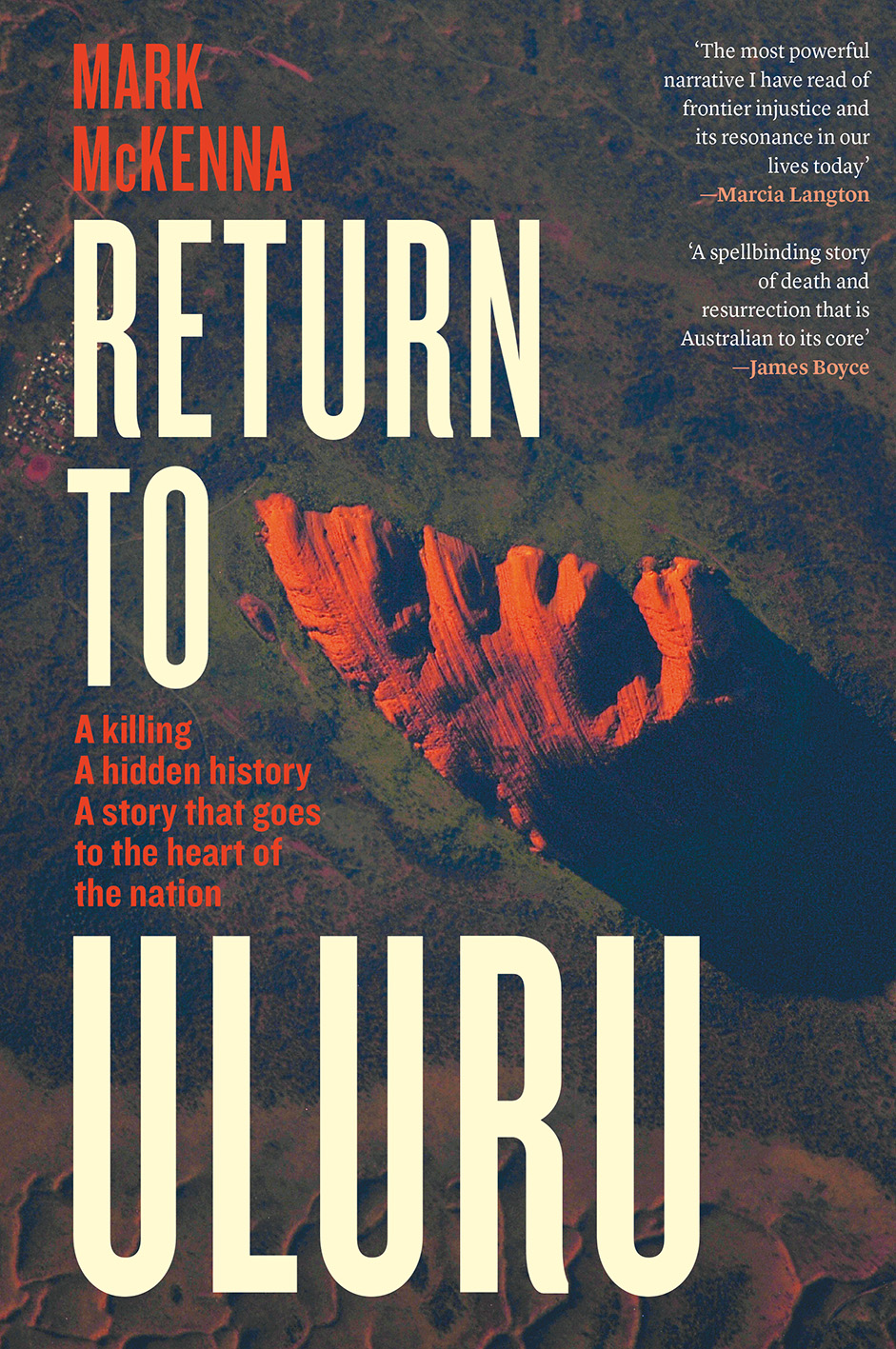
Winner: 2022 Chief Minister’s Northern Territory History Book Award
Shortlisted: 2022 Prime Minister’s Literary Awards
Longlisted, 2021 Mark & Evette Moran Nib Literary Award
Shortlisted, 2022 Ernest Scott Prize.
Return to Uluru
Return to Uluru unearths a long-hidden story of frontier violence and its reverberations. Mark McKenna reveals how this single tragedy became the heart of his narrative, and why confronting such truths is vital to Australia’s national memory.
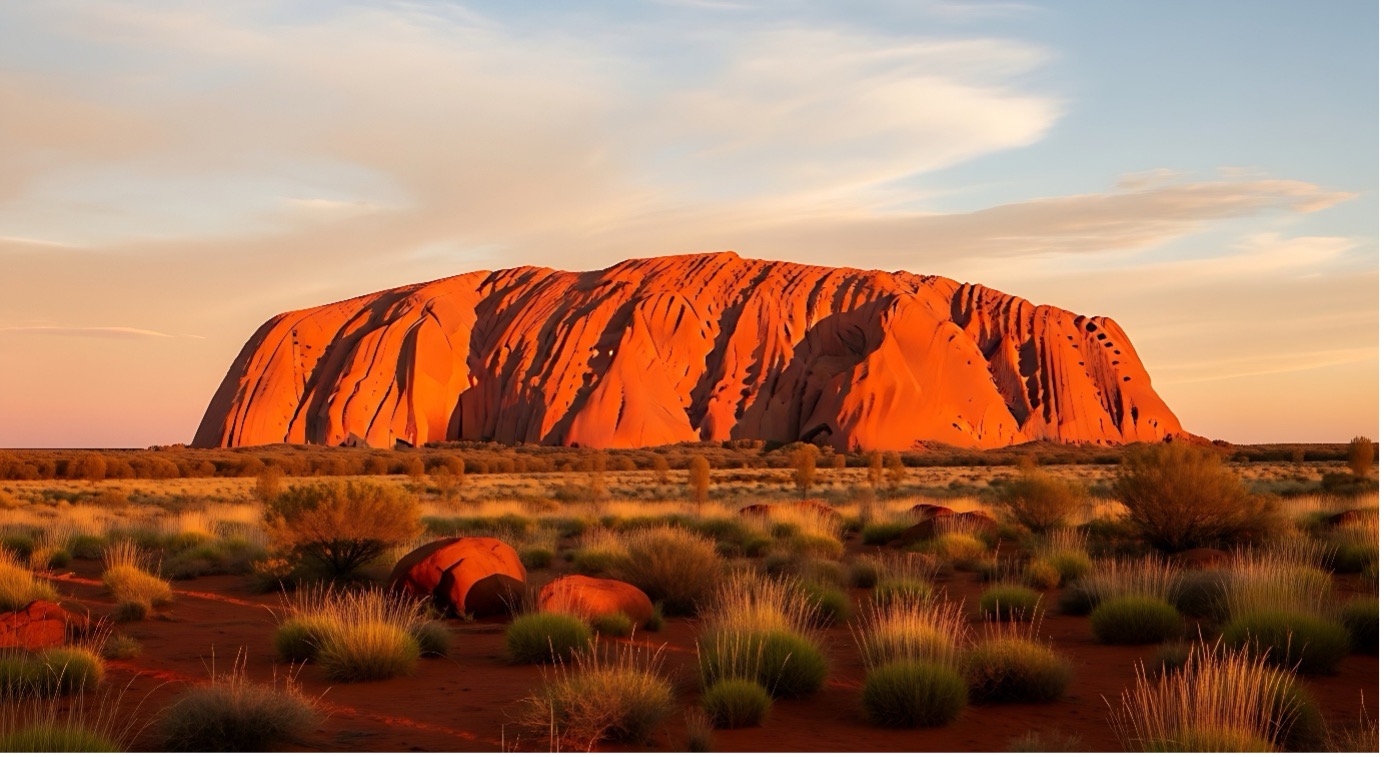
Uluru, Source: Shutterstock.
Return to Uluru began as a broader history of Central Australia, but McKenna explains that a chance discovery led him to focus on the 1934 Uluru incident, a story largely absent from official histories. He describes the epiphany, when he realised this was the story he must share.
The killing of Yokununna by McKinnon, initially just one episode in his research, came to embody something far greater. As McKenna recognised, the ‘biography of one moment in one man’s life encompassed the entire history of the Centre and went straight to the heart of the nation’s long struggle to come to terms with its past’.
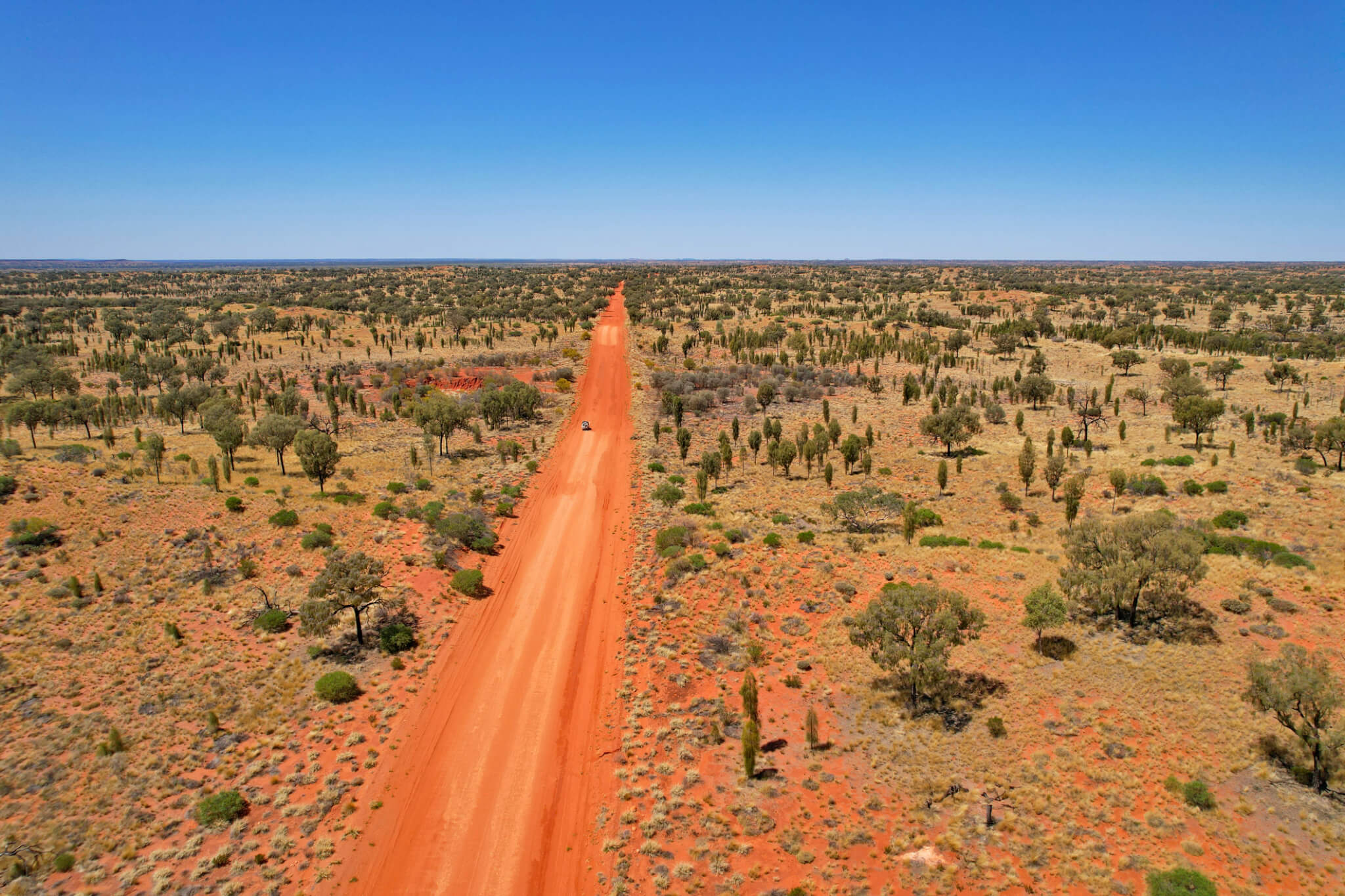
Central Australia,
Source: Shutterstock.
McKenna recalls he decided to pivot his book entirely to this case, a decision driven by the insight that this single, buried event could illuminate Australia’s wider history of colonial violence and injustice. By piecing together scattered clues, he set out to challenge the official record and bring Yokununna’s story to light in the spirit of truth-telling.
Revisionist History
During our conversation, McKenna shares his thoughts on the larger themes of revisionist history, truth-telling and the moral responsibilities of a biographer. Return to Uluru is an act of historical revisionism, a necessary re-examination of accepted history in light of suppressed truths. He argues that revisiting and rewriting history is crucial if we are to honestly reckon with our past.
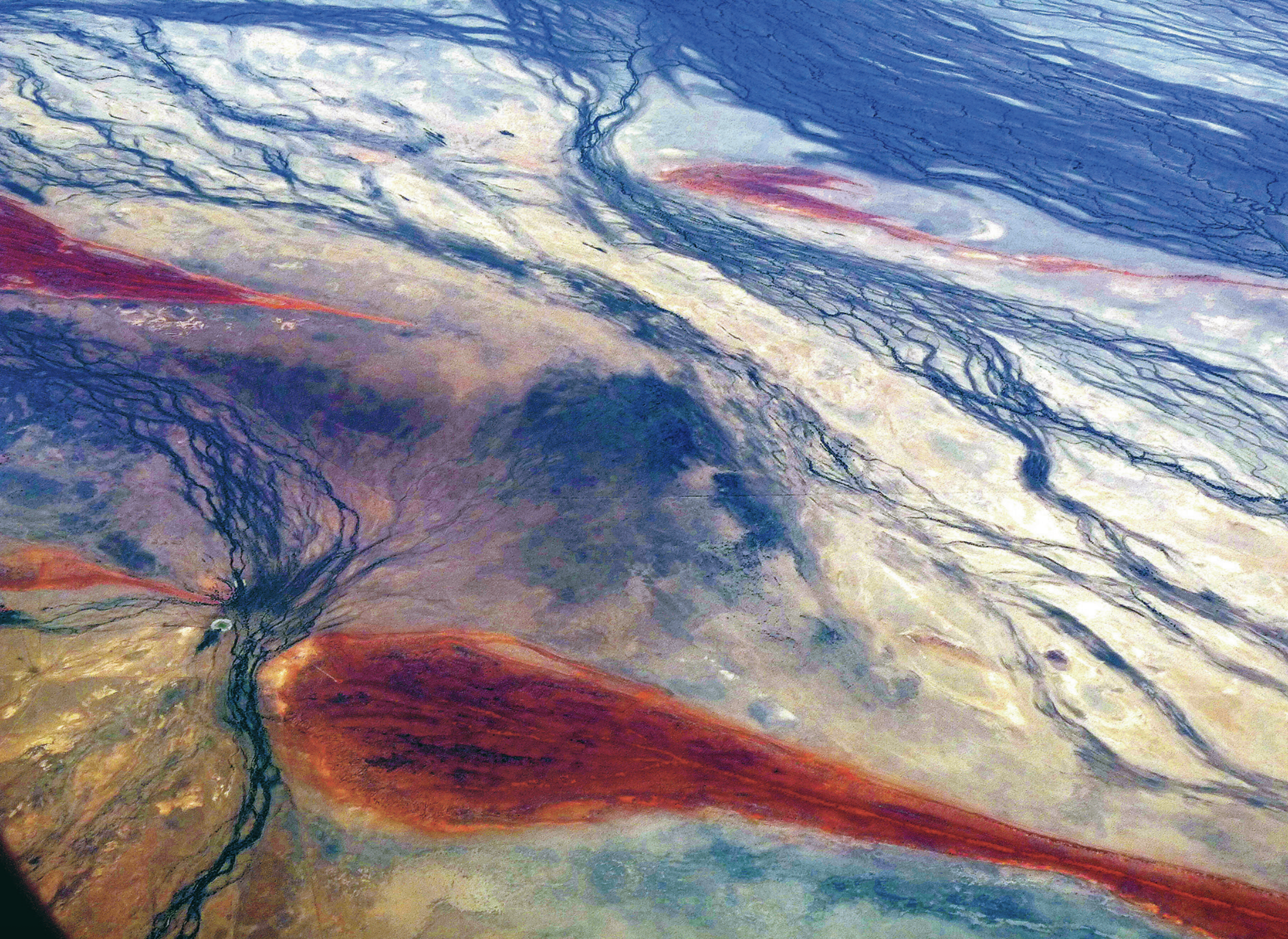
Central Australia from the air.
The official record had long portrayed Constable McKinnon as a dutiful lawman and Yokununna as a footnote. McKenna’s research upends that narrative, demonstrating why such truth-telling matters. He reflects on how bringing an Indigenous perspective and a critical eye to this story corrects the record about 1934 and speaks to contemporary issues of justice and reconciliation.
Never trust a biographical subject’s view of their life
McKenna believes a biographer-historian must strive for truth even when it is uncomfortable; they must grapple openly with the ethical implications of telling someone else’s story. In discussing the role of a biographer, McKenna suggests it is not just to chronicle a life, but to ask what that life (or in this case, that moment in time) means for us today.
By shining a light on one violent episode long buried in archives, Return to Uluru contributes to the broader project of national truth-telling and healing. McKenna hopes his work prompts Australians to reflect on the untold stories that still linger in the shadows and to acknowledge the enduring impact of our history.
Every history is seeking to revise earlier accounts of the past
Ultimately, Mark McKenna leaves us with a hopeful message: that uncovering the truth, however painful, is a necessary act of remembrance and respect. By returning to Uluru, both as a physical place and as a symbol of Australia’s spiritual heart, we open ourselves to a more honest national memory and a step forward in the protracted process of healing.
Praise for Return to Uluru
‘A short, elegant book that delivers on its promise of a hidden history and a story that goes to the heart of the nation.’
Paul Daley, The Guardian
‘An extraordinary work of history that effects a different kind of centring of Australia’s story. While the book’s structure builds slowly, it ultimately delivers a stunning lesson about the persistence of the past, illuminating how the violence of the 1930s still resonates nearly a century later.’
Jeff Sparrow, Sydney Morning Herald / The Age
Return to Uluru arrived at a propitious moment, bringing news we need to hear, underscoring its timeliness in Australia’s reckoning with history.
Geordie Williamson, The Australian
Return to Uluru is one of several recent histories engaging directly with the ‘Uluru Statement from the Heart’ and its call for truth-telling. The book serves as a form of redemptive storytelling that reframes national foundations around a story of violence and belated justice.
The Conversation
Return to Uluru Interviews
- Conversations: The cold case secret in a Brisbane garage, interview with Richard Fidler, 1 March 2021, ABC Radio National
- Big Ideas: “Uluru, frontier violence, and the Statement from the Heart” 6 July 2021, ABC Radio National
- Mark McKenna presents Return to Uluru | Hornsby Shire Council
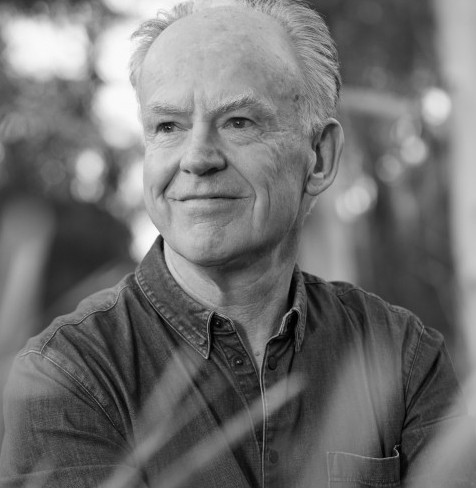
Author photo by Mia McDonald
Professor Emeritus Mark McKenna is one of Australia’s leading historians, based at the University of Sydney. He is the author of several prize-winning books, including From the Edge: Australia’s Lost Histories, Looking for Blackfellas’ Point and An Eye for Eternity: The Life of Manning Clark, which won the Prime Minister’s Literary Award for nonfiction and the Victorian, New South Wales, Queensland and South Australian premiers’ awards.
Episode transcript
Aboriginal and Torres Strait Islander readers are advised that this transcript contains the names of people who have died and discussion of colonial violence and human remains.
Opening extract
Mark McKenna: I think with biography, it's tempting, or sometimes so easy, to accept the standard narrative we have of a subject's life. Some of the surprises I've had while researching various subjects have taught me never to trust the subject's view of their life. There are different levels and layers of that acceptance, and you always have to keep challenging it.
Introduction
Gabriella Kelly-Davies: Hello, I'm Gabriella Kelly-Davies. Welcome to Season 5 of Biographers in Conversation.
In each episode, biographers chat about the multiplicity of choices they face while crafting life stories. I'd like to acknowledge Australia's first storytellers, the Gadigal people of the Eora Nation. The Gadigal people are the Traditional Owners of the land from which I'm coming to you today.
Aboriginal and Torres Strait Islander listeners are advised that this conversation contains information about people who have died. You'll find us wherever you listen to your podcasts and on our website, biographersinconversation.com. Let's start the show.
In this episode of Biographers in Conversation, the award-winning historian and author Mark McKenna chats with me about his choices while crafting Return to Uluru. This book takes us back to a pivotal yet long-hidden event in our history: the shooting of the First Nations man Yukun by Constable Bill McKinnon. It occurred at Uluru, near a waterhole at this deeply sacred site for its Traditional Owners, the Anangu people.
Mark reveals the long history of colonial violence against our First Nations people, inviting us to reflect on Australia's Indigenous–settler history. In the spirit of truth-telling, he's pieced together a story that was largely forgotten outside Indigenous communities, uncovering truths that challenge the official record.
A book that changed direction
Gabriella Kelly-Davies: Mark, welcome to Biographers in Conversation.
Mark McKenna: Thanks, Gabriella. Good to be here.
Gabriella Kelly-Davies: Congratulations on the success of Return to Uluru, which was shortlisted for the 2022 Prime Minister's Literary Awards and won the 2022 Chief Minister's Northern Territory History Book Award. Please tell us about this book.
Mark McKenna: Essentially, the book began as something else, like a lot of books do. Originally, I'd set out to write what I thought was going to be a history of Central Australia. A good friend of mine said to me, just after he'd read the first draft, I think, 'Your book's been hijacked. It's become something else.'
I suppose the hijacking part was when the book changed from a history of Central Australia to the history of one incident that occurred at Uluru in 1934, which involved the shooting by a policeman of an Aboriginal man named Yukun. It's that shooting and that incident at Uluru in 1934 that the book unravels.
There were a lot of things that happened along the way in the writing of the book — research discoveries that kept changing it. When it was marketed — publishers and booksellers do all kinds of crazy things with books when they try to sell them — my book was marketed as a classic cold case, and I was invited to crime-writing festivals. It was always surprising how the book kept morphing into another thing as I was doing it.
Even in the end, it had some unexpected surprises. Every publisher tries to on-sell their books to other markets. They tried in Europe with my book, and they didn't have any luck where I thought they might have luck, in France or Germany, where there's strong interest in Aboriginal history. But in Poland, of all places, it was translated into Polish and published there.
It was published in the US. I have no idea how it did in the US. It probably disappeared without trace, given the number of books that are published there. But it was interesting to see how this book touched unexpected chords in that way.
Gabriella Kelly-Davies: You can never predict where your book's going to end up.
Mark McKenna: I'm still astonished that it was published in Poland. But some of the best interviews I did about the book were with Polish journalists. Their perspective is really different. That's what's great about going to a different market: you see how a book about truth-telling, as this one is, a book about Australian history, can be seen so differently by an audience that's far away but still engaged.
Gabriella Kelly-Davies: Absolutely. In a different culture and with a different history. That's really fascinating.
Mark McKenna: It's been a good part of the long journey of the book. Like every book, they all have long journeys. Just when you think they're dead, they pop up again and they've got another life somehow.
Looking for the Centre
Gabriella Kelly-Davies: Rather than opening with a prologue or introductory chapter, you took us directly into the first of the book's four parts, 'Looking for the Centre'. This section introduced us to the breathtaking beauty of Central Australia. Suddenly, the narrative took an unexpected twist. Please read the closing passages of this section.
Mark McKenna: Ah, yes, the closing passages.
When I travelled to central Australia, I was unprepared for the way in which the region's frontier past would unsettle the history of the centre I had originally intended to write. What began as one disturbing episode — the shooting of an Aboriginal man by Constable Bill McKinnon at Uluru in late 1934 — slowly became the centre of the book. McKinnon was another seeker of the centre — a man who walked in the footsteps of John McDouall Stuart, Cecil Madigan and so many others. While I'd known of his story for many years, new evidence unexpectedly came to light. Once I asked myself what had happened in his life before and after the shooting, everything changed. What appeared at first glance to be 'a half centimetre high' — the biography of one moment in one man's life — encompassed the entire history of the centre and went straight to the heart of the nation's long struggle to come to terms with its past. > Mutitjulu translates literally as 'belonging to Aboriginal people'. Home to the Anangu at Uluru, it's also the name of a waterhole at the southern end of the rock. It was here, in 1934, that Europeans' awareness of Uluru's sacred significance emerged in tandem with the gruesome reality of White Australia's incursion into central Australia.
Gabriella Kelly-Davies: Thank you. At what point did you realise the story needed to focus on this episode rather than the history of Central Australia you had planned to write?
Mark McKenna: To be honest, there wasn't one moment when that happened. It was a gradual realisation on my part. I just found myself wanting to know more about this policeman.
I think I do have a biographical instinct. I love biography. I love finding out more about other people's lives. I found myself wanting to understand more about his life: how he'd come to be a policeman in the Northern Territory, because he wasn't from the Northern Territory originally, and what happened to Bill McKinnon afterwards.
Once I asked those questions, I started to see that I could fold that other history around this biography. Of course, it would be much more filtered, much more condensed. But in a way, that wasn't a bad thing because it helped me to cut to the chase about what I wanted to say about that history that was really important. I could just say those bigger things.
In a way, the biographical approach here set me free because it allowed me to be a bit more playful or experimental with the structure.
Why history matters
Gabriella Kelly-Davies: Your many books reveal why it's crucial to understand history. Why does history matter?
Mark McKenna: Gee, that's a big one. Why does history matter? First and foremost, it matters because it's through history that we have some idea of what's gone before us: how the society we're born into emerged, how it was formed, what ideas drove it, et cetera. It explains who we are. It can explain — not always, but it can explain — who we are.
It matters because it's about citizenship and how you belong in the place where you live. Without history, without a basic understanding or level of history, you can't really grasp how things came to be as they were, and why. Also, how and why your society needs to change, because it's not just about understanding what aspects of the past you want to cling to, but also which ones you want to reject and what you want to change.
But that's probably a very superficial answer to the question, which is a big one.
Gabriella Kelly-Davies: It would take us a thesis to describe why history matters, so I think you've covered the territory.
Connecting past and present
Gabriella Kelly-Davies: You noted that every thread of Return to Uluru is connected to the present. Please tell us about this idea.
Mark McKenna: Every history, in a way, talks to the present. I think the most successful histories have always done that. They explain the past, but they do it in a way in which people understand the present moment they're in much better.
This shooting occurred in a cave in the heart of the very place that white Australians have come to see as the spiritual centre of the country in recent years. It really went to the heart of truth-telling. It went to the heart of the whole dilemma about Australia's history that we've been grappling with, probably for the last 50 years or more.
Of course, I was writing this in the lead-up to a referendum. The referendum hadn't been decided yet. This book was published in 2021, but the lead-up, discussions and planning were all underway. There was the Uluru Statement from the Heart, released in May 2017, when Aboriginal people had gathered from all around Australia and produced the statement after a long process of consultation.
Here was a history that dealt with frontier violence at Uluru in the 20th century. A lot of people, I think, conceive of truth-telling as something to do with the distant colonial past. But it's not at all. For so many Aboriginal people, it's living. It's still inside them, and it's still inside their families. It's on those levels that it talks to the present.
I think you've got to be careful about being too didactic about these things. In other words, you don't want to wave your finger at the reader and say, 'Now, this book speaks to the present because A, B, C, D, and this is why, why, why, bang, bang, bang.'
In the same way, I didn't want to write an introduction that said the standard sort of thing: 'This chapter will do this, and that will do that, and so on in this part of the book.' I just wanted the story to unfold. I wanted the story to speak for itself.
In saying that the book speaks to the present, I tried very hard, writing it, not to spell those connections out, but to embed them in the narrative itself, to embed them in the story.
Gabriella Kelly-Davies: It's very much about showing, not telling.
Mark McKenna: It is, yes. A fundamental difference between academic writing and a lot of what we would call trade publishing is that, in academic writing, you're obliged to spell out in your abstract, or in your first two pages, what you're going to do. That always steals your own thunder, I think.
Gabriella Kelly-Davies: You don't need to read the rest because you've read it in the abstract.
Mark McKenna: Exactly. You know what you're getting. You've already tasted the meal before you've ordered it. I'm not really interested in that kind of writing. I've always wanted the narrative to do the talking, so to speak, rather than interpreting my own work.
Truth-telling and living history
Gabriella Kelly-Davies: You've mentioned truth-telling a few times. What does truth-telling mean to you in biography and history, and in the context of this book?
Mark McKenna: Ah, that's another big one. If I start just with me and the book, this book was difficult in lots of ways because I came to know the family, the descendants of the policeman — some of the descendants, not all of them. I really saw the everyday, continuing impact of history, not only on the Indigenous side of things, of course, but also on the non-Indigenous.
It taught me that truth-telling has become a kind of catch-all phrase, but really it's got to involve both Indigenous Australians [and non-Indigenous Australians].
For Indigenous people, fundamentally, truth-telling is a present thing. It's not just exhuming a past that is no longer with us. It's acknowledging the past that lives and is playing out in so many ways in the lives of Indigenous Australians throughout the country: emotionally, psychologically, financially, economically, socially — you name it.
Uluru and limits of knowledge
Gabriella Kelly-Davies: How did being at Uluru influence you as you conceived the book and then wrote it?
Mark McKenna: One of the attractions of the story for me was that I was drawn to it because of where it happened. If this shooting had taken place 50 kilometres away, out on a sand dune somewhere, I would have written about it. But I don't think it would have become the same thing that it did because of Uluru itself.
Uluru is so powerful as a place and has so many stories that the Anangu tell about it. It's not just this red rock that we rush to the sunset car park or the sunrise car park to take lots of beautiful pictures of the rapidly changing colour spectrum, which is all great. But it's much, much more than that. That's just the glistening surface of it.
I wanted to learn more about that cultural significance. But in the process, I also came to realise that I couldn't know it all. There would always be things about the significance of Uluru, as there would be about any place in Australia, that are not meant for whitefellas to know, that are not meant for us to know. That's a good thing, I think.
But you don't really become aware of those boundaries until you start digging deeply enough into the history of any place.
Oral histories and archival discoveries
Gabriella Kelly-Davies: By scouring archives, museum storerooms and household garages, you discovered critical new evidence. Which sources were most revealing?
Mark McKenna: I wanted to use oral history. There's a substantial oral history of the killing in Indigenous communities. As they've said many times in Mutitjulu and Areyonga, the other place where family members connected to this story live, they've known about this story for decades and they've talked about it. I wanted to understand that oral history, so those sources were really crucial.
The other source was observing the place itself. I can't remember how many times I walked around the rock or spent time at Mutitjulu, just looking at the actual site where this happened. So the rock itself.
One of the sources that had a huge impact and was very revealing was the discovery of Bill McKinnon's journals, which he kept during the time of the shooting, in a suburban garage in Brisbane. Those were the three things.
Gabriella Kelly-Davies: He admitted in his journals or memoirs that he did the shooting, didn't he?
Mark McKenna: Yes. Just for the benefit of your listeners, this shooting resulted in a Commonwealth Board of Inquiry, which was set up to get to the truth, I guess, about what happened and why this man was shot.
Bill McKinnon had told the Board of Inquiry that he fired into the cave at Yukun without taking aim. He just fired indiscriminately. What his journal showed was that he'd written the words, 'I fired to hit.'
In other words, he wasn't telling the truth to the Commonwealth Board of Inquiry. I could obviously ascertain that. He'd intended to severely injure, if not kill, when he fired. It was literally the crowning piece of evidence, in his own hand, that he'd intended to shoot Yukun and to injure or kill him.
Gabriella Kelly-Davies: And he got away with it?
Mark McKenna: Yes, he did. I think after the Board of Inquiry, he had a bit of a slap on the wrist, with a salary deduction or something like that. He was allowed to continue being a policeman, and he did get away with it.
He did and he didn't. In another sense, he hasn't got away with it because his family is still grappling with and dealing with the whole legacy of this, to their credit.
Gabriella Kelly-Davies: Maybe he didn't get away with it, as well, because it was on his conscience so much that he wrote about it.
Mark McKenna: Those words I referred to earlier were the words he wrote the morning after the shooting. It's just describing that he fired to hit. But the story did resurface occasionally after he retired, and he referred to it obliquely in the press.
He was surely aware that he'd kept that journal and aware of what he'd written. Why did he keep it? Had he forgotten what he wrote? Had he created his own story of this event? We all do this, I suppose. We create the stories that allow us to go on, and he may have done that. I can't prove it one way or the other.
But from the point of view of the book, I was fortunate that he did leave it. It had an incredible impact on the book.
Questioning memory and self-narratives
Gabriella Kelly-Davies: It really raises the issue of a biographer's need to keep asking questions: why, why, why? We can't take anything at face value.
Mark McKenna: That's right. In my experience writing not just biography but history — definitely the biography of Manning Clark and other books I've written — I think with biography it's tempting, or sometimes so easy, to accept the standard narrative we have of a subject's life.
Some of the surprises I've had while researching various subjects have taught me never to trust the subject's view of their life. There are different levels and layers of that acceptance, and you always have to keep challenging it.
Gabriella Kelly-Davies: That's right. We recall events in a way that makes us comfortable with that event, even if that means we've distorted it. Every time we re-remember, we probably remember it in a slightly different way. By the time you get to a story or a memory in someone's old age, they've re-remembered it in multiple different ways.
There are multiple versions of the truth. There's no one monolithic truth. There are multiple plausible versions of the truth.
Mark McKenna: That's very true, I suppose. If you wanted to be vaguely cynical about it, you could say we remember what we need to remember at a certain moment, depending on what our needs are at a particular point in time.
That difference between what actually happened and what we remember is what makes biography so challenging, so important and so revealing, potentially, about all the sleights of hand we invent. In the context of truth-telling, I suppose it's all relevant.
Ethical dilemmas and repatriation
Gabriella Kelly-Davies: After discovering McKinnon's admission in his journal, you faced several moral and ethical challenges. Please tell us how you resolved them.
Mark McKenna: For people listening, it's helpful to know that one of the biggest ethical dilemmas I had was that I'd discovered this information, this journal, through the generosity of Bill McKinnon's daughter, Susan, who'd allowed me to come to her family home. She was very generous and said, 'Sure, go through my dad's things. He's got some things out here in the garage.'
In some ways, there was part of me that wished I'd found some anodyne piece of information, nothing as life-changing as this information was. I knew it would be uncomfortable for her and for her children. But, of course, I wasn't going to withhold it or not publish it for that reason, because the story was larger than that, I thought.
With writing these kinds of things, it's not just dealing with the ethical dilemmas in order to bin them or zip them up in a bag and say, 'Well, that's it. I've moved beyond them.' You just learn how to live with them. They're always there.
At the very time I was visiting the family home in Brisbane, I had a call from the South Australian Museum telling me that Yukun's remains were still in the museum's collection. The very moment they happened to reply was when I was sitting in the living room of Bill McKinnon's daughter's place. Sometimes you think: why is this happening right now? That was a pretty staggering moment.
I remember driving away that afternoon. I could see the end point: that his remains would be repatriated to Uluru, and what that could mean for the families involved. At that point, I could only imagine. When I use the word 'families', I'm talking about scores of people, not just five or six or ten. Eventually, that repatriation did take place after the book was published.
Revising history and biography
Gabriella Kelly-Davies: Your book's a form of historical revisionism: the reinterpretation of a historical account. Please tell us about revisionist history and biography, and why they matter.
Mark McKenna: I guess all history is revisionist, in a way. It's pretty much de rigueur for historians to say something like, 'As Smith and Roberts have said, blah, blah, blah. But hang on, they forgot this, or they didn't mention that, or what about this angle?'
In a way, every history is seeking to revise earlier accounts of the past. Part of the great appeal of history for me as a historian is seeing how those interpretations change over time. The study of that, of course, is called historiography. So all history is revisionist.
Even though there was a Commonwealth Board of Inquiry into this incident, it was a sham in a way. Bill McKinnon travelled with the rest of the Board of Inquiry to Uluru and told them where this had happened and that had happened. It was really a kind of mates' business, and it wasn't fully independent.
The evidence I subsequently discovered really proved that, even in White Australia — this incident happened under what we would call White Australia — even when the Commonwealth government was trying, or appearing to try, to apply equal treatment to Indigenous people as it would to the shooting of a white man, that really wasn't the case. The racist assumptions that caused the event in the first place still framed the way the so-called inquiry played out.
In that sense, the fact that McKinnon was lying to that Board of Inquiry — on one level, you might go, 'Surprise, surprise.' But, of course, you need the evidence. It was wonderful to have that evidence.
Also, through making all the connections I managed to make, that made it easier for the museum to trace and identify Yukun's remains. COVID got in the way and it took longer, but it was still one of the most remarkable things I've ever been involved in, in my life as a historian.
Gabriella Kelly-Davies: You said that all history is revisionist, but what about biography? Is all biography revisionist?
Mark McKenna: I guess so. If there's no prior biography of your subject or subjects, you're the first one in the pond. You might be revising your subjects' views of their lives, but you're not necessarily revising previous biographical interpretations.
For any biographer writing a biography of a figure who's had at least one or two biographies written about them already, they're revising the previous biographers' views. They might not do that directly, because that would be pretty boring from a narrative point of view, but they do it implicitly.
Just as historians are trying to find new ways of thinking about and structuring their narratives, their story and their approach, biographers, too, are hopefully trying to find the best way, the best structure and the best framework to tell the story they want to tell.
That should change from book to book, because an approach that's right for one subject is not necessarily right for another.
Sammy Wilson's call for truth
Gabriella Kelly-Davies: Before you launched the book at Adelaide Writers' Week in 2021, Kathy Tozer, the partner of Sammy Wilson, filmed Sammy speaking about Return to Uluru at Uluru. Kathy then translated Sammy's brief, five-minute talk, which was screened at the festival. I'd love you to read the edited transcription of Sammy's words from the video.
Mark McKenna: Sure. Just for the listeners' benefit, these are the words of Sammy Wilson, one of the people whose family is connected to this story of the shooting of Yukun. Sammy wanted to be at the launch of my book in Adelaide at the festival. He couldn't be there, but nonetheless made this brief, five-minute video, which was screened at the festival. These are his words:
I'm talking to you about this book that brings a story to light for people so they can reflect and learn from it. It's been hidden for years. At some time, we have to speak the truth — truth-telling, on the record. We made the Uluru Statement for understanding and working together. So I'm very glad this book has been published. > The Anangu record of what happened is here.
Sammy is standing at Uluru when this video was made. 'The Anangu record of what happened is here,' he says.
My grandfather and others told this story over and over until they passed away. This is family we're talking about. Yukun should be returned to his home Country. He's been lying in a distant museum. Can you imagine that? Shot and taken away to a museum? And forgotten, like many others. > We want the truth to come out. More people need to hear this so more people can understand it and let others know. In Australia, we need to think consciously and understand properly and realise these things. It's up to each and every one of us to recognise, 'Oh, okay, this is how things are.'
Collaboration and Indigenous storytelling
Gabriella Kelly-Davies: Thank you. That's so powerful. What's the significance of this talk, and why did you show it at the writers' festival?
Mark McKenna: It was really important for me. I think one of the biggest changes in the writing of Australian history — not just history, but biography and non-fiction generally — is that when these histories and stories involve the lives and stories of Indigenous Australia and Indigenous people, you should be, and want to be, as collaborative as possible in telling the story.
One of the things we're still trying to come to terms with is that, for whitefellas, stories are who we are. We're storytellers, et cetera. But we treat stories very differently from the way Indigenous people treat them. Understanding the difference is really hard.
When I watch Sammy tell that story, and when I listen to descendants of Yukun tell stories about how they've remembered this incident and what it meant to their families, they own the story. They inhabit the story. They tell the story in a completely different way.
I think there's less distance between their own flesh and blood and the story they're telling. It becomes them. It is them. That's the kind of thing I learned through writing this book, and I'm still trying to deal with it in other ways in subsequent things I've written.
That's why it was so important to show Sammy's video: to let him speak. He wanted to be there anyway, so it was fantastic to have him there on the screen. As it turned out, it was at a time when we were all just getting used to talking to one another on screens because of COVID.
That's why I wanted to use that. Any time I talk about the book to a public audience, I show that video at the start.
The freedom of biography
Gabriella Kelly-Davies: That's very, very powerful. Just in closing, what do you believe is the role of a biographer?
Mark McKenna: I think part of the joy of writing is discovery. The joy of writing other people's lives is partly about finding a way, as I said earlier, to tell those stories in a way that's true to them, and to find a literary framework and a way of doing that that's true to them and true to yourself.
We don't need the biography police. We don't need set rules. Of course, there are some fundamental things about evidence and the way we treat evidence, and how we distinguish facts from speculation, et cetera. But we don't want to constrain or overly define the role of the biographer. It should be as free as possible in pushing whatever boundaries we think might be there.
Gabriella Kelly-Davies: I think there are some basic rules around ethics and privacy, corroborating evidence and not making anything up. They're standard aspects of biographical writing. But apart from that, as you say, it's about pushing boundaries and seeing where your writing, research and storytelling can take you.
Mark McKenna: That's right. At the same time, in the last 20 years or so, there have been countless books devoted to the study of biography itself as a literary genre. That industry, as it were, is increasing.
One of the potential downsides is that we end up with a situation where we think, through all these decades of studying different biographies, that we've distilled or formulated some way of doing it that's the right way. I wouldn't want to arrive at that point.
Closing conversation
Gabriella Kelly-Davies: Mark, I could talk to you all day about biography and biographical decision-making. Thank you so much for chatting with me today. I thought Return to Uluru was a profoundly powerful book, and I'm looking forward to reading your next book. Thank you for chatting with us today.
Mark McKenna: Thanks very much, Gabriella, and thanks to everyone who's listening in.
Gabriella Kelly-Davies: Thank you.
Credits
Gabriella Kelly-Davies: Thank you for listening to Biographers in Conversation. Special thanks to my producer, Andy Maher; web manager, Dylan Hamilton-Foster; and Sonny Lauderdale for the music.
We'd love you to take a moment to rate the show on Apple Podcasts, Spotify or wherever you find your podcasts. If you enjoyed this conversation, please share it with your family and friends and on social media.
To discover more about my guests and their biographies, head over to their show pages on biographersinconversation.com. There you'll find all our episodes and ways of getting in touch with us.
I'm looking forward to our next conversation about the choices every biographer faces. I hope you are too.